Climate Change
Purnea's Peril: Wet-Bulb Heat Threatens India's Agricultural Heartland
As humid heat intensifies, agricultural laborers in Bihar's plains face extreme physiological limits, impacting food security.
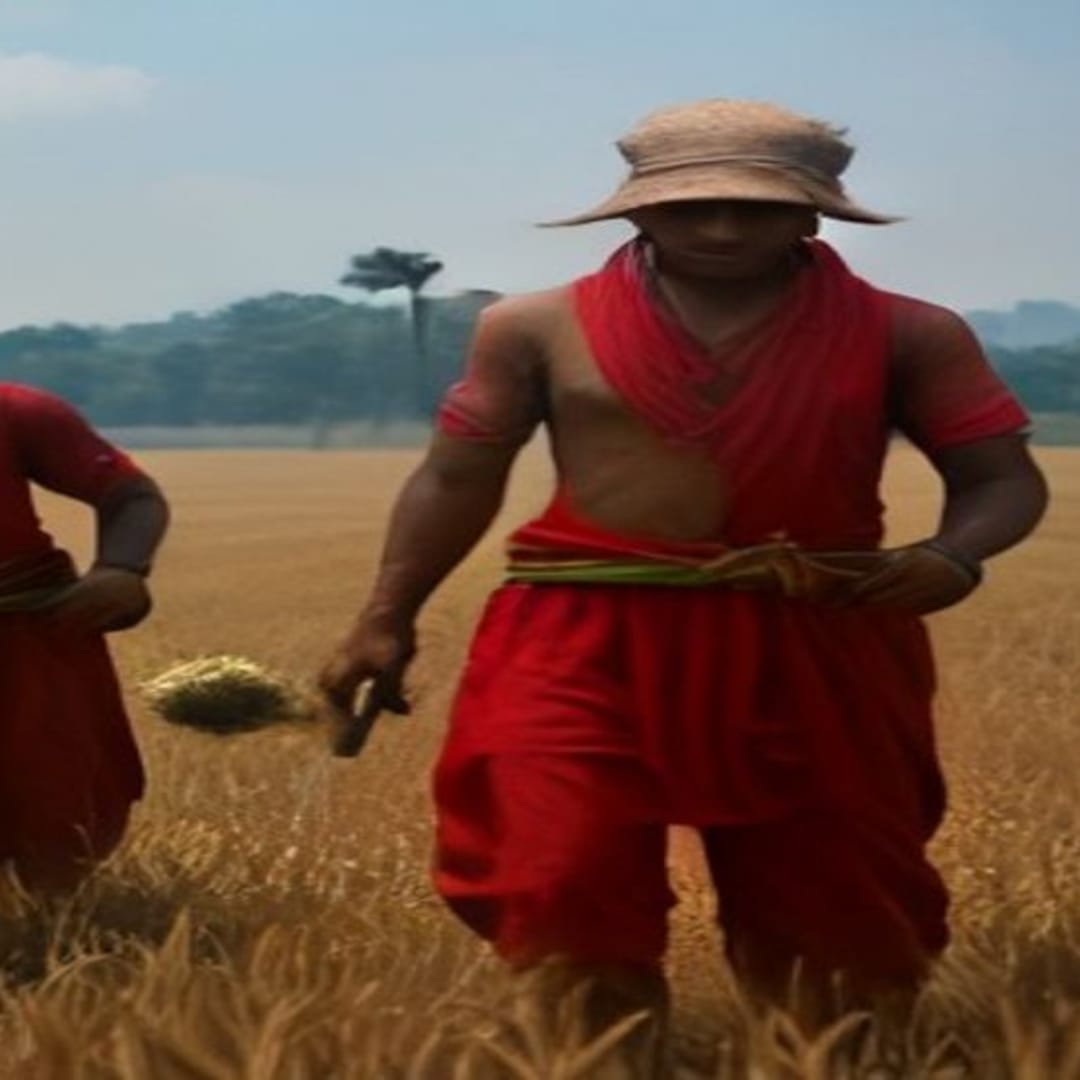
The pre-dawn calm in Purnea, Bihar, offers little respite these days. By 5 AM, Rakesh Kumar, a paddy farmer, is already in his fields, his vest clinging to his back, drenched not just from the morning dew but from an invisible, insidious heat. The sun hasn't even fully cleared the horizon, yet the air is thick, oppressive, a heavy blanket of humidity that makes every breath a struggle. This isn't just 'hot' anymore; it's a new, more dangerous kind of heat – the wet-bulb heat.
For Rakesh and millions like him across India's densely populated Gangetic plains, the mercury on the thermometer tells only half the story. The real threat lies in the combination of high temperature and suffocating humidity, a measure known as the wet-bulb temperature (WBT). When the WBT climbs, the human body's primary cooling mechanism – sweating and evaporation – becomes drastically inefficient. As evaporation slows, our core temperature rises, pushing us towards heat stress, exhaustion, and, eventually, organ failure and death if exposure is prolonged.
It's a physiological threshold that defines the very limits of human survivability. ## The Insidious Rise of Wet-Bulb Temperatures A 2024 collaborative study involving the Indian Institute of Tropical Meteorology (IITM) and international partners highlighted a concerning trend: the Gangetic plains, particularly regions like Bihar and Eastern Uttar Pradesh, are experiencing an alarming increase in days where WBT exceeds critical thresholds. The study projected a significant rise in events where the WBT could cross 32°C by mid-century, with some areas even brushing against the theoretical human survivability limit of 35°C WBT under prolonged exposure, a level at which even a healthy, resting person would struggle to survive without artificial cooling. Why is Purnea, a district in Bihar's fertile Kosi-Seemanchal region, particularly vulnerable?
Its geographical location within the Gangetic basin means high ambient temperatures, especially from April to October. Coupled with the immense moisture brought by the monsoon season and a high water table, the humidity levels soar, creating perfect conditions for elevated wet-bulb temperatures. This region, a breadbasket for maize, jute, and paddy, relies heavily on manual agricultural labor, directly exposing its workforce to these life-threatening conditions. ## Beyond Discomfort: Impacts on Life and Livelihoods The consequences of this rising wet-bulb heat are multifaceted and devastating: ### 1.
**Human Health Crisis:** For agricultural laborers like Rakesh, working in the fields during peak WBT hours becomes a gamble. Chronic dehydration is rampant, leading to an increased incidence of kidney diseases, a silent epidemic among India's rural workforce. Heatstroke cases are on the rise, overwhelming local healthcare facilities ill-equipped for such an onslaught. Productivity plummets as workers are forced to take more frequent and longer breaks, or cease work altogether during the hottest parts of the day.
This directly translates to lost wages for daily wage earners, pushing already vulnerable families further into poverty. "We used to work from sunrise to sunset, sometimes even longer during planting season," recounts Sunita Devi, a landless agricultural worker from a village near Purnea city. "Now, by 9 AM, my head is spinning, and my body feels like it's on fire. We go home, wait for the sun to dip, and then try to finish.
But the work doesn't get done, and the pay is less. " This reduction in effective working hours, often by several hours a day, has a compounding effect on household incomes, especially during critical planting and harvesting periods. ### 2. **Threat to Food Security:** The ability to grow food is directly linked to the ability to work in the fields.
If farmers and laborers cannot tend to their crops – weeding, irrigating, harvesting – agricultural output will inevitably suffer. While some crops are heat-tolerant, the physiological limits imposed on human labor by wet-bulb conditions present a unique challenge. Delayed planting due to unbearable heat, reduced care during growth, and hindered harvesting can lead to lower yields and increased post-harvest losses. This, in turn, threatens local and national food security, potentially leading to higher food prices and exacerbated hunger, particularly impacting Bihar, which is already a food-deficit state in some commodities.
### 3. **Exacerbated Climate Migration:** India is already witnessing significant internal climate migration, with people moving from distressed rural areas to urban centers in search of livelihoods. The escalating wet-bulb threat adds another powerful push factor. As agricultural work becomes unbearable and economically unviable for larger parts of the year, more families will be forced to abandon their ancestral lands and migrate, often to precarious conditions in overcrowded cities, straining urban resources and creating new social challenges.
## A Policy Gap and the Path Forward Despite the growing scientific consensus on the wet-bulb threat, specific and targeted policy responses remain nascent. The National Disaster Management Authority (NDMA) has issued comprehensive guidelines for managing heatwaves, but these often focus on dry heat conditions and may not adequately address the unique dangers of high humidity combined with heat, nor do they always translate effectively to granular, localized action in agricultural settings. Addressing this looming crisis requires a multi-pronged, urgent approach: 1. **Hyper-Local Early Warning Systems:** The India Meteorological Department (IMD) needs to integrate wet-bulb temperature forecasts into its regular advisories, providing hyper-local, real-time alerts specifically for WBT thresholds.
These alerts must be disseminated through accessible channels (radio, local language SMS, community leaders) to agricultural communities. 2. **Labor Protection Policies:** State governments, particularly in vulnerable regions like Bihar, must implement policies that mandate specific working hours, provide shaded rest areas, and ensure access to potable water for outdoor laborers during high WBT periods. Schemes like MNREGA could be leveraged to provide alternative, less strenuous work during peak heat, or to financially compensate for reduced working hours.
3. **Cooling Infrastructure and Water Access:** Investment in rural cooling centers, especially in conjunction with existing community buildings, is crucial. Ensuring ubiquitous access to clean drinking water sources in rural areas is a fundamental necessity for preventing dehydration. 4.
**Climate-Resilient Agriculture and Agroforestry:** Promoting heat-tolerant crop varieties and shifting planting calendars can help. Encouraging agroforestry – planting trees within or around agricultural fields – provides natural shade, reduces ground temperature, and can improve soil moisture, offering both adaptation and mitigation benefits. 5. **Community Awareness and Health Preparedness:** Educating communities on the dangers of wet-bulb heat, early symptoms of heat stress, and first-aid measures is vital.
Local health workers need specialized training to diagnose and treat heat-related illnesses effectively. ## The Unfolding Crisis The silent, humid creep of wet-bulb temperatures represents a profound challenge to India's future, particularly for its agricultural heartlands. It's not just about rising temperatures; it's about the very conditions that make life and work possible. For farmers like Rakesh Kumar, Purnea is not just a home; it's a battleground against a climate reality that demands immediate, specific, and sustained action.
Ignoring this insidious threat risks not only millions of lives and livelihoods but also the very foundation of India's food security and rural economy. The time to act, with targeted strategies for wet-bulb heat, is now, before the plains of India become truly unbearable for those who feed the nation.