Climate Change
Mumbai's Coastal Crucible: Navigating Sea Rise, Deluge, and Searing Heat
As 2026 unfolds, India's economic engine confronts a confluence of rising seas, intense deluges, and scorching heat, demanding urgent, adaptive urban planning.
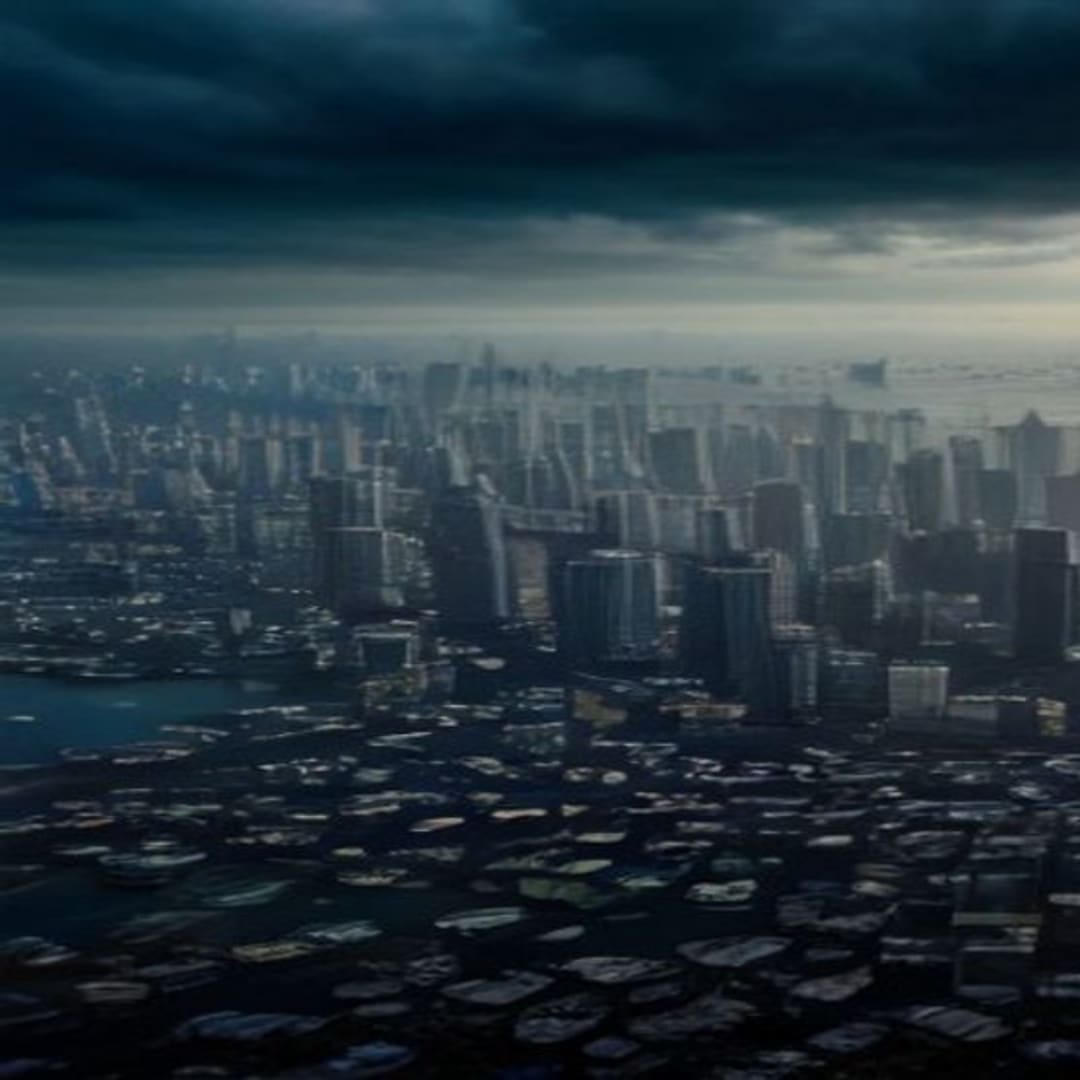
The smell of brine and exhaust fumes hangs heavy in the humid air of Bandra West on a late September afternoon in 2026. Along Carter Road, the usual joggers and street vendors are sparse. The Arabian Sea, usually a soothing backdrop, now laps ominously close to the promenade, a tangible reminder of the city's precarious dance with nature. Just last week, a combination of an unusually high tide and an unseasonal, intense downpour brought life to a standstill, submerging vital arterial roads and disrupting the lifeline local trains.
This isn't an anomaly; it's Mumbai's new normal – a city in the throes of a climatic transformation, facing not one, but a trio of escalating environmental threats. Mumbai, a sprawling megalopolis of over 20 million souls and India's undeniable financial heartbeat, stands at a critical juncture. Its very geography – a collection of islands and reclaimed land jutting into the Arabian Sea – makes it exquisitely vulnerable. For decades, the city has embodied ambition and resilience, but today, it confronts a 'coastal crucible' forged by the insidious creep of sea-level rise, the increasingly ferocious temper of its monsoons, and the relentless escalation of urban heat.
## The Inexorable Rise: Mumbai and the Arabian Sea The most existential threat to Mumbai is the inexorable rise of the Arabian Sea. Global warming's twin impacts – the thermal expansion of warming ocean waters and the accelerating melt of polar ice caps and glaciers – are gradually, yet unstoppably, elevating sea levels. For a low-lying coastal city like Mumbai, this isn't a distant scientific projection; it's a looming reality. A 2025 study by the National Institute of Coastal Resilience Studies (NICRS), in collaboration with the Indian Meteorological Department, projected that parts of Mumbai could experience significant tidal inundation and permanent submersion within the next 30-50 years under moderate emission scenarios.
Key areas like Colaba, Worli, parts of Bandra Reclamation, and the low-lying eastern waterfronts are particularly susceptible. The city’s iconic Marine Drive, often referred to as the 'Queen's Necklace', already faces more frequent overwash events during high tides and storm surges. Saltwater intrusion into freshwater aquifers threatens the city's already strained water supply, impacting both human consumption and the fragile coastal ecosystems that act as natural buffers. The implications for infrastructure are staggering.
The colossal Coastal Road Project, designed to ease traffic congestion, could find itself battling the very sea it skirts. Railway lines, the lifeblood of daily commuting, run perilously close to the coast in many sections, vulnerable to flooding and erosion. Historical landmarks, many situated near the shoreline, face the slow but certain threat of degradation. The economic cost of defending, or worse, retreating from these rising waters is almost incalculable, threatening to destabilize India's economic engine.
## Monsoon's Fury: Deluge and Disruption While sea-level rise represents a slow-motion catastrophe, Mumbai is no stranger to the immediate, visceral terror of extreme rainfall. Climate change is fundamentally altering India's monsoon patterns, leading to fewer rainy days but significantly more intense downpours. For Mumbai, this means short, sharp bursts of rain that overwhelm the city's aging and often inadequate drainage systems. Memories of the devastating 2005 floods, which brought Mumbai to its knees, serve as a stark precursor.
In 2026, such events are becoming more frequent, not less. The Mithi River, once a clean waterway, now a polluted tidal estuary, routinely overflows its banks during heavy rains, engulfing neighborhoods like Kurla and Kalina. Flash floods paralyze the local train network, stranding millions of commuters, and turn roads into rivers, making vehicular movement impossible. The economic toll of a single day's paralysis can run into hundreds of crores of rupees.
Beyond immediate disruption, these deluges carry significant public health risks. Contaminated floodwaters become breeding grounds for waterborne diseases like leptospirosis, cholera, and dengue, placing immense strain on public healthcare systems. The psychological toll on residents, constantly bracing for the next deluge, is also profound, eroding a sense of security and stability in their homes and livelihoods. ## The Searing Scorch: Unbearable Urban Heat Even outside the monsoon season, Mumbai is grappling with another insidious threat: escalating heat.
As global temperatures rise, so too do the ambient temperatures in urban centers. The 'urban heat island' effect – where concrete, asphalt, and lack of green spaces absorb and re-emit heat – exacerbates this trend, making Mumbai significantly hotter than its surrounding rural areas. In 2026, the city experienced its hottest March and April on record, with daytime temperatures routinely exceeding 38-40 degrees Celsius, coupled with stifling humidity. Such conditions trigger a public health crisis, leading to increased cases of heatstroke, dehydration, and exhaustion, particularly among outdoor workers, the elderly, and children.
The strain on the power grid becomes immense as millions turn to air conditioning, leading to frequent power outages that plunge already sweltering homes into unbearable conditions. The economic consequences are immediate and severe. Productivity plummets as workers struggle in the heat, and outdoor economic activities become hazardous. The urban poor, often living in informal settlements with inadequate ventilation, access to clean water, and cooling facilities, bear the brunt of this heat, turning their homes into literal death traps during extreme heat spells.
This exacerbates existing inequalities and threatens the very fabric of social cohesion. ## The Intersecting Crises: A Cascading Effect The true peril for Mumbai lies not in these threats in isolation, but in their devastating synergy. Imagine a scenario: an intense monsoon downpour coincides with an exceptionally high tide, exacerbated by rising sea levels. The city's drainage systems are overwhelmed, and the swollen sea prevents floodwaters from receding, leading to prolonged and deeper inundation.
Such 'compound events' are becoming more frequent and severe, creating cascading failures across critical infrastructure – power, transport, communications, and water supply. This confluence of climate hazards also amplifies social inequities. Marginalized communities, often residing in low-lying, flood-prone areas or informal settlements lacking basic amenities, are disproportionately affected. They have fewer resources to adapt, recover, or relocate, trapping them in a cycle of vulnerability that undermines the city's overall resilience and development trajectory.
## Mumbai's Response and the Road Ahead The Brihanmumbai Municipal Corporation (BMC) and various state agencies are not entirely unaware of these challenges. Initiatives like upgrading storm water drains, constructing pumping stations, and some mangrove restoration efforts are underway. The 'Mumbai Climate Action Plan (MCAP)', developed with support from organizations like the World Resources Institute (WRI) India, outlines strategies for mitigation and adaptation across sectors. However, the scale and urgency of the triple threat demand a paradigm shift – from reactive disaster management to proactive, integrated, and foresight-driven urban planning.
Mumbai needs to embrace a multi-pronged strategy: 1. **Green and Blue Infrastructure**: Aggressive mangrove restoration along the city's coastlines, protecting existing wetlands, and creating new urban green spaces are crucial. These natural buffers absorb storm surges, filter water, and mitigate the urban heat island effect. Investing in permeable surfaces and rainwater harvesting can reduce flood risks.
2. **Resilient Infrastructure Development**: Critical infrastructure, including transport networks, power grids, and housing, must be designed and retrofitted to withstand future climate impacts. This means elevating structures in flood-prone zones, enhancing cooling systems, and using climate-resilient building materials. The long-term viability of massive projects like the Coastal Road needs rigorous re-evaluation against future sea-level rise scenarios.
3. **Enhanced Early Warning and Preparedness**: Strengthening meteorological forecasting capabilities, integrating tidal data with rainfall predictions, and establishing robust community-level early warning systems can save lives and minimize disruption. Public awareness campaigns are vital to foster a culture of preparedness. 4.
**Integrated Coastal Zone Management**: A holistic approach that balances development with ecological protection, strictly regulates construction in vulnerable coastal areas, and explores options for planned retreat where necessary. This requires unprecedented coordination between multiple government agencies and scientific bodies. 5. **Community-Centric Adaptation**: Empowering vulnerable communities through livelihood diversification, providing access to climate-resilient housing, and ensuring their participation in planning processes are essential for equitable adaptation.
Mumbai's future as India's global city, its financial prowess, and the dreams of its millions depend on how swiftly and decisively it acts today. The coastal crucible is heating up, and the time for half-measures has long passed. The challenge is immense, but so too is the opportunity to redefine urban resilience, setting a precedent for mega-cities worldwide grappling with the multifaceted impacts of a rapidly changing climate. The city that never sleeps must now awaken to its most formidable foe, and innovate for survival.