Climate Change
Monsoon's New Riddle: Farmers Battle Climate's Capricious Hand
India's vital monsoon, once a predictable rhythm of life, now delivers a devastating ballet of drought and deluge, pushing millions of farmers in regions like Marathwada to the brink.
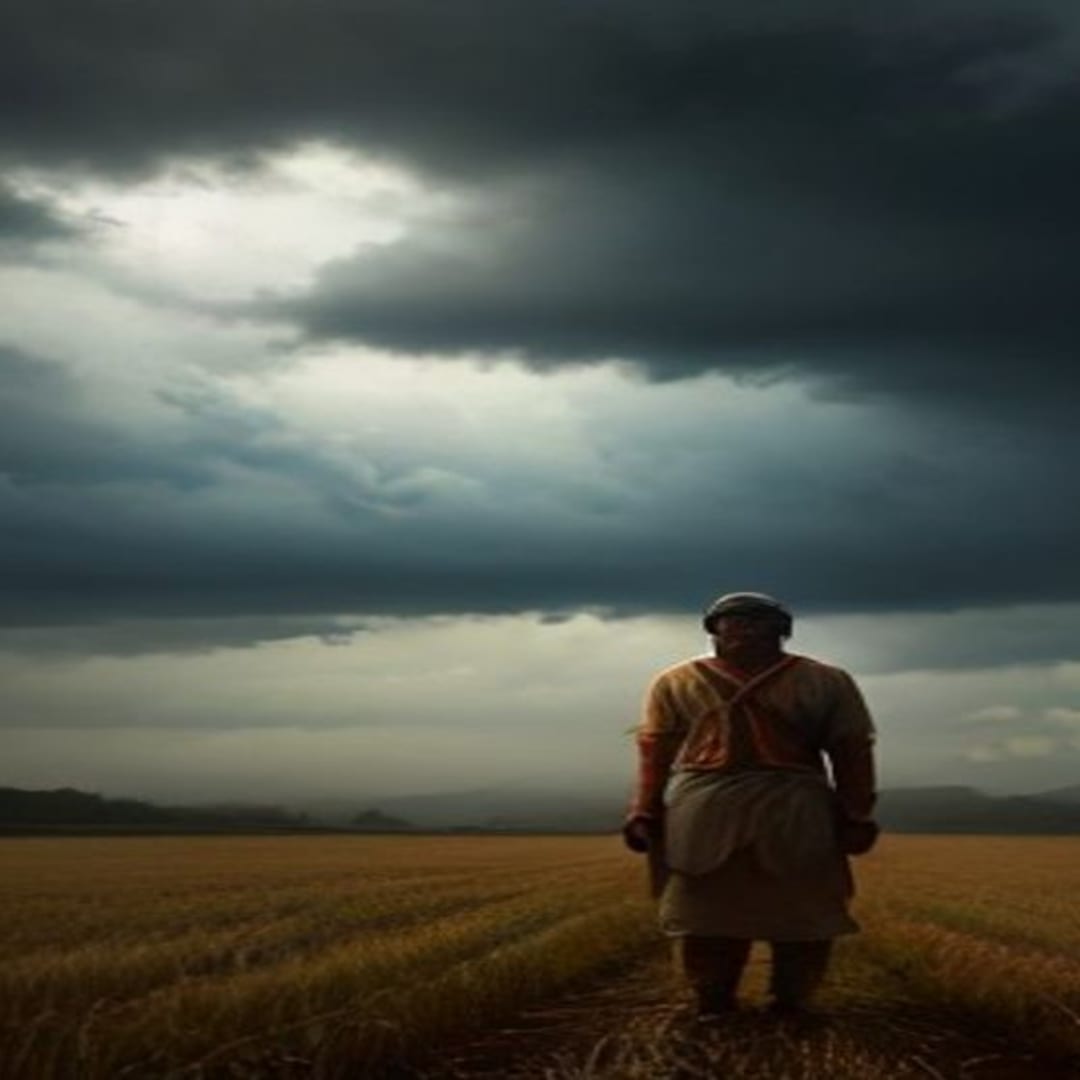
Ramesh Patil, a third-generation farmer in Latur district, Marathwada, stares at his parched cotton field, the soil cracked like a shattered mirror. It’s August 2026, and the rains, usually a life-giving torrent by now, have played a cruel game of hide-and-seek. "Last year, the monsoon arrived late, then dumped all its fury in two weeks, drowning my soybeans. This year, it's just teasing us," he says, his voice heavy with despair.
"How do we plan? How do we survive? " Ramesh’s plight is a microcosm of a much larger crisis unfolding across India’s agricultural heartland. The very pulse of Indian farming – the annual southwest monsoon – is undergoing a terrifying transformation.
For centuries, the monsoon's arrival, intensity, and withdrawal were largely predictable, forming the bedrock of agricultural calendars and rural livelihoods. Now, climate change has turned this age-old rhythm into a chaotic, often destructive, symphony. ## The Unraveling of a Lifeline The India Meteorological Department (IMD) reports a worrying trend: while the overall quantum of rainfall might not have drastically changed in some regions, its *distribution* and *intensity* have become alarmingly erratic. Delayed onset, prolonged dry spells (even during peak monsoon months), sudden heavy downpours leading to flash floods, and early withdrawal are the new normal.
For farmers like Ramesh, who cultivate rain-fed crops like cotton, soybeans, and pulses, this variability is a death knell. "We prepare the land, buy seeds, sow with hope when the first showers arrive, just to watch them wither away if the next spell is delayed by even two weeks," explains Sunita Devi, a farmer from Vidarbha, another region grappling with similar challenges. "And if the rain comes too much, too fast, it washes away the topsoil, the young saplings, and all our investment. " This feast-or-famine pattern leaves farmers in an impossible bind, unable to adapt to such rapid, unpredictable shifts.
## Marathwada's Battle with the Elements Marathwada, a semi-arid region in Maharashtra, stands as a stark example of this climate vulnerability. Historically prone to drought, the region's challenges have been exacerbated by the monsoon's capriciousness. Farmers here, predominantly smallholders, rely heavily on groundwater and rain-fed agriculture. When the monsoon falters, reservoirs run dry, groundwater levels plummet, and borewells become redundant, triggering a domino effect on drinking water, livestock, and livelihoods.
Cotton and soybeans, cash crops that offer the promise of better returns, are particularly susceptible. Cotton, a long-duration crop, needs consistent moisture through its growing cycle. Erratic rains mean either stunted growth or waterlogging, both leading to significant yield reduction. Soybeans, a shorter-duration crop, are vulnerable to dry spells during crucial flowering and pod-filling stages.
The consequence is not just reduced yield but often complete crop failure, plunging farmers deeper into debt. Official data from Maharashtra's Agriculture Department indicates that crop losses due to unseasonal rains and prolonged dry spells in the last two years have been unprecedented, leading to a surge in distressed sales and, tragically, an increase in farmer suicides. The **Pradhan Mantri Fasal Bima Yojana (PMFBY)**, India's flagship crop insurance scheme, while a crucial safety net, often faces implementation challenges, from delayed assessments to disputes over payout eligibility, leaving many vulnerable farmers unprotected. ## Beyond the Field: Ripple Effects on Society The impact of erratic monsoons extends far beyond agricultural fields.
Food security for millions is jeopardized as staple crops become less reliable. Rural economies, heavily dependent on agriculture, stagnate. The distress fuels rural-to-urban migration, putting immense pressure on urban infrastructure and services, and often leading to precarious living conditions for those who migrate in search of work. Public health is also directly affected.
Water scarcity leads to hygiene issues and water-borne diseases. Extreme heat, when combined with drought conditions, exacerbates heat stress and malnutrition. The mental health toll on farming communities, burdened by debt and uncertainty, is immense, manifesting in increased anxiety and depression. ## Adapting to the New Normal: A Race Against Time Recognizing the gravity of the situation, various stakeholders are scrambling to implement adaptation strategies, though the scale of the challenge is enormous.
The **National Mission for Sustainable Agriculture (NMSA)**, part of India's National Action Plan on Climate Change, advocates for climate-resilient practices. These include: * **Drought-Resistant and Short-Duration Varieties:** Developing and promoting crop varieties that can withstand prolonged dry spells or mature quickly to avoid late-monsoon uncertainties. * **Precision Agriculture & Weather Advisories:** Utilizing satellite data, localized weather forecasts, and soil moisture sensors to provide farmers with timely, actionable advice on sowing, irrigation, and harvesting. The IMD, for instance, is strengthening its district-level forecasting capabilities.
* **Water Conservation and Management:** Promoting micro-irrigation techniques like drip and sprinkler systems, rainwater harvesting, community ponds, and watershed development to make every drop count. * **Crop Diversification:** Encouraging farmers to move away from water-intensive crops in drought-prone areas towards more climate-appropriate alternatives, or to integrate livestock farming for supplementary income. * **Agro-forestry:** Integrating trees into farming systems to improve soil health, provide shade, and offer alternative income streams. However, these solutions face significant hurdles.
Small and marginal farmers often lack the capital to invest in new technologies. Access to quality, region-specific weather advisories remains inconsistent. Furthermore, convincing farmers to shift from traditional crops, which are often culturally significant or have established market linkages, is a complex socio-economic challenge. ## A Call for Collective Resilience The erratic monsoon is not merely a weather anomaly; it is a profound testament to India's climate vulnerability.
It demands a multi-pronged, urgent, and localized approach that combines scientific innovation with traditional wisdom and robust policy support. Government agencies, research institutions, NGOs, and the private sector must collaborate to develop and disseminate tailored climate-resilient solutions. More importantly, policies must prioritize the most vulnerable – the small and marginal farmers – ensuring they have access to affordable technologies, timely credit, effective insurance, and reliable market access. India's agricultural future, and indeed the future of millions, hinges on our collective ability to help farmers adapt to the monsoon's new and increasingly unpredictable moods.
The cracked earth of Ramesh Patil's field is not just a picture of personal despair; it's a stark warning that the nation can no longer afford to ignore the climate's capricious hand. Building resilience, one farm, one village, one policy at a time, is not an option – it is an imperative.