Climate Change
Marathwada's Climate Exodus: India's Unseen Migrants
Persistent drought and rising temperatures are driving a silent wave of displacement, reshaping rural lives and urban futures across India.
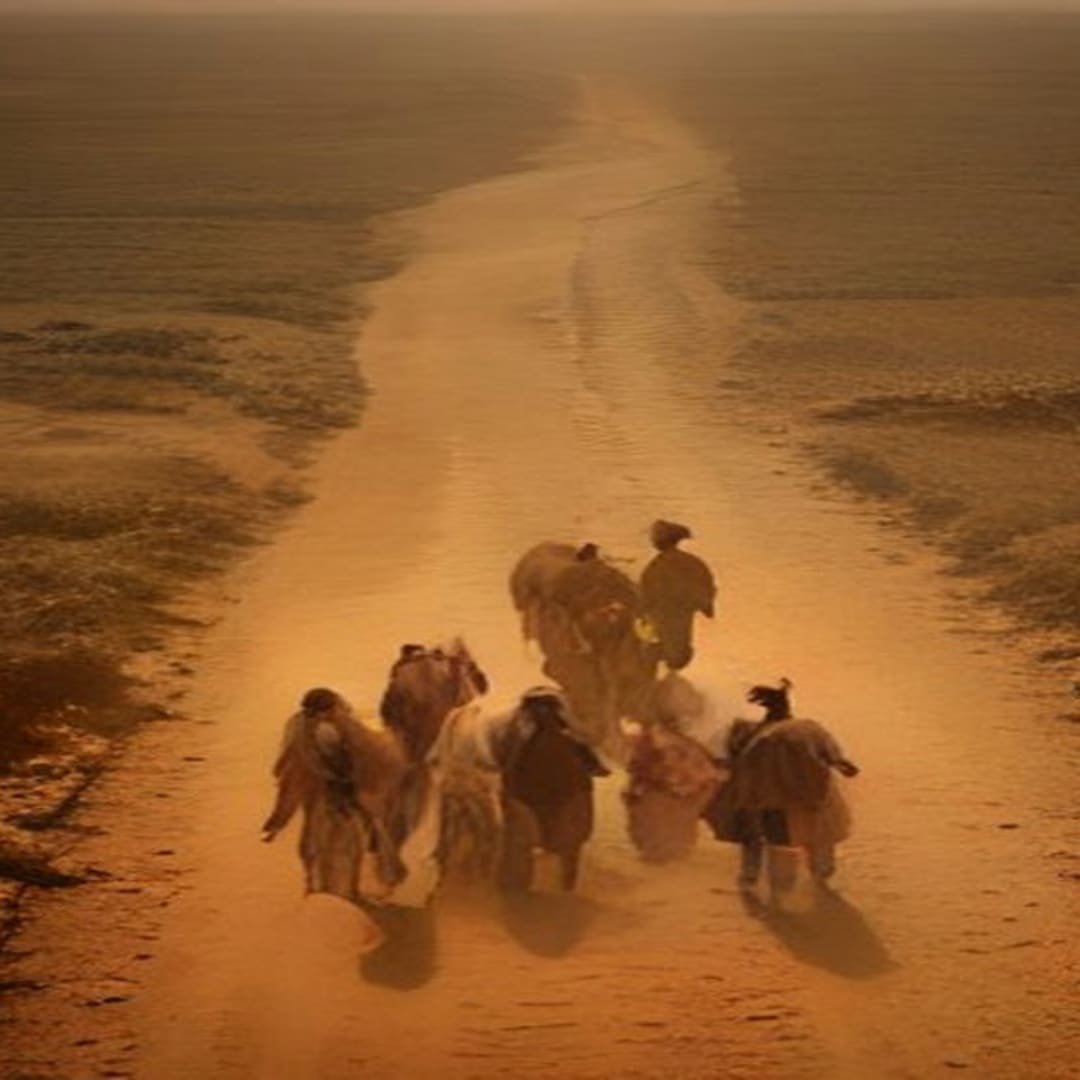
The dust swirled around Narayan Rao's worn chappals, a familiar dance of despair in his village of Wadgaon, Latur district. For generations, the land had fed his family, a patchwork of jowar and bajra reliant on the capricious monsoon. But this year, like so many before, the rains had either failed completely or arrived in violent, unseasonal bursts, washing away topsoil and hope. His well, once a reliable source, was a gaping maw of cracked earth.
The scorching October sun, even now in late 2026, felt like a judgment, searing away any lingering optimism. “There’s nothing left here for us,” Narayan had told his wife, Meena, his voice hollow. Their two children, barely teenagers, watched silently as their parents packed the meager belongings. Their destination: Pune, a city Narayan had only ever visited for a day, a sprawling metropolis promising work – any work – for hands accustomed to the soil.
They were not alone. Across Marathwada, a region once known as the heartland of Maharashtra, countless families like theirs were making the agonizing decision to abandon their ancestral homes, driven out by a climate crisis that had transformed their agricultural dreams into a dust-choked nightmare. ## The Parched Lands of Marathwada: A Climate Crucible Marathwada, encompassing eight districts including Latur, Osmanabad, and Beed, has long grappled with water scarcity. However, in the last decade, the situation has escalated from chronic to catastrophic.
Data from the India Meteorological Department (IMD) shows a consistent pattern of below-average rainfall coupled with increasingly intense heatwaves. Average temperatures in the region have risen by over 1. 5°C in the past century, a seemingly small number with devastating consequences on the ground. This warming intensifies evaporation, dries up reservoirs, and stresses groundwater resources, which are already over-exploited.
Farmers, once resilient, are now facing a triple whammy: erratic monsoons leading to crop failures, prolonged dry spells that deplete water sources, and extreme heat that wilts any surviving plants and makes agricultural labor unbearable. The region’s reliance on rain-fed agriculture, primarily for crops like cotton, pulses, and oilseeds, makes it acutely vulnerable. Even government initiatives, such as Maharashtra's ambitious **Jalyukta Shivar Abhiyan**, aimed at making villages drought-free through water conservation, have struggled to deliver sustained relief in the face of these extreme climatic shifts. While some villages saw improvement, many others found their efforts overwhelmed by successive years of poor rainfall and intense heat, rendering check dams and farm ponds dry.
## A Journey of Desperation: The Faces of Displacement For families like Narayan’s, migration isn't a choice; it’s a desperate survival strategy. They become India's unseen climate migrants, moving from rural hinterlands to already strained urban centers. The journey itself is fraught with peril. Many travel on overcrowded buses or trains, carrying their few possessions and even fewer certainties.
Upon arrival, they often find themselves in the informal economy, working as daily wage laborers in construction, street vending, or domestic help – jobs that are precarious, low-paying, and offer no social security. “In Wadgaon, at least we had our dignity, our land,” Meena reflects, as she washes dishes in a cramped Pune chawl, earning a fraction of what her husband makes at a construction site. “Here, we are just another face in the crowd, often looked down upon. But what choice did we have?
To starve? ” Their children, too, often become part of the labor force, sacrificing education for meager earnings. Studies by organizations like the **Internal Displacement Monitoring Centre (IDMC)** highlight that India consistently ranks among the top countries globally for internal displacement due to disasters and climate-related events. While precise figures for climate-induced migration are hard to disaggregate from general economic migration, anecdotal evidence and local surveys suggest a dramatic surge in recent years.
Researchers estimate that millions have already been displaced by climate impacts in India, and these numbers are projected to rise exponentially as the crisis deepens. ## The Unseen Tsunami: India's Internal Climate Migration This internal migration is more than just a demographic shift; it's a profound societal transformation. It’s a silent tsunami, slowly but surely altering the social fabric of both sending and receiving regions. Rural areas lose their youth and vitality, leading to an aging population and a decline in agricultural productivity.
Urban areas, meanwhile, face immense pressure on resources – housing, sanitation, water, and public health infrastructure already struggling to keep pace with organic growth. Furthermore, climate migrants often find themselves in a legal and social limbo. Unlike refugees crossing international borders, internal migrants often lack specific legal protections or dedicated support systems. They fall between the cracks of existing welfare schemes, designed for settled populations.
This vulnerability exposes them to exploitation, discrimination, and a perpetual cycle of poverty, perpetuating inequalities. ## Straining the Urban Fabric: A City's Burden Cities like Pune, Mumbai, and Aurangabad, already densely populated, bear the brunt of this influx. Informal settlements expand, basic services are stretched to breaking point, and competition for low-skilled jobs intensifies. The lack of adequate housing pushes families into precarious living conditions, often in flood-prone areas or near industrial zones, exposing them to further environmental hazards and health risks, including respiratory illnesses from poor air quality and waterborne diseases due to inadequate sanitation.
This creates a vicious cycle where climate migrants, fleeing one form of environmental adversity, often land in another. Experts at the National Institute of Urban Affairs (NIUA) have repeatedly called for integrated urban planning that accounts for climate-induced migration. “We cannot continue to plan our cities as if they exist in a vacuum,” states Dr. Priya Sharma, a lead researcher at NIUA.
“The climate crisis in rural India is directly impacting our urban centers. We need robust data, dedicated funds, and innovative policy solutions to manage this transition humanely and sustainably. ” ## Beyond Reactive Aid: Building Resilience and Policy Addressing Marathwada's exodus, and indeed India's broader climate migration challenge, requires a multi-pronged approach: 1. **Strengthening Rural Resilience:** Investment in climate-resilient agriculture, including drought-resistant crop varieties, precision irrigation techniques, and agroforestry models.
Crucially, decentralized water management, leveraging traditional knowledge alongside modern technology, is vital. Community-led initiatives for watershed development and groundwater recharge must be scaled up and supported. The focus must shift from merely providing relief to building long-term adaptive capacity. 2.
**Rural Economic Diversification:** Beyond agriculture, developing non-farm livelihoods in rural areas can reduce reliance on climate-vulnerable sectors. Skill development programs tailored to local resources and markets, promoting rural entrepreneurship, and improving access to credit can create viable alternatives to migration. 3. **National Climate Migration Policy:** India urgently needs a comprehensive national policy framework that recognizes climate-induced internal displacement.
This policy should focus on early warning systems, planned relocation where necessary, dignified rehabilitation, access to basic services and social protection for migrants, and support for their integration into destination areas. It must distinguish climate migrants from other migrant groups and address their unique vulnerabilities. 4. **Integrated Urban Planning:** Destination cities need forward-looking urban planning that anticipates and accommodates migration flows.
This includes investing in affordable housing, expanding public services, strengthening social safety nets, and creating opportunities for skill development and formal employment for migrant populations. Recognizing migrants as assets rather than burdens is crucial for equitable urban development. ## A Future on the Move: A Call for Proactive Action Narayan and Meena’s story is a microcosm of a larger national narrative unfolding across India. The rising temperatures, erratic rainfall, and environmental degradation are not distant threats; they are here, now, reshaping lives and landscapes.
The decision to leave one's home, one's history, is perhaps the most profound impact of the climate crisis. As an environmental journalist for Environment Warrior, I urge policymakers, urban planners, and civil society to look beyond the immediate symptoms and address the root causes of climate migration. India's future depends not just on mitigating emissions, but also on building a compassionate and just framework for those already on the move, ensuring their survival and dignity in a warming world. The time to act is now, before the silent exodus becomes an overwhelming torrent, fundamentally altering the very fabric of our nation.