Climate Change
Maharashtra's Green Chill: Solar Cold Storage Warms Farmer Incomes
Decentralized solar cold storage units are revolutionizing post-harvest management, bolstering resilience for Maharashtra's small farmers.
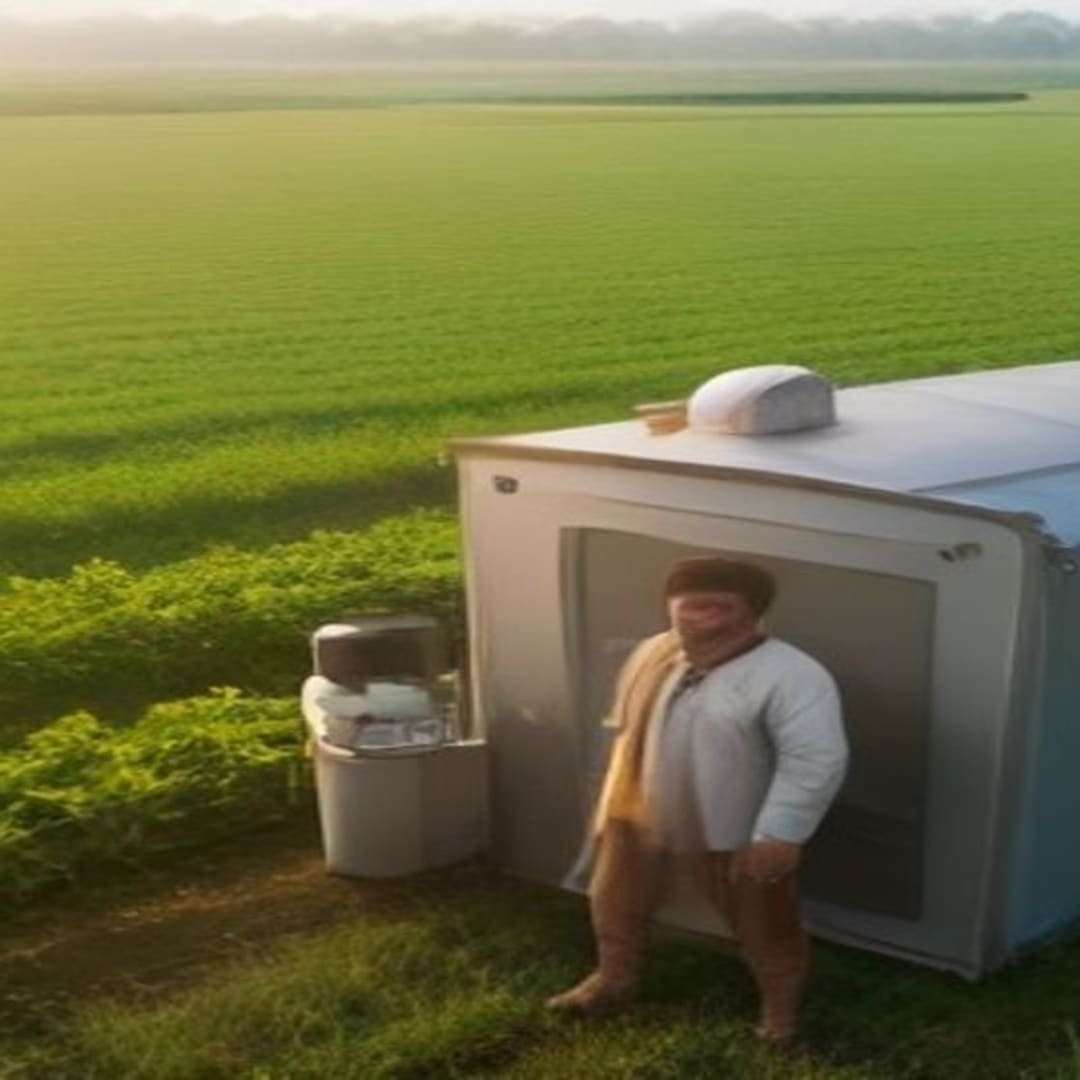
## From Field to Fortune: How Solar Cold Storage is Empowering Maharashtra's Farmers The searing heat of a September afternoon in Nashik, Maharashtra, often brought a familiar dread to Lata Devi. Her small plot, a vibrant tapestry of fresh grapes and onions, was her family's lifeline. But the scorching sun, coupled with unpredictable monsoons, meant a race against time once her harvest was in. "We would pick the grapes, and within hours, the heat would begin its work," she recounts, her voice etched with past anxieties.
"Selling immediately, often at throwaway prices to middlemen, was our only option. If we waited, spoilage was certain. The weather wasn't just affecting our crops in the field; it was stealing our earnings after harvest. " Lata's story is not unique.
Across India, millions of small and marginal farmers grapple with a silent adversary: post-harvest loss, a crisis exacerbated by the escalating climate emergency. As India navigates record temperatures and erratic weather patterns in 2026, the vulnerability of its agricultural backbone becomes painfully clear. However, amidst these challenges, a quiet revolution powered by the sun is taking root in rural Maharashtra, promising a cooler future for its farmers: decentralized solar-powered cold storage. ## The Unseen Harvest: Climate's Toll on India's Food Supply India's agricultural sector, employing over half its workforce, is on the frontlines of the global climate crisis.
While rising temperatures and unpredictable monsoons directly impact crop yields, the post-harvest phase often receives less attention, yet it's equally critical. According to a report by the Indian Council of Agricultural Research (ICAR), post-harvest losses for fruits and vegetables alone can range from 4. 6% to 15. 9%, translating to billions of dollars wasted annually.
For highly perishable commodities like grapes, tomatoes, and leafy greens, this figure can be even higher. The sheer volume of this waste is staggering, enough to feed millions, and it undermines both farmer incomes and national food security. In a warming world, this challenge intensifies. Higher ambient temperatures accelerate ripening and decay, create ideal conditions for pests and pathogens, and increase the energy required for traditional cooling.
Moreover, the lack of reliable grid electricity in many remote agricultural pockets means farmers often rely on expensive, polluting diesel generators for any cooling needs, if they can afford it at all. ## A Ray of Hope: Decentralized Solar Cold Storage The solution emerging from the confluence of India's renewable energy push and agricultural innovation is the modular, solar-powered cold storage unit. These compact, off-grid systems are designed specifically for rural environments, offering a robust and sustainable alternative to conventional cold chains that often bypass small farmers. Unlike large, centralized cold storage facilities located near urban centers, these units can be installed directly in farming communities, even at village level collection points or within Farmer Producer Organizations (FPOs).
They harness solar energy through photovoltaic panels, storing it in batteries to ensure continuous operation, day and night, regardless of grid availability. This autonomy is a game-changer for regions plagued by unreliable power supply. For Lata Devi and her neighbors in Nashik, the introduction of a community solar cold storage unit facilitated by a local FPO, supported by initiatives under the **Pradhan Mantri Kisan Sampada Yojana (PMKSY)'s Scheme for Cold Chain, Value Addition and Preservation Infrastructure**, transformed their harvest strategy. "Before, we had to sell everything the day it was picked," she explains.
"Now, we can store our grapes for a week, sometimes even ten days. This gives us time to find better buyers, negotiate fair prices, and avoid distress sales. " ## Beyond Preservation: Economic Empowerment and Market Access The impact of solar cold storage extends far beyond merely preventing spoilage. It fundamentally alters the economic landscape for small farmers: 1.
**Price Negotiation Power:** Farmers are no longer forced to accept low prices from middlemen immediately after harvest, when supply is abundant. They can store their produce and release it to the market when prices are more favorable, significantly increasing their profit margins. 2. **Extended Market Reach:** With longer shelf life, farmers can transport their goods to more distant markets, expanding their customer base and reducing reliance on local, often monopolized, channels.
3. **Reduced Waste, Increased Income:** Every kilogram saved from spoilage translates directly into income. This tangible reduction in losses builds economic stability and encourages more diversified, high-value crop cultivation. 4.
**Women's Empowerment:** In many rural households, women play a crucial role in post-harvest activities. Access to reliable cold storage reduces their manual labor burden and enhances their economic agency by enabling them to participate more effectively in value-added activities and market engagement. Organisations like **NABARD (National Bank for Agriculture and Rural Development)** have been instrumental in promoting such infrastructure, often providing financial assistance and capacity building to FPOs to adopt these technologies. Their focus on holistic rural development sees decentralized cold chains as vital for improving farmer livelihoods and strengthening the agricultural value chain.
## Scaling Up Resilience: Challenges and the Path Forward While the promise of solar cold storage is immense, scaling up its adoption across India presents its own set of challenges. **Capital Costs:** Despite long-term savings, the initial investment for solar cold storage units can be substantial for individual small farmers. Innovative financing models, including subsidies, low-interest loans, and leasing options, are crucial to make these units accessible. **Technical Expertise and Maintenance:** The long-term viability of these systems depends on proper installation, operation, and maintenance.
Training local technicians and establishing robust service networks are essential. **Awareness and Adoption:** Many farmers remain unaware of the benefits or feasibility of such technologies. Extensive outreach and demonstration programs are needed to build trust and encourage widespread adoption. **Integration with Existing Supply Chains:** For maximum impact, these decentralized units need to be seamlessly integrated into broader cold chain logistics, connecting village-level storage to larger transportation networks and processing centers.
Progress is being made. Companies specializing in sustainable cold chain solutions, often collaborating with NGOs like **SELCO Foundation**, are developing smaller, more affordable, and user-friendly units. These innovations, coupled with government support through schemes like PMKSY, are steadily building momentum. ## A Cooler, More Prosperous Future Lata Devi, now a vocal advocate for solar cold storage in her community, reflects on the change.
"My earnings have gone up by nearly 25% this season," she proudly states. "I can now afford to send my children to a better school and even save a little for unforeseen circumstances. " Her experience underscores the profound impact of this technology. The expansion of solar energy in rural India is not just about providing clean electricity; it is about building resilience against the intensifying climate crisis, empowering communities, and fostering economic prosperity from the ground up.
As India charts its course through a warming world, embracing decentralized, renewable-powered solutions like cold storage will be key to securing its agricultural future and ensuring that the bounty of its fields translates into sustainable livelihoods for millions. The sun, once a harbinger of spoilage, is now illuminating a path to prosperity for India's farmers, one cool storage unit at a time.