Climate Change
Kutch's Maldharis: Climate's Scorched Pastures, Fading Livelihoods
Gujarat's nomadic pastoralists face existential threat as extreme heat and erratic monsoons devastate Banni grasslands.
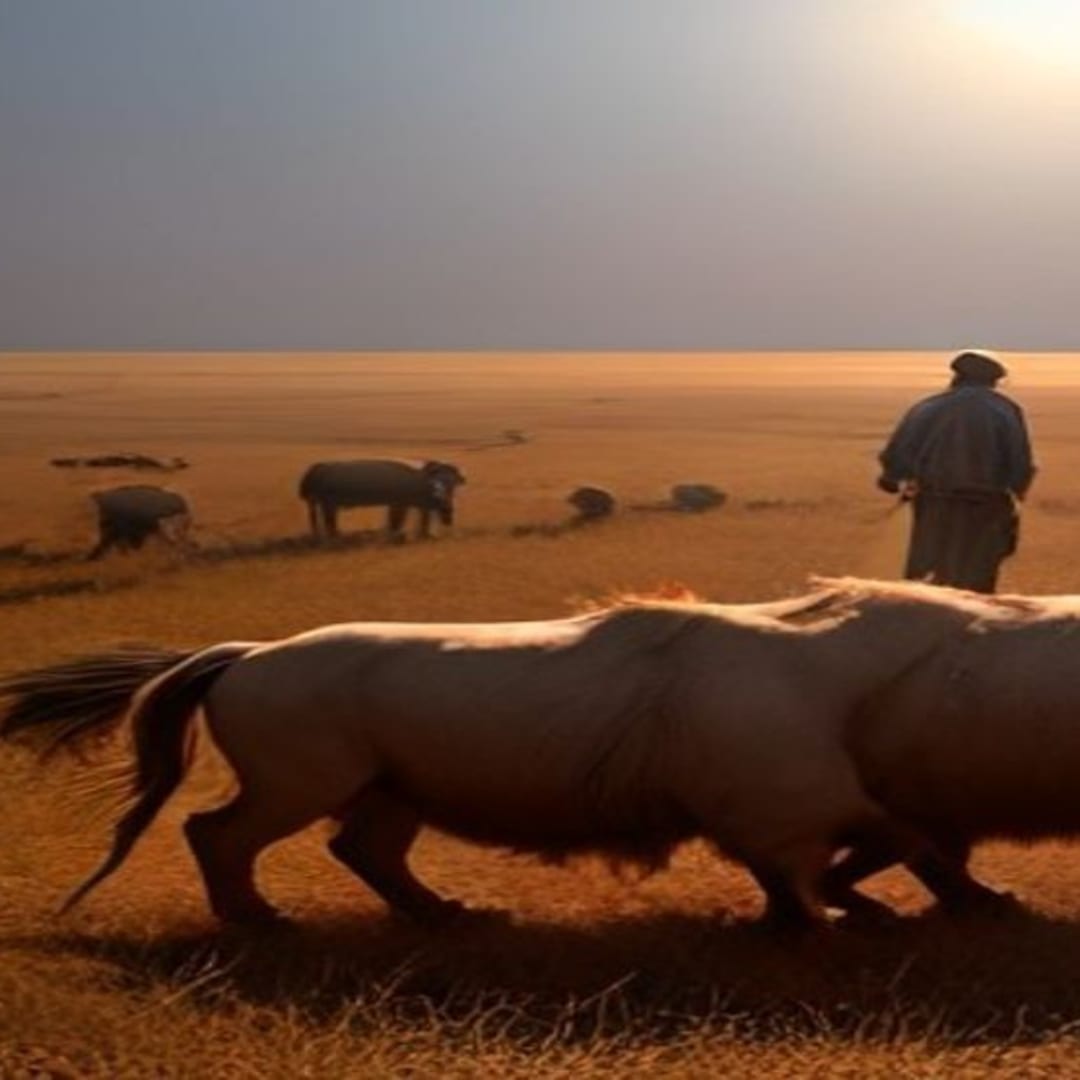
The air shimmered above the cracked earth of the Banni grasslands, a familiar mirage of hope in a landscape increasingly defined by despair. Rabari Khetabhai, his face etched with the wisdom of generations spent under the Kutch sun, squinted at the horizon. His herd of Banni buffalo, once plump and productive, now looked gaunt, their ribs more prominent than their udders. "The Banni is thirsty, and so are we," he murmured, his voice raspy from the dust and the worry that had become his constant companion.
"The rains, they play hide-and-seek. When they come, it's a deluge that washes everything away. When they don't, the land cracks open like a broken promise. " Today, 24 September 2026, Khetabhai's struggle is a microcosm of a larger crisis unfolding across India's climate-vulnerable regions.
While headlines scream of record temperatures and dangerous AQI levels in urban centres, a quieter, yet equally devastating, battle is being fought on the fringes – in the arid, ecologically sensitive zones where traditional communities like the Maldharis of Kutch cling to a way of life that climate change is systematically eroding. ## The Heart of Kutch: Banni and its Guardians Kutch, Gujarat's westernmost district, is home to the majestic Banni grasslands, one of Asia's largest tropical grasslands. This unique ecosystem, spread over approximately 2,600 square kilometres, is a critical wetland and a biodiversity hotspot, sustaining a diverse range of flora and fauna, alongside its most iconic inhabitants: the Maldhari pastoralist communities. For centuries, the Maldharis, comprising various groups like the Rabaris, Jats, Mutwas, and others, have practiced a sophisticated system of nomadic and semi-nomadic pastoralism, intricately linked to the Banni's seasonal cycles.
Their Banni buffalo, a robust indigenous breed known for its high milk yield and resilience in harsh conditions, is the cornerstone of their economy and cultural identity. Their lives revolve around the rhythm of their livestock, the migration routes, and the deep, inherited knowledge of the land, its pastures, and its scarce water sources. However, this delicate balance is now being brutally disrupted by the unprecedented acceleration of India's climate crisis. The twin threats of escalating heat and increasingly erratic monsoon patterns are delivering a one-two punch that threatens to deliver a knockout blow to the Maldhari way of life.
## Climate's Dual Assault: Scorching Heat and Wayward Rains ### The Blistering Heatwave India in 2026 is experiencing some of its highest temperatures on record, and Kutch, already a hot region, is bearing the brunt. Average summer temperatures in Kutch have risen by nearly 1. 5-2 degrees Celsius over the last two decades, with extreme heat events becoming more frequent and intense. These prolonged heatwaves scorch the Banni's grasses, turning once-lush pastures into brittle stubble long before the monsoon's expected arrival.
The nutritional value of the remaining fodder diminishes drastically, leading to widespread malnutrition among livestock. "Our buffaloes are suffering from severe heat stress," explains Dr. Gaurav Sharma, a veterinarian working with the local NGO Sahjeevan, which has long supported pastoralist communities in Kutch. "Milk production drops significantly, sometimes by as much as 30-40% during peak summer.
Reproduction rates decline, and the animals become more susceptible to diseases. We're seeing increased mortality rates, especially among calves and older animals, simply due to exhaustion and dehydration. A Banni buffalo is resilient, but there's a limit to how much it can endure. " ### The Erratic Monsoon Gamble Compounding the heat is the increasingly unpredictable nature of the monsoon.
Historically, the Banni's ecosystem relied on steady, albeit brief, monsoon rains for its regeneration. But recent years have witnessed a dramatic shift. Rainfall is either delayed, arriving weeks after the usual schedule, or it comes in short, intense bursts that lead to flash floods and rapid runoff, rather than gradual soil absorption. This means less water percolates into the ground to recharge shallow aquifers and fill traditional water bodies (locally known as `virdas` and `talavs`), which are crucial for both human and animal consumption.
"Last year, we waited, and waited, and the monsoon barely trickled," recounts Jamabhai, another Maldhari elder. "This year, it came late, and then poured so much in three days that it flooded our temporary settlements, but the water didn't stay. It just ran off into the Rann. The ground beneath remains dry, and the grasses struggle to grow back properly because the moisture isn't retained.
" The combined effect of scorched pastures and water scarcity forces Maldharis to embark on earlier, longer, and riskier migrations. Traditional migration routes, once well-understood and resourced, are now often barren, leading to conflicts with settled farmers over grazing rights and increased stress on the already struggling herds. ## A Culture on the Brink: Economic Strain and Erosion of Identity The economic ramifications for Maldhari families are dire. Reduced milk production means a direct hit to their primary income.
The cost of supplementary feed, which they must purchase from outside the Banni, has skyrocketed, further squeezing their already tight budgets. Veterinary expenses for heat-stressed or ailing animals add another burden. Many are forced to sell off their precious livestock at distress prices, decimating their only asset and a generational inheritance. Beyond the immediate financial impact, the climate crisis is chipping away at the very foundations of Maldhari culture.
Their identity is intrinsically tied to their animals and their nomadic lifestyle. The forced sedentary existence, or the increasingly desperate search for new pastures, disrupts traditional social structures, knowledge transfer between generations, and their unique oral traditions. Children are pulled out of local schools to assist with migrations, further entrenching cycles of poverty and limiting future opportunities. "Our children are not learning the old ways of reading the land, predicting the rains, or knowing every plant in the Banni," laments Khetabhai.
"They just see the hardship. Many are leaving for towns, working as daily wage labourers. Who will be left to care for the buffaloes? Who will know the songs of the Banni?
" ## Towards Resilience: A Path Forward? The challenges faced by the Maldharis demand urgent and multifaceted interventions. Organizations like Sahjeevan have been instrumental in advocating for the recognition of pastoralist rights, promoting indigenous fodder species, and facilitating access to water resources through community-led initiatives. However, the scale of the climate crisis necessitates broader policy action.
There is a critical need for a more comprehensive national policy framework that specifically addresses the vulnerabilities of pastoralist communities, securing their traditional grazing rights, ensuring access to common property resources, and integrating their indigenous knowledge into climate adaptation strategies. Investment in localized, climate-resilient agriculture and animal husbandry practices, coupled with robust early warning systems for extreme weather, could offer a lifeline. Furthermore, exploring alternative livelihood options that complement, rather than replace, pastoralism – such as value addition to milk products, ecotourism that respects their traditions, or skilled trades that can be practiced seasonally – could provide much-needed economic diversification. The Gujarat government, through its various rural development schemes, has the potential to focus more acutely on these highly vulnerable communities, perhaps establishing dedicated fodder banks during dry spells or supporting water harvesting structures that are relevant to their nomadic patterns.
The plight of Kutch's Maldharis is a stark reminder that climate change is not a distant threat; it is a present reality that is redrawing the socio-economic and cultural map of India. As the mercury climbs and the monsoons become ever more erratic, ensuring the survival of communities like the Maldharis is not just about preserving a unique culture; it's about safeguarding biodiversity, traditional ecological knowledge, and the very fabric of India's diverse human landscape. Their resilience, honed over centuries, is now being pushed to its breaking point. The time for decisive action, rooted in deep understanding and respect for their way of life, is now, before the Banni's ancient songs fall silent forever.