Climate Change
India's Water Warriors: Uniting Tradition & Tech for a Thirsty Nation
From ancient stepwells to modern solar canals, India mobilizes a nationwide effort to secure its water future amidst a looming monsoon deficit.
## India's Urgent Call to Action: Securing Our Water Future **New Delhi, 29 July 2026** – As the monsoon clouds play hide-and-seek, leaving a nationwide cumulative rainfall deficit hovering at a concerning 15%, India finds itself at a critical juncture. Prime Minister Narendra Modi's urgent pitch for water conservation resonates across the nation, underscoring a stark reality: water security is not merely an environmental concern, but a foundational pillar for national resilience and prosperity. Yet, amidst this challenge, a powerful narrative of hope and proactive action is unfolding – a testament to India's holistic, multi-pronged strategy to safeguard its most precious resource. From the highest echelons of government policy to the tireless efforts of grassroots 'water warriors', India is demonstrating an unparalleled commitment to sustainable water management.
This isn't just about managing a crisis; it's about building a sustainable future by seamlessly blending ancient wisdom with modern innovation, empowering communities, and instilling a deep sense of environmental responsibility, particularly among its youth. ## The 'Catch the Rain' Imperative: A National Movement for Groundwater Recharge At the heart of India's contemporary water strategy lies the ambitious 'Catch the Rain' campaign, a pioneering initiative reinforced by AMRUT 2. 0. This national movement, championed by the Government of India, is a clarion call to action: to conserve water wherever and whenever it falls.
Minister of State for Housing and Urban Affairs, Tokhan Sahu, recently underscored the campaign's vitality in a review meeting at Sankalp Bhawan, New Delhi, emphasizing the critical role of scientific innovation, traditional wisdom, and robust community involvement. The campaign's focus on urban groundwater recharge is particularly crucial in a rapidly urbanizing nation. India has boldly expanded its urban groundwater recharge programme to 75 cities, a significant step towards bolstering urban water security. This initiative aims to address the twin challenges of depleting groundwater levels and increasing urban water demand.
Through a combination of rainwater harvesting structures, rejuvenation of traditional water bodies, and the adoption of modern recharge techniques, 'Catch the Rain' is transforming how India's cities interact with their water sources, moving towards a more sustainable and self-reliant model. The integration of scientific methodologies with time-tested community practices is key to ensuring the longevity and effectiveness of these projects, promising a future where urban landscapes are not just consumers, but active contributors to water replenishment. ## Reviving Ancient Lifelines: The Power of Traditional Wisdom While modern science offers innovative solutions, India's rich heritage of water management provides invaluable blueprints. Generations of communities developed intricate systems to harvest, store, and manage water, often with profound ecological sensitivity.
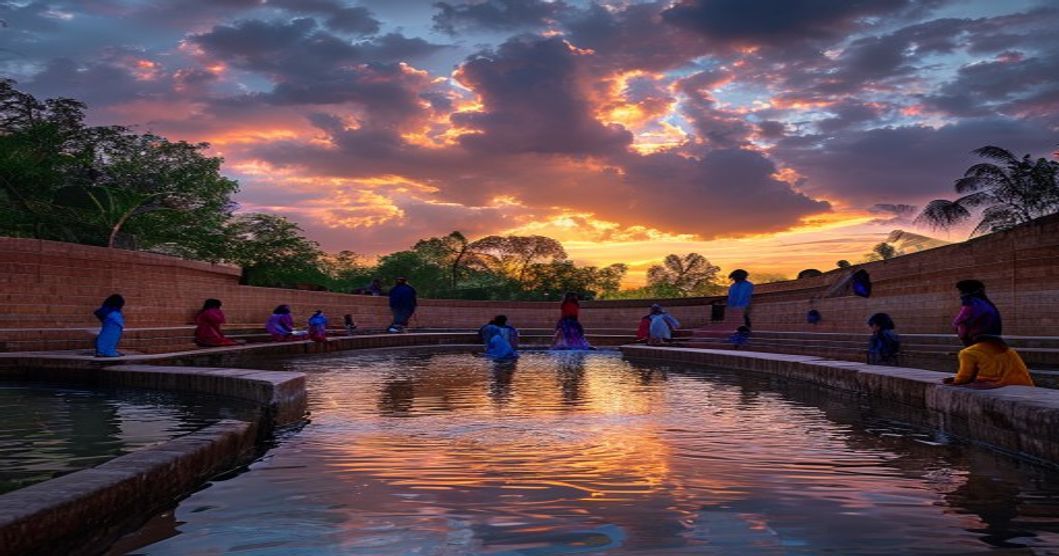
Today, these traditional knowledge systems are being revitalized, proving their enduring relevance. A shining example of this resurgence is the remarkable work of Caron Rawnsley, an 80-year-old Irishman affectionately known as 'Paagal Saab' in Jodhpur. For over a decade, Rawnsley has dedicated his life to restoring the city's forgotten bawris (stepwells) and jhalaras (tanks). His tireless, seemingly 'mad' obsession began after he fell in love with Rajasthan's architectural treasures.
Anand Mahindra's recent praise for Rawnsley highlights not just an individual's selfless passion, but the immense value in preserving these historical structures. These ancient water bodies are not merely relics; they are vital arteries for groundwater recharge and local water supply, embodying sustainable water management principles that predate modern engineering. Minister Sahu's emphasis on bringing scientific innovation together with traditional knowledge developed by communities over generations perfectly encapsulates this dual approach. The revival of bawris, johads, and other indigenous systems serves as a powerful reminder that sometimes, the best solutions lie in looking back, adapting, and integrating with what has worked for centuries.
These efforts not only conserve water but also preserve cultural heritage and foster a deep connection between communities and their local environment. ## Innovation on the Frontlines: Smart Solutions for Water Security Beyond traditional methods, India is also embracing cutting-edge technological innovations to enhance its water conservation efforts. A standout example is Gujarat's pioneering canal-top solar project. This ingenious initiative demonstrates how multiple environmental benefits can be achieved simultaneously: generating renewable energy without consuming valuable farmland, and, crucially, saving an astonishing 9 million liters of water annually by reducing evaporation from the canals.
This synergy between solar power generation and water conservation offers a scalable model for other regions, showcasing how smart infrastructure can address energy and water needs concurrently. Such projects are emblematic of India's commitment to leveraging scientific advancements for sustainable development. From advanced water treatment technologies to remote sensing for monitoring water bodies and optimizing irrigation, innovation is a key driver. These technologies provide precise data, enable efficient resource allocation, and offer novel ways to protect and augment water resources, ensuring that India's growing population has access to clean and sufficient water.
## The Power of People: Community, Students, and a Collective Ethos Ultimately, no policy or technology can succeed without the active participation and ownership of its people. The call for water conservation is resonating deeply within communities, fostering a collective ethos of responsibility. Dr. Inderjit Kaur, president of the All India Pingalwara Charitable Society, Amritsar, powerfully articulated this when she urged students to make environmental conservation their "true wealth.
" Her demand for the urgent protection of the environment, specifically asking students to actively safeguard water, air, and nature by completely shunning single-use plastics and polythene bags, highlights the critical role of youth. Engaging students and the broader community is paramount. When environmental awareness is instilled from a young age, it fosters lifelong habits of responsible stewardship. Shunning single-use plastics, participating in local clean-up drives, adopting rainwater harvesting at home, or simply being mindful of water usage – these individual actions, when multiplied across a billion-plus population, create an unstoppable wave of positive change.
The 'Paagal Saab' phenomenon in Jodhpur further exemplifies the profound impact an individual, supported by the community, can have on local water heritage. These stories are not outliers; they are inspiring beacons for a nationwide movement. ## A Sustainable Future Through Shared Responsibility As India navigates the complexities of climate change, population growth, and erratic monsoons, the journey towards water security is continuous and multifaceted. The nationwide monsoon deficit serves as a potent reminder of the urgency, but also galvanizes collective action.
India's strategy – a dynamic blend of ambitious government campaigns like 'Catch the Rain' and AMRUT 2. 0, the revival of traditional wisdom, the deployment of cutting-edge scientific innovations, and the indispensable power of community and youth engagement – offers a robust framework. It's a model that recognizes the interconnectedness of environmental challenges and champions a holistic approach. For "Environment Warrior" readers, the message is clear: India's water future is being written today, not just in policy documents, but in every conserved drop, every revived stepwell, and every conscious choice made by its citizens.
It is a testament to the fact that environmental conservation is indeed the true wealth, not just for high-thinking students, but for an entire nation striving for a sustainable tomorrow.