Climate Change
India's Water Crisis: From Bawris to RWH, A Nation Fights Back
Amidst monsoon deficit warnings, communities, corporations, and policies unite to champion water conservation across India.
## India's Water Lifeline: A Collective Call to Action Amidst Scarcity **July 11, 2026** – The monsoon, often celebrated as India's lifeblood, is once again casting a shadow of concern across the nation. Just days into July, the India Meteorological Department (IMD) has issued a stark warning: rainfall for this crucial month is likely to be below 94 percent of the long period average. This follows a June that ended with a troubling 40 percent deficit, signaling a potential weak monsoon season, exacerbated by the lingering specter of El Niño. For a country where agriculture feeds millions and daily life hinges on water availability, these forecasts are not mere statistics; they are a clarion call for urgent, collective action.
At "Environment Warrior," we've always believed that challenges, however daunting, ignite the spirit of innovation and resilience. And across India, that spirit is burning bright. From octogenarian Irishmen tirelessly restoring ancient stepwells to smart cities incentivizing rainwater harvesting, and from corporate giants partnering with communities to cutting-edge modular technologies, India is rallying. This isn't just about surviving a dry spell; it's about fundamentally rethinking our relationship with water, embedding conservation into our very ethos, and building a sustainable future.
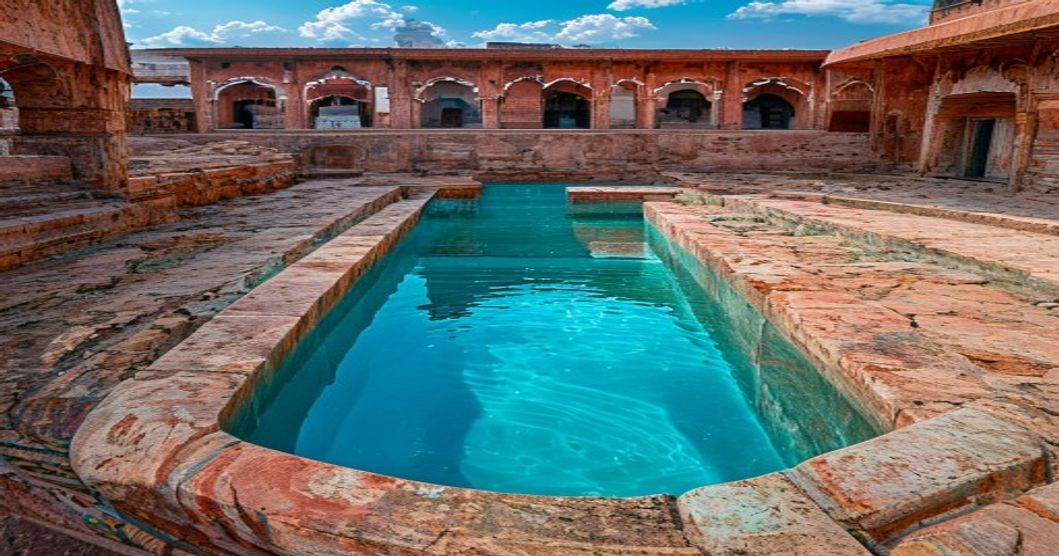
Let's delve into the inspiring efforts that are redefining India's water narrative. ## The Unsung Heroes: Reviving Ancient Lifelines with Modern Urgency In the sun-baked heart of Rajasthan, an extraordinary story unfolds. At 80 years old, Caron Rawnsley, an Irishman affectionately known as 'Paagal Saab' (mad sir) by the locals, has made Jodhpur's forgotten bawris (stepwells) and jhalaras (traditional tanks) his life's obsession. For over a decade, this indefatigable conservationist has dedicated himself to cleaning and restoring these architectural marvels, which once served as vital water sources for the desert city.
His journey began as a tourist, captivated by Rajasthan's heritage, and evolved into a profound mission to preserve India's past for its future. Rawnsley's tireless efforts highlight a critical truth: traditional water harvesting structures are not mere relics; they are ingenious, sustainable solutions perfectly adapted to local climates. Their restoration isn't just about heritage preservation; it's about reactivating ancient, decentralized water management systems that can significantly enhance groundwater recharge and provide local water security. Recently, industrialist Anand Mahindra lauded Rawnsley's selfless passion, bringing much-deserved national attention to the 'Paagal Saab' and, by extension, to the immense value of India's traditional water infrastructure.
His work is a powerful reminder that sometimes, the most impactful solutions lie in looking back, coupled with an unwavering commitment to the present. ## Community and Corporate Synergy: Puducherry's Restoration Story While individual passion can spark change, large-scale impact often requires collaboration. This was beautifully demonstrated on July 3rd in Pooranankuppam village, Puducherry, where Union Finance Minister Smt. Nirmala Sitharaman inaugurated the newly restored Muzhiyan Kulam.
This traditional water body, brought back to life through a commendable partnership, stands as a testament to what can be achieved when diverse stakeholders unite for a common environmental cause. Leading the charge was Lumina Datamatics, a global strategic partner in publishing and eCommerce, working hand-in-hand with the Dhanasundarambal Charitable Society, local community members, and public representatives. Their objective was clear: to revive the kulam (pond) and strengthen water conservation efforts in the region. Such public-private-community partnerships are the bedrock of sustainable development.
Corporations bring resources and organizational capacity, NGOs provide grassroots connectivity and expertise, and local communities offer invaluable traditional knowledge and ownership. The Muzhiyan Kulam project serves as a powerful blueprint for how India can restore its countless neglected ponds, lakes, and other water bodies, transforming them from stagnant forgotten spaces into vibrant, functional ecosystems that serve both people and nature. ## Incentivizing Sustainable Practices: Indore's Smart Move Towards Water Security Beyond restoration, proactive measures and smart policy are crucial. Indore, a city that has repeatedly earned the title of India's cleanest city, is now pioneering an innovative approach to water conservation.
Mayor Pushyamitra Bhargav recently announced a significant incentive for homeowners: a 10% reduction in property tax for those who install and maintain functional rainwater harvesting (RWH) systems. This initiative is a brilliant example of how policy can drive behavioral change and foster environmental responsibility. By offering a tangible financial benefit, Indore is directly encouraging its citizens to become active participants in groundwater recharge and water conservation. The rebate, contingent on inspection and certification by the Municipal Corporation, ensures the efficacy and continued operation of these systems.
It's a true "win-win": homeowners save money, and the city benefits from enhanced water security, reduced strain on municipal supplies, and a healthier groundwater table. As urban centers across India grapple with water scarcity, Indore's model offers a scalable and replicable solution that other cities would do well to emulate, transforming environmental stewardship into an economically attractive proposition. ## Technological Frontlines: Modular Rainwater Harvesting for a Modern India While traditional wisdom and policy incentives are vital, technology plays an indispensable role in scaling up water conservation efforts to meet the demands of a rapidly urbanizing and growing nation. Companies like InRain® Construction Pvt.
Ltd are at the forefront of this technological revolution, offering advanced modular rainwater harvesting systems that are changing the game. With declining groundwater levels and ever-increasing demand on water resources, sustainable water conservation is no longer an option but an absolute necessity. InRain®'s innovative modular technology provides efficient solutions for organizations, institutions, industries, and residential communities. These systems are designed to enhance groundwater recharge, effectively reduce urban runoff, and offer flexibility in installation and capacity.
By capturing and storing rainwater, these technologies not only supplement existing water sources but also mitigate flooding risks and reduce the burden on municipal water infrastructure. The adoption of such next-generation systems is critical for building resilient water management strategies that can withstand the pressures of climate change and rapid development, ensuring that every drop counts and is put to good use. ## The Monsoon's Urgent Message: Adapting to a Changing Climate The IMD's warnings of below-normal rainfall for July, coupled with the significant deficit in June, underscore the urgency of all these efforts. A weak monsoon, influenced by El Niño, has far-reaching consequences.
Farmers, already grappling with unpredictable weather patterns, must adopt water conservation measures and potentially adjust crop choices to mitigate losses. Urban centers face heightened water stress, impacting everything from daily household consumption to industrial operations. Power generation, heavily reliant on hydro sources, could also be affected, leading to potential shortages. This isn't an abstract environmental problem; it's a direct threat to livelihoods, health, and economic stability.
The fluctuating monsoon patterns are a stark manifestation of climate change, demanding a paradigm shift in how India manages its most precious resource. Every drop saved, every traditional water body restored, every rainwater harvesting system installed, and every policy incentivizing conservation contributes to building a collective buffer against these climatic shocks. Water conservation is no longer a niche environmental concern; it is a fundamental survival imperative for India. ## A Collective Reservoir of Hope: Charting India's Water-Secure Future The stories emerging from across India – from 'Paagal Saab's' solitary mission in Jodhpur to the collaborative restoration in Puducherry, from Indore's progressive policies to InRain®'s technological innovations – paint a picture of a nation awakening to its water challenges with resolve and ingenuity.
They demonstrate that there are multiple pathways to water security, each vital, and each reinforcing the other. As "Environment Warrior," we believe that India's future depends on a multi-pronged approach: reverence for traditional wisdom, robust community engagement, responsible corporate citizenship, visionary government policies, and the intelligent application of modern technology. The monsoon's uncertain dance serves as a powerful reminder that we cannot take water for granted. It is a shared resource, and its conservation is a shared responsibility.
By embracing these diverse strategies and fostering a culture of water stewardship, India can transform the threat of scarcity into an opportunity for resilience, ensuring a water-secure future for generations to come. The time to act is now; the future of our water, and our nation, depends on it.