Climate Change
India's Water Crisis: A Nation's Fight for Every Drop
From monsoon deficits to urban recharge, India mobilizes policy, innovation, and community for a sustainable water future.
Today, August 2, 2026, India faces a stark reality: a nationwide monsoon rainfall deficit exceeding 15%. Prime Minister Narendra Modi's urgent pitch for water conservation isn't just a seasonal plea; it's a clarion call echoing across a nation grappling with the dual pressures of climate change and rapid urbanization. As "Environment Warrior," India's leading environmental platform, we delve into the multifaceted efforts underway to secure India's most precious resource: water. The challenge is immense, but so too is the spirit of innovation, tradition, and community resolve that defines India's response.
From the highest echelons of government to the tireless work of individuals, a unified front is emerging to safeguard our aquatic future. ## Government's Proactive Stance: Policy and Innovation The Government of India has demonstrated a clear, unwavering commitment to water security through ambitious initiatives like the 'Catch the Rain' campaign and AMRUT 2. 0 (Atal Mission for Rejuvenation and Urban Transformation). These flagship programmes are not merely about infrastructure; they represent a holistic philosophy that intertwines scientific innovation with the deep well of traditional knowledge passed down through generations.
Minister of State for Housing and Urban Affairs, Tokhan Sahu, recently chaired a critical review meeting, underscoring the urgency and strategic importance of these efforts. His discussions with officials from the AMRUT Mission and the National Institute of Urban Affairs (NIUA) at Sankalp Bhawan, New Delhi, focused on the ambitious expansion of urban groundwater recharge programmes to 75 cities. This expansion is a testament to the government’s recognition that sustainable urban water management is intrinsically linked to replenishing our aquifers – the hidden reservoirs beneath our feet. Sahu rightly emphasized that India’s water-conservation strategy must be a symphony of the old and the new.
While cutting-edge hydrological science provides predictive models and efficient technologies, the time-honoured methods of rainwater harvesting, watershed management, and local tank systems, developed by communities over centuries, offer invaluable, context-specific solutions. The 'Catch the Rain' campaign, with its simple yet powerful slogan, encourages every citizen, every household, and every institution to actively participate in harvesting rainwater wherever and whenever it falls. This decentralized approach is vital in a country as vast and diverse as India, ensuring that water conservation isn't just a government mandate but a collective movement. ## Community and Youth Engagement: The Human Element The battle for water security cannot be won by policy alone; it demands a profound shift in societal mindset and active participation from all segments, especially the youth.
Dr. Inderjit Kaur, president of the All India Pingalwara Charitable Society, Amritsar, recently articulated this powerfully. Addressing students, she declared environmental conservation as the "true wealth" of high-thinking individuals, urging them to become active guardians of water, air, and nature. Her message was unequivocal: completely shun single-use plastics and polythene bags.
This call transcends mere waste management; it’s about reducing our ecological footprint, preventing plastic pollution from clogging our waterways, and fostering a culture of mindful consumption that directly impacts water quality and availability. Engaging students is paramount. They are not just the future custodians of our environment; they are powerful agents of change in the present. By instilling values of conservation and responsible living from a young age, India is cultivating a generation that understands the intrinsic link between a healthy environment and human well-being.
Their energy, idealism, and capacity for innovation are critical assets in translating national policies into grassroots action. ## Innovative Solutions on the Ground: Smart Infrastructure While traditional wisdom and community participation form the bedrock, modern innovation offers transformative solutions. A stellar example is Gujarat's pioneering canal-top solar power project. This ingenious initiative tackles multiple environmental challenges simultaneously.
By installing solar panels directly over irrigation canals, the project achieves several remarkable feats: Firstly, it generates clean, renewable energy without consuming valuable agricultural land, a critical consideration in a densely populated nation. This dual-use of infrastructure is a masterclass in resource efficiency. Secondly, and perhaps most importantly for our discussion on water, it significantly reduces water evaporation from the canals. The shade provided by the solar panels means that an astounding 9 million litres of water are saved annually – water that would otherwise be lost to the scorching sun.
This innovation showcases how integrated approaches can yield exponential benefits, contributing to both India's energy security and water conservation goals. Such projects serve as powerful blueprints for other states and nations facing similar resource constraints, demonstrating that sustainable development is not only possible but also economically viable. ## The Power of Passion and Traditional Wisdom: 'Paagal Saab's' Legacy Beyond large-scale government programs and technological marvels, the heart of India's water conservation story often lies with individuals who dedicate their lives to the cause. Meet Caron Rawnsley, an 80-year-old Irishman affectionately known as 'Paagal Saab' (Crazy Sir) in Jodhpur.
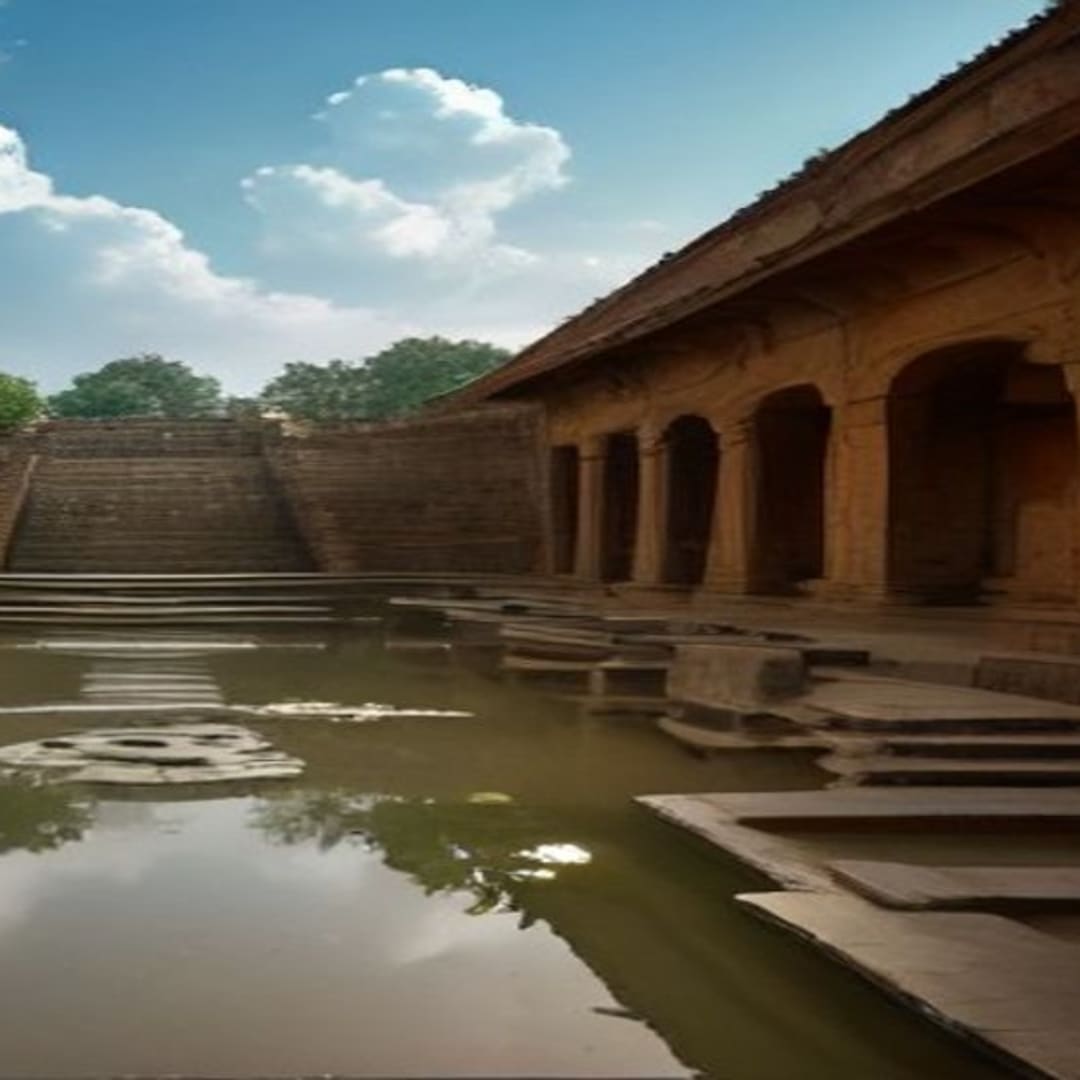
His decade-long obsession? To clean and restore the forgotten bawris (stepwells) and jhalaras (traditional water harvesting tanks) of the city. Rawnsley, who began his mission after being captivated by Rajasthan's architectural heritage as a tourist, embodies selfless passion. His tireless, often solitary, work has not only brought these magnificent historical structures back to life but has also reactivated their crucial role in groundwater recharge and local water supply.
Anand Mahindra's recent praise for Rawnsley highlights the growing recognition of such grassroots efforts. 'Paagal Saab's' story is a poignant reminder that traditional water management systems, often neglected in the rush towards modern infrastructure, hold immense value. These ancient structures are not just architectural wonders; they are ingenious examples of sustainable engineering, designed to capture, store, and replenish water in arid regions. Restoring them is an act of historical preservation as much as it is an act of vital water conservation.
Rawnsley's dedication proves that even one individual, driven by conviction, can make an extraordinary difference, inspiring communities to reclaim their water heritage. ## The Broader Picture: Why it Matters The urgency surrounding water conservation in India extends far beyond simply quenching thirst. It is inextricably linked to climate resilience, food security, public health, and urban sustainability. A nation facing widespread monsoon deficits, coupled with increasing demand from a burgeoning population and industrial growth, cannot afford to treat water as an infinite resource.
Climate change is exacerbating existing water stress, leading to more erratic rainfall patterns – intense downpours followed by prolonged dry spells. This necessitates robust infrastructure for both flood management and drought mitigation. Effective water conservation, particularly groundwater recharge, acts as a critical buffer against these climatic extremes, ensuring a more stable water supply for agriculture, industry, and domestic use. For a largely agrarian economy like India, water security is synonymous with food security.
When farmers lack access to reliable irrigation, crop yields suffer, impacting livelihoods and national food reserves. Furthermore, inadequate access to clean water contributes to a host of public health issues, disproportionately affecting vulnerable communities. Urban areas, rapidly expanding and often grappling with decaying infrastructure, face immense pressure. Sustainable urban water management, as championed by AMRUT 2.
0, is crucial for preventing water crises, ensuring sanitation, and maintaining livable cities. ## Call to Action: Every Drop Counts Securing India's water future requires a multi-pronged, collaborative effort: * **Government:** Continue investing in and expanding programs like 'Catch the Rain' and AMRUT 2. 0, prioritizing groundwater recharge and integrated water resource management. Foster innovation while respecting and integrating traditional wisdom.
* **Communities:** Actively participate in local water conservation initiatives. Revive and maintain traditional water bodies. Practice responsible water usage in homes and workplaces. * **Youth & Students:** Embrace the role of "Environment Warriors.
" Shun single-use plastics, advocate for sustainable practices, and innovate solutions for local water challenges. Dr. Kaur's message is a potent reminder of their power. * **Industry:** Adopt water-efficient technologies, implement responsible wastewater treatment, and reduce their water footprint.
* **Individuals:** Every drop counts. Fix leaks, use water-efficient appliances, practice rainwater harvesting at home, and be mindful of consumption. ## Conclusion: A Resilient Future As India navigates the complex challenges of a changing climate and growing demands, the importance of water conservation cannot be overstated. From the national policy frameworks driven by PM Modi and MoS Sahu, to the ingenious canal-top solar projects in Gujarat, to the dedicated efforts of 'Paagal Saab' in Jodhpur, and the passionate appeals of Dr.
Inderjit Kaur to students – a powerful narrative of resilience and determination is unfolding. It is a narrative that celebrates the synergy of modern science and ancient wisdom, individual passion and collective action. India's journey towards water security is a testament to its resolve, proving that with concerted effort, innovation, and a deep respect for nature, a sustainable water future is not just a dream, but an achievable reality for its 1. 4 billion people.
The time to act is now, and every Indian has a role to play in becoming a true "Environment Warrior. "