Climate Change
India's Solar Surge: The Unseen Grid Challenge
While India races towards a renewable future with record investments, a critical bottleneck threatens to dim its green ambitions.
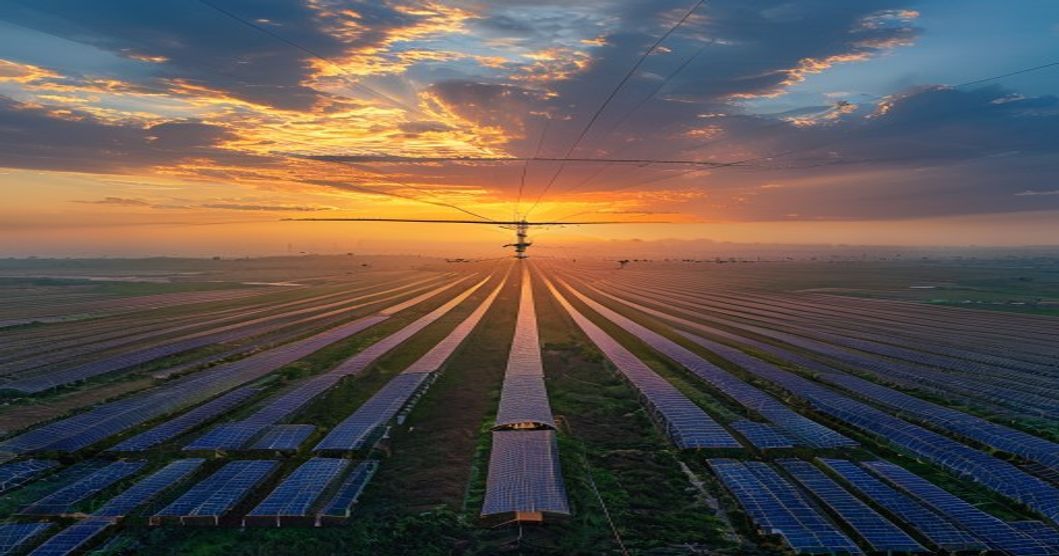
## India's Green Revolution: A Double-Edged Sword? Surat, Gujarat [India], 13 July 2026 – India stands at a pivotal juncture in its renewable energy transition. The air is thick with the promise of a cleaner, more sustainable future, fueled by ambitious targets, significant investments, and a burgeoning domestic manufacturing ecosystem. Just last week, the news painted a vibrant picture of progress: Rayzon Solar, a key player in India's solar manufacturing landscape, proudly announced NABL accreditation for its R&D laboratory.
This isn't just a feather in Rayzon's cap; it’s a robust signal of growing confidence in the quality and reliability of India’s solar photovoltaic (PV) modules, crucial for attracting global investment and ensuring long-term performance. Simultaneously, the financial gears are turning at an unprecedented pace. The World Bank Group committed a staggering $890 million to bolster India's rooftop solar push, an initiative designed to bring clean energy to millions of homes, drastically reduce household electricity costs, and generate significant employment opportunities across the renewable energy supply chain. This infusion of capital is a powerful endorsement of India's commitment to achieving net-zero emissions by 2070 and substantially increasing its non-fossil fuel energy capacity.
Gujarat, ever the pioneer, continues to lead the charge, contributing a remarkable 18% of India's total renewable energy capacity and excelling in both wind and rooftop solar installations. Even at the state level, proactive measures are taking shape. Kerala recently secured a deal with the Solar Energy Corporation of India (SECI) to receive power at an incredibly competitive tariff of ₹2. 93 per unit, specifically targeting peak-hour demand.
Such agreements underscore the growing viability and accessibility of solar power, directly benefiting consumers and strengthening state grids. On the surface, it's a story of triumph, innovation, and unwavering global support. Yet, beneath this gleaming narrative of progress, a formidable challenge looms – one that threatens to undermine these monumental efforts and cast a shadow over India’s green revolution. ## The Elephant in the Grid: Curtailment Threatens Progress Amidst the chorus of celebratory announcements, a stark warning emerged from ICRA, a leading credit rating agency: approximately one-third of India's recently commissioned renewable energy capacity is facing grid curtailment.
This isn't a minor hiccup; it's a systemic issue, primarily attributed to persistent delays in the expansion of transmission infrastructure. The highest curtailment rates, predictably, occur during peak solar generation hours – precisely when the sun is shining brightest and our panels are most productive. Imagine investing billions, building state-of-the-art solar farms, and installing advanced rooftop systems, only to find that a significant portion of the electricity generated cannot reach the homes and industries that desperately need it. This is the grim reality of grid curtailment.
It’s like having a fully stocked pantry but no clear path to the kitchen. The energy is there, but the pathways to deliver it are inadequate. ## Why is This Happening? The Transmission Bottleneck The rapid pace of renewable energy deployment in India has, in many ways, outstripped the development of the necessary supporting infrastructure.
While solar and wind projects can be commissioned relatively quickly, building high-capacity transmission lines, substations, and upgrading existing grid infrastructure is a far more complex and time-consuming endeavor. These projects often face a multitude of challenges: * **Land Acquisition Hurdles:** Securing vast tracts of land for transmission corridors can be a protracted and politically sensitive process, leading to significant delays. * **Environmental Clearances:** Obtaining various environmental and forest clearances adds another layer of complexity and time to project timelines. * **Financial Constraints:** While the World Bank is funding generation, transmission infrastructure requires massive, sustained investment that often lags behind generation capacity.
* **Inter-State Coordination:** Developing a robust national grid requires seamless coordination between multiple state utilities and central agencies, which can be challenging. * **Technological Upgrades:** Integrating intermittent renewable energy sources requires smart grid technologies, flexible transmission systems, and advanced forecasting capabilities, which are still evolving in many regions. ## The Cost of Curtailment: More Than Just Lost Energy The implications of widespread curtailment are far-reaching and detrimental to India’s energy transition: * **Financial Losses:** For project developers and investors, curtailed energy translates directly into lost revenue. This uncertainty makes renewable energy projects less attractive, potentially deterring future investment.
The very capital injection from the World Bank could see its impact diluted if the generated power can't be monetized effectively. * **Erosion of Investor Confidence:** Consistent curtailment signals a lack of grid readiness, which can undermine investor confidence in India's renewable energy sector, despite robust policy support and demand. * **Missed Climate Targets:** If a significant portion of installed renewable capacity remains unutilized, India will struggle to meet its ambitious climate goals and reduce its reliance on fossil fuels. The promise of net-zero by 2070 becomes harder to achieve.
* **Increased Electricity Costs:** Paradoxically, when cheap renewable energy is curtailed, utilities might have to fall back on more expensive conventional power sources, ultimately impacting consumer tariffs. * **Reduced Grid Stability:** An inefficient grid that struggles to integrate renewables can also face stability issues, leading to power fluctuations and outages. * **Slower Job Creation:** While World Bank funding aims to create jobs, a bottleneck in transmission could limit the full potential for employment generation across the entire value chain, from manufacturing to operations. ## Paving the Way Forward: Urgent Actions Required The ICRA warning is a critical call to action, demanding immediate and concerted efforts to address the transmission bottleneck.
India's environmental warriors, policymakers, and industry leaders must unite to implement a multi-pronged strategy: 1. **Accelerated Transmission Planning and Execution:** There needs to be a proactive and aggressive approach to planning and executing transmission projects, anticipating future renewable energy growth rather than reacting to current shortfalls. This includes fast-tracking land acquisition, environmental clearances, and project implementation. 2.
**Increased Investment in Grid Infrastructure:** Public and private sector investments must be significantly ramped up for grid modernization and expansion. Innovative financing mechanisms and public-private partnerships can play a crucial role. 3. **Smart Grid Technologies and Energy Storage:** Deploying advanced smart grid technologies, including AI-driven forecasting, demand-side management, and real-time monitoring, can help optimize grid operation and better integrate intermittent renewables.
Furthermore, substantial investment in battery energy storage systems (BESS) is paramount. BESS can store excess solar power generated during peak hours and release it when demand is high or solar generation is low, effectively mitigating curtailment and enhancing grid stability, as seen in some advanced global grids. 4. **Strengthening Inter-State Transmission Corridors:** Enhancing the capacity of inter-state transmission lines is crucial for transferring power from resource-rich regions (like Gujarat, which leads in RE capacity) to demand centers across the country.
5. **Policy Reforms for Grid Flexibility:** Regulatory frameworks need to evolve to incentivize grid flexibility, demand response programs, and the adoption of new technologies that support higher renewable energy penetration. 6. **Decentralized Energy Solutions:** While large-scale projects are vital, promoting decentralized rooftop solar and microgrids can reduce the strain on the national grid and provide localized energy security, especially in remote areas.
## The Promise of a Truly Green India India's journey towards a sustainable energy future is undeniably ambitious and inspiring. The NABL accreditation, the World Bank's substantial commitment, and pioneering state initiatives like Kerala's solar deal are testament to the nation's resolve and potential. However, the critical challenge of grid curtailment serves as a powerful reminder that a truly green India cannot be built on generation capacity alone. It requires a robust, intelligent, and resilient transmission backbone capable of delivering every watt of clean energy to its intended destination.
The time to act is now. By strategically investing in and rapidly deploying advanced grid infrastructure, India can transform this looming bottleneck into an opportunity, ensuring that the sun's abundant energy not only lights up our panels but also powers the dreams of a truly sustainable and prosperous nation. Only then can we truly claim victory in our environmental warrior mission.