Climate Change
India's Solar Surge: Powering a Nation, One Rooftop at a Time
PM Surya Ghar Yojana spearheads a revolution, empowering millions and cementing India's green energy leadership by July 2026.
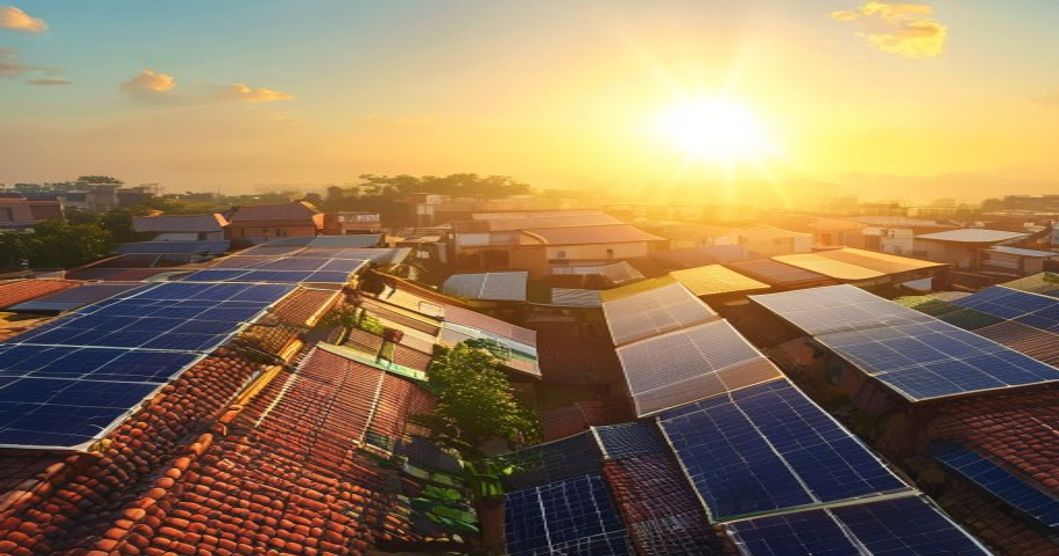
# India's Solar Surge: Powering a Nation, One Rooftop at a Time ## The Dawn of a Distributed Energy Revolution India stands at the precipice of an energy revolution, a monumental shift towards a sustainable future powered by the sun. As of July 17, 2026, the nation is not just witnessing growth in renewable energy; it is actively shaping a transformative movement that empowers millions, cleans the environment, and solidifies its position as a global leader in green technology. At the heart of this transformation lies the ambitious **PM Surya Ghar: Muft Bijli Yojana**, a scheme that is rapidly turning India's rooftops into vibrant powerhouses, promising free electricity and a brighter, cleaner tomorrow for its citizens. ## PM Surya Ghar: A Household-Level Transformation The numbers speak for themselves.
Union renewable energy secretary Santosh Kumar Sarangi recently revealed a staggering pace: approximately 100,000 households are installing rooftop solar systems *every single week* under the PM Surya Ghar scheme. This incredible momentum puts the government firmly on track to achieve its audacious target of covering 10 million homes by March 2027. This isn't merely an infrastructure project; it's a social and economic empowerment initiative on an unprecedented scale. For millions of Indian families, the promise of "Muft Bijli" – free electricity – is a game-changer.
By generating their own power, households not only drastically reduce or eliminate their electricity bills but also become active participants in India's energy independence journey. This distributed energy model reduces strain on the national grid, minimizes transmission losses, and brings power generation closer to consumption, fostering resilience and reliability. The scheme's success is a testament to strong government backing and growing public awareness of the tangible benefits of solar power. ## Global Confidence and Domestic Excellence The international community is taking note and actively contributing to India's solar ambitions.
Just this year, the World Bank announced a substantial $890 million financing package to further expand India's residential solar capacity. This significant investment is not just about capital; it's a vote of confidence in India's vision and its capacity to execute such large-scale green initiatives. Crucially, this funding is earmarked to stimulate employment throughout the entire renewable energy supply chain, from manufacturing and installation to maintenance and innovation. This creates a virtuous cycle of economic growth and environmental stewardship.
Indeed, the domestic solar manufacturing ecosystem is maturing rapidly, driven by both demand and a commitment to quality. Rayzon Solar, a Surat-based company, recently earned NABL (National Accreditation Board for Testing and Calibration Laboratories) accreditation for its R&D laboratory. This achievement, announced on July 10, is a critical milestone. As global demand for renewable energy soars, so do expectations for the quality and reliability of solar photovoltaic (PV) modules.
NABL accreditation signifies that Rayzon Solar's products meet stringent international standards, bolstering confidence in India's solar manufacturing capabilities. It assures project developers, financial institutions, and end-users alike that Indian-made solar modules are robust, reliable, and built to last – a crucial factor for the long-term success of schemes like PM Surya Ghar. ## Corporate Stewardship and Market Consolidation Beyond government initiatives and manufacturing prowess, corporate India is also stepping up its commitment to renewable energy. Aludecor, a leading manufacturer of Aluminium Composite Panels (ACP), demonstrated its dedication to sustainable manufacturing with the inauguration of two new solar power plants at its facilities in 2026.
The first plant at Factory Unit 2 was commissioned on April 19, coinciding with Akshaya Tritiya, followed by the second at Factory Unit 3 on May 14. This move reflects a growing trend among Indian businesses to integrate renewable energy into their operations, reducing their carbon footprint and setting a powerful example for industrial sustainability. The utility-scale solar sector is also witnessing significant activity, indicating a maturing market and robust investor confidence. The Aditya Birla Group made headlines with its substantial acquisition of Shell's India renewables energy arm, Sprng Energy, for an impressive $1.
8 billion. This strategic move significantly expands Aditya Birla Group's renewable energy portfolio, adding utility-scale solar, wind, and hybrid assets across the country. Once regulatory approvals are complete, this transaction will position Aditya Birla Renewables among the nation's largest developers, signaling a strong belief in India's long-term renewable energy growth trajectory and the increasing consolidation within the sector. ## Ingenuity in Infrastructure: Saving Water and Land While rooftop solar captures the imagination with its distributed impact, India is also pioneering innovative solutions for large-scale solar deployment.
Gujarat's groundbreaking canal-top solar power project stands as a shining example of ingenious resource optimization. By deploying solar panels over irrigation canals, the project achieves a dual benefit: generating clean electricity while simultaneously preventing the evaporation of precious water. This innovative approach saves an estimated 9 million liters of water annually – a critical conservation effort in a water-stressed region – all while producing renewable energy without consuming valuable farmland. It’s a powerful demonstration of how smart infrastructure design can address multiple environmental challenges simultaneously, showcasing India's capacity for creative and sustainable engineering.
## The Multifaceted Dividends of Solar Power The implications of India's solar surge extend far beyond mere electricity generation. Environmentally, the widespread adoption of rooftop solar systems significantly reduces the nation's reliance on fossil fuels, leading to a substantial decrease in greenhouse gas emissions. This directly contributes to cleaner air, mitigates climate change, and enhances public health. The water savings from innovative projects like canal-top solar further underscore the comprehensive environmental benefits.
Economically, the solar revolution is a powerful engine for job creation. From manufacturing solar panels and inverters to installing systems, maintaining them, and developing new technologies, a vast ecosystem of employment opportunities is emerging. Households benefit directly from reduced energy costs, freeing up income for other necessities or investments. For the nation, enhanced energy security reduces dependence on volatile global energy markets, fostering greater economic stability.
Socially, the empowerment of households through self-generated electricity is profound. It brings reliable power to remote areas, improves quality of life, and fosters a sense of self-sufficiency. Educational institutions, small businesses, and community centers can all benefit from stable, affordable power, driving local development. ## Navigating the Path Ahead: Challenges and Opportunities Despite the undeniable progress, the path to a fully solar-powered India is not without its challenges.
The rapid proliferation of rooftop solar systems necessitates robust advancements in grid infrastructure. Integrating millions of distributed energy sources requires smart grid technologies, advanced metering, and sophisticated energy management systems to maintain stability and efficiency. Ensuring universal access to financing remains crucial, especially for lower-income households, to ensure the benefits of PM Surya Ghar are truly inclusive. Furthermore, maintaining stringent quality control across the entire value chain, from manufacturing to installation and post-sales service, is paramount.
The NABL accreditation for companies like Rayzon Solar sets a benchmark, but consistent quality assurance mechanisms are needed nationwide to protect consumer trust and ensure the long-term performance of solar assets. Public awareness campaigns also need to continue, addressing misconceptions and educating citizens about the benefits and practicalities of adopting solar energy. ## India's Radiant Future As India marches towards its ambitious climate goals, the rooftop solar revolution, spearheaded by the PM Surya Ghar: Muft Bijli Yojana, stands as a beacon of hope and progress. Supported by international partners, bolstered by domestic innovation and manufacturing excellence, and embraced by corporate and individual citizens alike, the nation is demonstrating a powerful commitment to a sustainable future.
On this 17th day of July, 2026, the sun not only shines brightly over India's diverse landscapes but also ignites a distributed energy movement that promises to illuminate every home, power every dream, and secure a clean, prosperous future for generations to come. India is not just installing solar panels; it is building an energy independent, environmentally conscious nation, one rooftop at a time. The "Environment Warrior" stands proud, witnessing this monumental transformation unfold.