Climate Change
India's Green Energy Leap: From Policy to Powering a Sustainable Future
India's Green Energy Surge: Key policies, private investments, and projects driving a sustainable, energy-independent future.
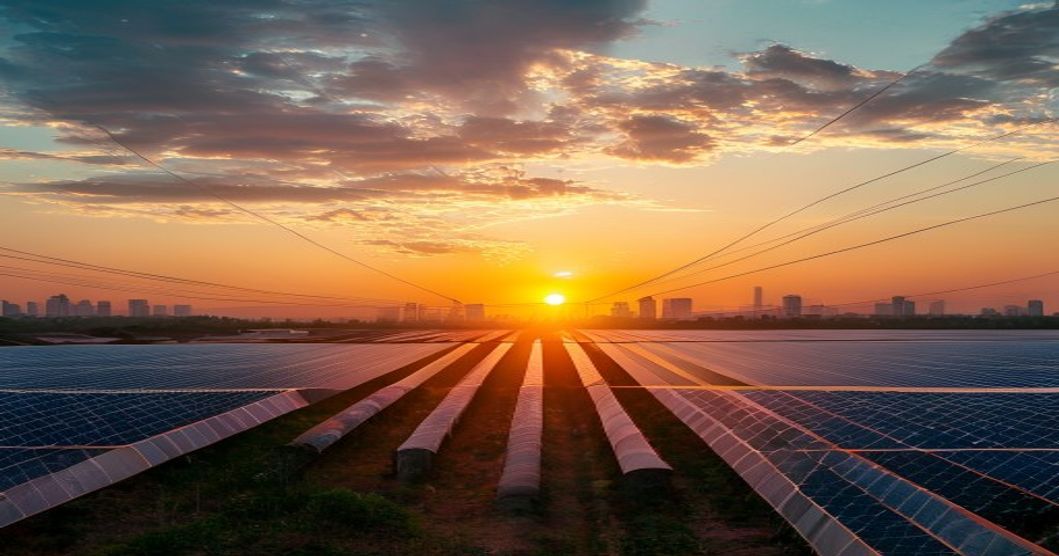
India is on an unstoppable trajectory towards a greener future, with an aggressive push in renewable energy, battery storage, and advanced grid infrastructure. As of July 2026, the nation's commitment to clean energy is not just a policy statement but a tangible reality, demonstrated by significant investments, groundbreaking projects, and robust financial backing. The collective efforts of government, industry leaders, and innovative enterprises are shaping a resilient and sustainable energy landscape, positioning India as a global leader in the green transition. ## Government's Vision: The Policy Imperative Union Minister Pralhad Joshi, speaking at the Sustainability Conclave 2026, underscored the critical role of renewable energy expansion and battery storage in India's green transition.
He emphasized that substantial investments in wind, solar, and energy storage technologies are poised to drive down electricity costs, making clean power more accessible and affordable. Joshi's remarks highlight a strategic shift, where energy storage is no longer an ancillary but a core component of the energy mix, crucial for grid stability and reliability. Furthermore, initiatives like hydrogen-powered trains signal India's ambition to explore and integrate next-generation technologies, demonstrating a holistic approach to decarbonization across various sectors. This governmental push provides the overarching framework and impetus for the rapid advancements witnessed in the sector.
## Industry Leaders: Balancing the Energy Equation The private sector is responding with strategic foresight. Sajjan Jindal's vision for JSW Energy exemplifies this approach. Rather than seeing conventional and renewable energy as competing forces, JSW Energy has meticulously built a diversified portfolio encompassing thermal, hydro, solar, and wind generation. This balanced strategy acknowledges India's current energy demands while aggressively investing in future-proof green solutions.
Jindal's philosophy, focused on "Building India at Scale," underscores the imperative of a pragmatic yet ambitious transition. Companies like JSW are crucial in demonstrating how established industrial players can pivot and lead the charge in decarbonization, ensuring energy security through a blend of reliable sources and cutting-edge renewables. Their diversified platform approach mitigates risks and ensures a stable power supply during the transition phase. ## On-the-Ground Transformation: Projects and Infrastructure The vision is rapidly translating into concrete projects across the nation.
A prime example is Rays Power Infra's recent achievement in Rajasthan. On July 24, 2026, the company announced the successful commissioning of a significant 300 MWp solar power project. This wasn't merely about generating power; it was an integrated effort that included the crucial associated power evacuation infrastructure: two 400/33 kV pooling substations and a substantial 16. 6 km 400 kV transmission line.
This project alone adds over 1 GW of power transmitting capacity, massively strengthening green energy evacuation in a state that is a solar powerhouse. Rajasthan, with its abundant sunshine, is a critical hub for India's solar ambitions, and such infrastructure development is paramount to efficiently transport renewable energy from generation sites to consumption centers. Rays Power Infra's end-to-end execution strength, covering both generation and transmission, highlights a vital aspect of India's green transition: the need for robust grid modernization and expansion to handle the intermittent nature and often remote location of renewable energy sources. These projects are not just about adding megawatts; they are about building the backbone of a future-ready green grid.
## Fueling the Future: Investment and Innovation The financial markets are buzzing with activity, reflecting strong investor confidence in India's renewable energy story. Juniper Green Energy, backed by AT Capital Group, is set to launch its ₹1,800-crore IPO on July 30, 2026. This entirely fresh equity offering aims to reduce debt, invest in subsidiaries, and support further expansion in solar, wind, hybrid, and battery energy storage projects across India. Such public issues are vital for channeling capital into the sector, enabling companies to scale operations and accelerate project development.
Simultaneously, Raydean Enterprises Limited, a full-stack energy engineering platform, successfully closed a ₹200 Crores capital raise on July 24, 2026, through a combination of equity and debt. The strong subscription from institutional funds, family offices, HNIs, and nationalized lenders underscores the market's belief in Raydean's integrated business model. Their expertise in agri-solar mounting structures, coupled with scalable EPC (Engineering, Procurement, and Construction) and transmission verticals, positions them perfectly to capitalize on India's long-term renewable buildout and grid modernization cycle. The infusion of capital into companies like Juniper and Raydean is not just about financial growth; it's about empowering the innovators and executors who are building the physical and digital infrastructure for India's green future.
It reflects a growing understanding that the transition requires not just generation capacity but also the entire ecosystem of transmission, distribution, and smart grid technologies to ensure efficiency and reliability. These funding rounds are critical enablers, transforming ambitious plans into tangible assets that power millions of homes and industries. ## Challenges and the Path Forward While the momentum is undeniable, the path to a fully green grid is not without its challenges. Integrating a higher share of intermittent renewable energy sources demands sophisticated grid management, advanced forecasting capabilities, and further investment in energy storage solutions.
The rapid expansion of transmission infrastructure must keep pace with generation capacity, particularly for evacuating power from remote renewable energy zones. Skill development for a green workforce, local manufacturing capabilities for components, and robust regulatory frameworks are also crucial. However, India's proactive policy environment, coupled with the innovation and investment from the private sector, signals a strong resolve to overcome these hurdles. The focus on next-generation technologies, from hydrogen to advanced battery storage, indicates a forward-looking strategy that anticipates future needs.
## Conclusion India stands at the cusp of an energy revolution. The combined force of governmental vision, private sector leadership, on-the-ground execution, and robust financial backing is propelling the nation towards a sustainable and energy-secure future. The developments of July 2026 – from ministerial pronouncements to significant project commissioning and capital raises – paint a vivid picture of a country not just adopting green energy, but mastering its complex transition. As "Environment Warrior," we recognize that this is more than an energy shift; it's a nation-building exercise, securing a cleaner, healthier, and prosperous future for all Indians.