Climate Change
India's EV Revolution: Mainstream Momentum & Future Frontiers
Record sales, 12% market penetration, and groundbreaking innovations mark a new era for electric mobility in India, powered by diverse growth drivers.
# India's EV Revolution: Mainstream Momentum & Future Frontiers ## The Roar of Silence: India's Electric Vehicle Tsunami Goes Mainstream 8 July 2026. The air in India feels different, charged with a quiet revolution. As an environmental journalist for "Environment Warrior," I’ve chronicled the nascent stages of electric mobility for years. Today, the data isn't just promising; it's definitive.
The Federation of Automobile Dealers Associations (FADA) has confirmed what many of us have keenly observed: June 2026 saw electric vehicle retail sales in India reach an unprecedented 3,06,220 units. This isn't merely a new record; it's a monumental milestone that pushed overall EV penetration past twelve percent for the very first time. India's electric vehicle dream is no longer a distant vision or a niche market; it has decisively moved into the mainstream of Indian auto retail, reshaping our environmental future one silent mile at a time. This surge is a testament to a nation embracing sustainable transport with unparalleled enthusiasm.
It signifies a profound shift in consumer behaviour, driven by both economic pragmatism and a growing environmental consciousness. From bustling city streets to nascent rural markets, the hum of electric motors is becoming the new symphony of progress. The question is no longer *if* India will electrify, but rather *how fast* and *how comprehensively* this transformation will unfold. ## A Nation Electrified: Decoding the Record-Breaking Numbers The FADA report paints a vivid picture of this electrification wave.
The staggering 3. 06 lakh units registered in June 2026 represent an all-time high, marking significant growth across all categories. While the two-wheeler segment traditionally leads the charge in India's automotive landscape, it has truly spearheaded this EV surge, registering substantial year-on-year increases that are nothing short of phenomenal. This is critical for a country where two-wheelers are the primary mode of personal transport for millions, making electric adoption in this segment a direct contributor to cleaner air and reduced carbon footprint on a massive scale.
But the revolution isn't confined to two wheels. Electric passenger vehicles also celebrated their best-ever month, indicating a growing acceptance among families and individual commuters. Similarly, the commercial vehicle segment recorded its highest-ever sales, a crucial indicator of fleet operators and businesses recognizing the long-term economic and environmental benefits of transitioning to electric. Even the premium segment is not immune to this electric allure; Mercedes-Benz India, for instance, reported its highest-ever first-half sales, with its EV mix reaching an impressive 14%.
This demonstrates that electric mobility is appealing across the entire spectrum of the Indian automotive market, from the mass market to luxury, solidifying its place as a formidable force. ## Beyond the Plug: The Drivers of This Unstoppable Momentum What factors are fueling this unprecedented acceleration? The answer lies in a confluence of innovative strategies, evolving consumer priorities, and a burgeoning ecosystem designed to support electric mobility. One of the most significant game-changers has been the relentless focus on **affordability and accessibility**.
Take the example of the MG Windsor EV. Within just two years of its launch, this electric car, with an impressive 449km range, has crossed 75,000 unit sales in India. Its success is a powerful illustration of how strategic pricing can democratize EV ownership. The key innovation here is the **Battery-as-a-Service (BaaS)** option.
By separating the cost of the battery from the vehicle, BaaS dramatically lowers the initial purchase price, bringing models like the Windsor EV down to an attractive Rs 9. 99 lakh. This model effectively addresses a major psychological barrier for potential buyers: the high upfront cost of an EV and concerns about battery degradation or replacement. With BaaS, consumers subscribe to the battery, paying a monthly fee, much like a fuel bill, making EVs financially viable for a much wider demographic.
Moreover, the broader economic landscape plays a significant role. High fuel prices have been a persistent challenge for Indian consumers, making alternative fuels increasingly attractive. In June 2026, alternative-fuel cars claimed a record 40. 35% share of the passenger vehicle market.
While CNG remains the dominant choice within this category, the sustained growth trajectory of hybrid and electric vehicles clearly indicates a shift in preference towards more sustainable and economically sound options. The long-term savings on running costs, coupled with a reduced environmental impact, are compelling arguments that are resonating with millions. ## India's EV "White Space": The Next Big Opportunities As India's EV market matures, the opportunities are expanding far beyond just vehicle sales. The "EV white space" refers to the emerging sectors that are poised for exponential growth, forming the backbone of a comprehensive electric mobility ecosystem.
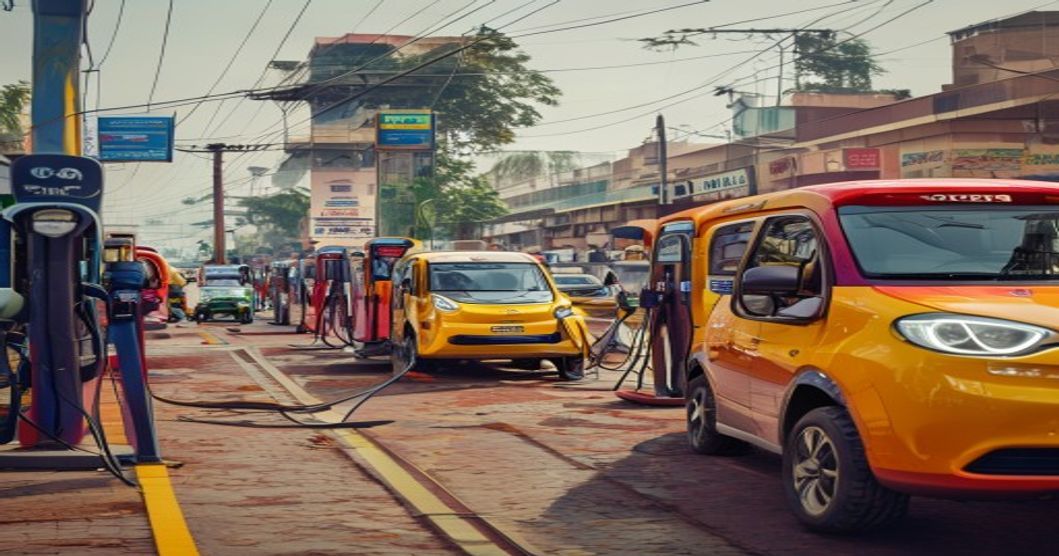
These are the areas where the next big investments, innovations, and environmental impacts will be made. **Charging Infrastructure:** This remains the undisputed nerve centre of the EV revolution. The sheer volume of new EVs demands a robust, accessible, and efficient charging network. We need a multi-pronged approach: ubiquitous public charging stations, rapid charging corridors on highways, widespread workplace charging solutions, and reliable home charging options.
The focus must shift towards smart grids, renewable energy integration for charging, and seamless payment systems to alleviate range anxiety and make EV ownership truly convenient. **Fleet Financing:** For commercial vehicles, the transition to electric fleets offers immense operational savings and environmental benefits. However, the initial capital expenditure can be high. Innovative financing models, including green loans, leasing options, and specialized EV financing, are crucial to accelerate the adoption of electric buses, trucks, and last-mile delivery vehicles.
This segment holds enormous potential for reducing urban pollution and logistics costs. **Agriculture:** This is perhaps one of the most exciting and less-explored "white spaces. " Electrifying the agricultural sector—from electric tractors and tillers to water pumps and processing machinery—could revolutionize rural economies. It offers farmers independence from volatile diesel prices, reduces localized pollution, and aligns perfectly with India's broader goals of energy security and rural development.
The potential for integrating solar-powered charging solutions in remote farming communities is immense. **Energy Storage:** The widespread adoption of EVs also presents a tremendous opportunity for advancements in energy storage. Beyond the batteries within the vehicles themselves, we're looking at grid-scale battery storage solutions that can stabilize the power grid, integrate intermittent renewable energy sources, and provide backup power. Furthermore, the concept of "second-life" batteries, where EV batteries are repurposed for stationary storage applications after their automotive lifespan, promises a sustainable circular economy for critical materials.
This will be pivotal in ensuring the entire EV ecosystem remains environmentally responsible. ## Navigating the Road Ahead: Challenges and the Path to a Green Future Despite the phenomenal progress, the journey is not without its challenges. Ensuring adequate and equitable access to charging infrastructure, especially in semi-urban and rural areas, remains a priority. The integration of a rapidly growing EV fleet with India's existing power grid requires careful planning and investment in smart grid technologies and renewable energy generation to ensure that the "fuel" for our EVs is as green as the vehicles themselves.
Furthermore, managing battery manufacturing, recycling, and the ethical sourcing of raw materials are critical considerations for long-term sustainability. However, the momentum is undeniable. India's commitment to reducing its carbon footprint and achieving its climate goals is being tangibly demonstrated through this electric vehicle revolution. Cleaner air in our cities, reduced reliance on fossil fuel imports, and the fostering of a robust domestic manufacturing and innovation ecosystem are just some of the profound environmental and economic dividends.
## Conclusion: India - A Global Leader in Electric Mobility The record-breaking EV sales in June 2026, coupled with the crossing of the 12% penetration mark, signal a pivotal moment in India's journey towards sustainable development. The success of affordable models enabled by innovations like BaaS, the growing interest across all vehicle segments, and the expansion into critical "white spaces" like charging, fleet financing, agriculture, and energy storage, collectively paint a picture of an unstoppable force. India is not just adopting electric vehicles; it is defining a unique, inclusive, and environmentally conscious pathway to electric mobility that could serve as a model for developing nations worldwide. As environmental warriors, it is our collective responsibility to champion these advancements, hold stakeholders accountable for sustainable practices, and continue to push the boundaries of innovation until every journey in India is a silent, emission-free one.
The future is electric, and India is leading the charge.