Climate Change
India's Air Pollution Crisis: From Promises to Action?
As Delhi chokes and a ministry faces fire, is India finally ready for a decisive battle against toxic air?
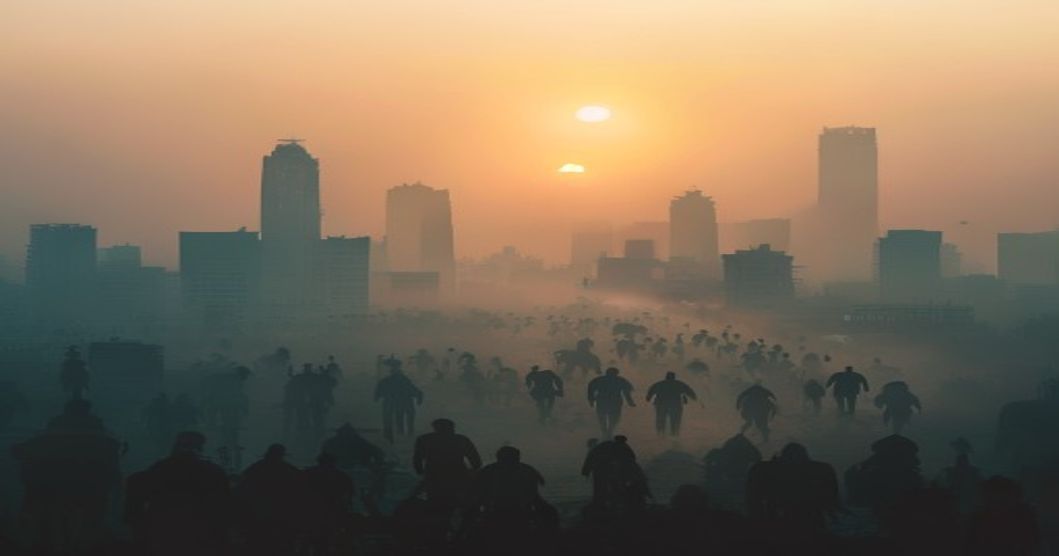
## India's Choking Future: When Will Promises Turn into Action? Today, July 9, 2026, the air over much of India hangs heavy, not just with pollutants but with unanswered questions about our nation's commitment to environmental protection. As the capital, Delhi, braces for another brutal winter of toxic air, and a leading opposition voice lambasts the Union Environment Ministry as a "Pravachan Mantralay" (Ministry of Sermons), the urgency for decisive action has never been clearer. "Environment Warrior" delves deep into the crisis, the politics, and the fragmented efforts to reclaim our right to breathe clean air.
## The 'Pravachan Mantralay': A Crisis of Governance The recent allegations by Congress leader Jairam Ramesh have cast a dark shadow over the Union Environment Ministry. His scathing critique – that the 'Paryavaran Mantralay' has become a 'Pravachan Mantralay' – resonates with many who feel that environmental protection has taken a backseat to rhetoric. The reported sacking of four close aides to Minister Bhupendra Yadav within days further fuels concerns about internal instability and a potential governance collapse. Ramesh's assertion that the ministry has done "little to protect the environment" and that "ecological destruction continues unabated" across India is a grave indictment.
From unchecked deforestation to unsustainable mining practices, the very fabric of India's natural heritage is under assault. Amidst this, air pollution, a silent killer claiming millions of lives annually, often feels like an afterthought in national policy dialogues, despite its undeniable impact on public health and economic productivity. This systemic failure at the highest level of environmental governance undermines all other efforts, however well-intentioned. Without a robust, proactive, and accountable national ministry, localized initiatives risk being mere drops in a rapidly polluting ocean.
## Delhi's Desperate Battle: A Microcosm of India's Struggle Nowhere is India's air pollution crisis more visible than in its capital, New Delhi. For years, as winter descends, the city transforms into a gas chamber, forcing its 20 million residents to breathe air often deemed the world's most toxic. In a proactive move, the Delhi government recently announced permanent anti-pollution curbs, months ahead of the annual season. These measures, likely building on the graded response action plan (GRAP), aim to tackle the multi-faceted sources of pollution – from vehicular emissions and industrial discharges to stubble burning and construction dust.
However, as an expert pointed out, "well-meaning moves, however, could be let down by their own complexity. " The efficacy of these new rules will require a "hard-nosed assessment" and a thorough cost-benefit analysis once they are tested this winter. Implementation challenges, inter-agency coordination, and public compliance remain significant hurdles. In a more direct attempt to tackle vehicular pollution, a major contributor to Delhi's smog, the government has unveiled a new policy offering a cash incentive of over $1,000 (approximately ₹83,000) to car owners willing to scrap their old vehicles for Electric Vehicles (EVs).
This progressive step aims to accelerate the transition to cleaner transport, but its success hinges on several factors: the attractiveness of the incentive, the availability and affordability of EVs, and the robustness of the charging infrastructure. While a welcome initiative, the sheer volume of old, polluting vehicles on Delhi's roads means this policy, while impactful, needs to be part of a much larger, more aggressive strategy. ## Industry Steps Up: A Collaborative Approach, But Is It Enough? Amidst the political rhetoric and governmental struggles, industry and civil society are also striving to make a difference.
In a commendable move, Cummins in India, in collaboration with CII and NITI Aayog, recently launched an advanced Decision Support System (DSS) for air quality management in Pune and Pimpri Chinchwad. This initiative, part of the "Cleaner Air Better Life" (CABL) platform, brings together government, industry, academia, civil society, and communities. CABL's focus on clean transport, clean fuel, clean industry, and biomass management is a holistic approach that acknowledges the diverse sources of pollution. Such multi-stakeholder platforms are crucial.
They leverage private sector innovation, academic research, and community engagement to develop localized solutions. The DSS, by providing data-driven insights, can empower policymakers to make informed decisions. However, the question remains: can such localized successes be scaled across the nation without a strong, overarching national air quality framework and robust central government support? While positive, these initiatives highlight the vacuum that a less-than-effective 'Paryavaran Mantralay' leaves.
## The PUCC Paradox: Easing Burden or Diluting Oversight? Adding another layer to the complex puzzle of air quality management is the Indian government's plan to extend the validity of Pollution Under Control (PUC) Certificates for new BSVI private vehicles to three years. Ostensibly, this aims to ease the burden on owners and encourage cleaner emissions from newer vehicles. While the intent to streamline processes is understandable, such a move warrants careful scrutiny.
BSVI vehicles are indeed cleaner, but their emissions are not zero, and regular checks ensure continued compliance and early detection of potential issues. Extending validity might inadvertently dilute the frequency of oversight, especially if maintenance standards are not rigorously upheld. Furthermore, this policy primarily addresses new vehicles, leaving the vast majority of older, more polluting vehicles under existing, often lax, enforcement regimes. A truly effective policy would focus on incentivizing the upgrade or scrapping of older vehicles, coupled with stringent, technologically advanced emissions monitoring across the entire fleet, rather than potentially easing checks on the newest ones.
## Beyond Band-Aids: A Call for Systemic Change India's air pollution crisis demands more than piecemeal measures and political blame games. It requires a fundamental shift in approach – from reactive to proactive, from fragmented to integrated, and from rhetoric to resolute action. 1. **Strengthen Environmental Governance**: The 'Paryavaran Mantralay' must reclaim its mandate as a protector of the environment.
This means transparent decision-making, robust enforcement of existing laws, and a clear, science-backed national air quality action plan with measurable targets and accountability mechanisms. Inter-ministerial coordination is paramount; air pollution cannot be tackled by one ministry alone. 2. **Data-Driven Policy & Enforcement**: Investments in real-time air quality monitoring networks across all urban and rural areas are essential.
This data must be publicly accessible and used to inform dynamic policy interventions and targeted enforcement. Technology, like the DSS in Pune, needs to be scaled nationally. 3. **Holistic Transport Transformation**: The push for EVs must be amplified with supportive infrastructure and more aggressive incentives.
Simultaneously, public transport infrastructure needs massive investment, coupled with strict emission norms and enforcement for commercial vehicles and older private vehicles. The PUC system needs an overhaul – perhaps moving towards on-board diagnostics (OBD) and remote sensing for real-time compliance. 4. **Industrial & Agricultural Solutions**: Stricter emission standards for industries, coupled with support for adopting cleaner technologies, are crucial.
For agricultural burning, sustainable alternatives must be promoted aggressively, providing farmers with viable solutions rather than just penalties. 5. **Public Participation & Awareness**: Empowering citizens with information and involving them in local air quality management plans can foster a sense of collective responsibility. Public health campaigns highlighting the dangers of air pollution are vital.
## The Time for Action is Now As "Environment Warrior," we believe that India stands at a critical juncture. The health and well-being of its citizens, the productivity of its workforce, and the very future of its natural ecosystems hinge on how we address the air pollution crisis. We cannot afford for our environmental ministry to be a 'Pravachan Mantralay' any longer. We need a 'Karyavahi Mantralay' – a Ministry of Action – that prioritizes the health of its people and its planet above all else.
The solutions are known; the will to implement them with unwavering commitment is what's truly needed. Let us not just hope for cleaner air, but collectively work towards it, ensuring that our children do not inherit a choking legacy.