Climate Change
Himalayan Retreat: India's Water Future in a Warming World
As record temperatures accelerate glacial melt, the Indo-Gangetic plain faces a future of unpredictable floods and deepening scarcity.
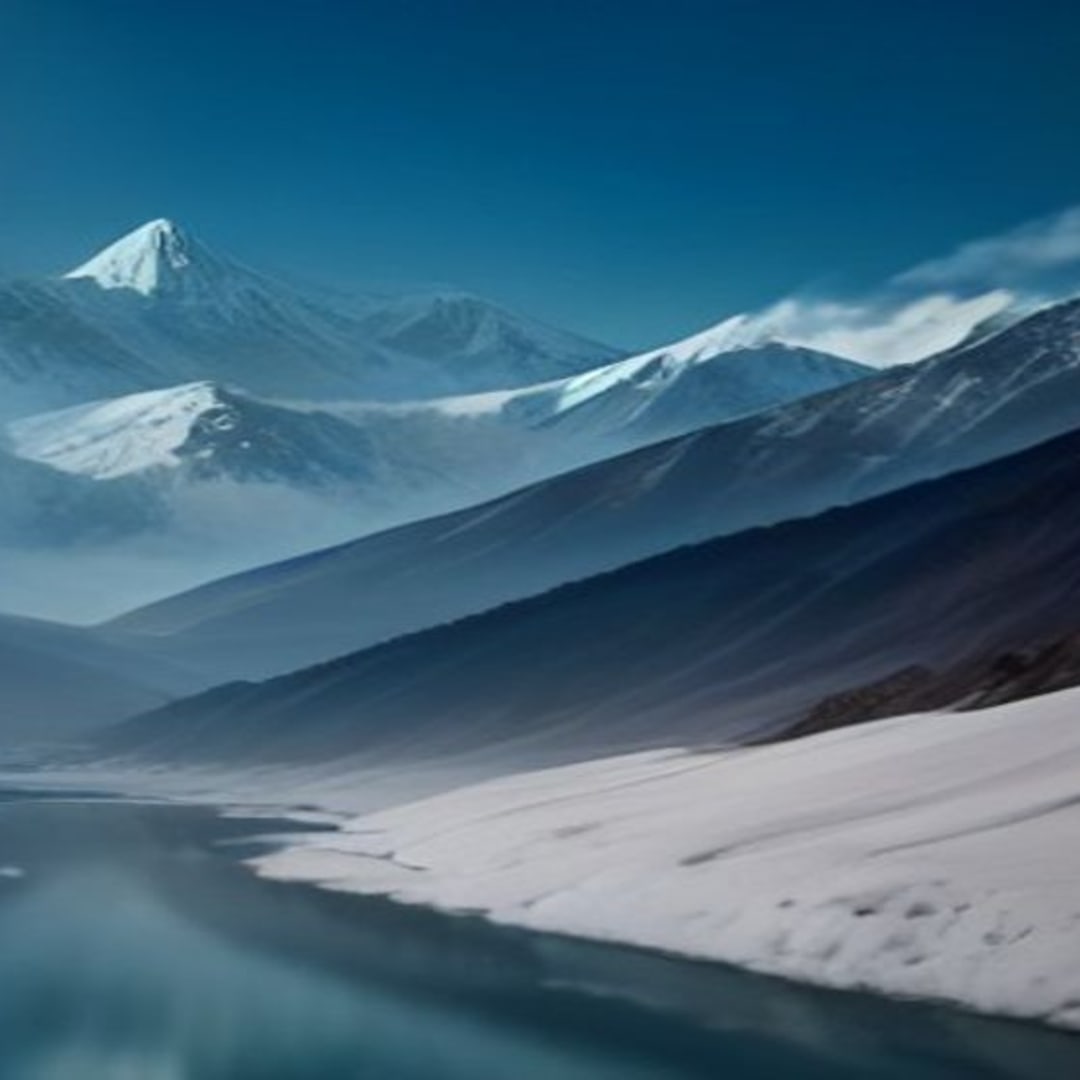
Ramu Singh, a seasoned farmer in Ghazipur, Uttar Pradesh, squints at the distant haze where the Ganga flows. "The river, it's not the same," he murmurs, adjusting his worn turban. "This year, unseasonal floods in April ruined my wheat saplings. We barely recovered, and now the wells are drying faster than ever, even with the monsoon just past its peak.
It's a paradox: too much water, then too little. Our fate, it feels, is tied to mountains we've never seen, mountains that are changing. "\n\nRamu's dilemma, shared by millions across India's vast Indo-Gangetic plain, isn't an isolated incident. It is a stark symptom of India's escalating climate crisis, directly linked to the unprecedented warming gripping the nation in 2026.
While headlines often focus on immediate heatwaves and erratic monsoons, a more insidious, long-term threat is accelerating high above: the rapid retreat of the Himalayan glaciers, India's vital water towers. \n\n## The Himalayas: India's Frozen Lifeline Under Siege\n\nThe majestic Himalayas, often called the 'Third Pole,' hold the largest store of freshwater outside the Earth's polar regions. These colossal ice reserves feed India's perennial rivers – the Ganga, Yamuna, Brahmaputra, and the Indus tributaries – providing lifeblood to an estimated 1. 3 billion people across South Asia.
They irrigate vast agricultural lands, sustain dense urban populations, and power critical hydropower projects. For centuries, the seasonal melt from these glaciers has ensured a steady flow, especially during the crucial dry months when monsoon rains recede. \n\nBut the balance is breaking. India's record temperatures in 2026, part of a worrying trend of accelerated global warming, are causing these glaciers to melt at an unprecedented pace.
Scientific consensus and observed data from institutions like the Wadia Institute of Himalayan Geology confirm that glaciers across the Indian Himalayas are retreating, with some losing dozens of meters annually. The **Gangotri Glacier**, one of the primary sources of the Ganga River, for instance, has shown significant retreat over recent decades, with its snout receding considerably faster in recent years. This isn't just a geological phenomenon; it's a direct threat to India's water security. \n\n## The Double-Edged Sword: From Surge to Scarcity\n\nThe accelerated glacial melt presents a complex, two-phase challenge.
Initially, increased meltwater can lead to higher river flows. While this might seem beneficial, it often translates into more frequent and intense flash floods, particularly in upstream and mid-stream regions. Glacial lake outburst floods (GLOFs), where meltwater accumulating behind unstable moraine dams suddenly breaks free, are becoming a growing concern, capable of unleashing catastrophic devastation on downstream communities and infrastructure. We've seen an uptick in unseasonal flooding events in regions historically less prone, overwhelming existing flood control mechanisms and causing widespread agricultural damage and displacement.
\n\nHowever, this initial surge is a temporary, deceptive reprieve. The long-term prognosis is grim: as glaciers continue to shrink and eventually disappear, the perennial river flows will diminish dramatically. This will lead to acute water scarcity, especially during the dry seasons when meltwater contribution is critical. Imagine the Ganga or Yamuna, once mighty rivers, reduced to a fraction of their current volume for significant parts of the year.
This future isn't distant; it's a looming crisis that will redefine the landscape and livelihoods of the Indo-Gangetic plain. \n\n## The Indo-Gangetic Plain: A Future Parched and Perilous\n\nThe Indo-Gangetic Plain is not just a geographical expanse; it's India's breadbasket, home to a significant portion of its population and agricultural output. The implications of diminishing glacial meltwater here are catastrophic:\n\n* **Agricultural Devastation:** India's food security is inextricably linked to the rivers flowing from the Himalayas. Reduced river flows will cripple irrigation systems, leading to devastating crop failures.
Farmers like Ramu Singh, already battling erratic monsoons and extreme heat, will face an existential threat. The ability to grow staple grains like wheat and rice will be severely compromised, threatening nationwide food supplies and rural livelihoods. \n* **Urban Water Crisis:** Major metropolitan centers like Delhi, Kanpur, Varanasi, and Patna, which draw heavily from these rivers, will confront unprecedented water shortages. Water rationing, health crises due to poor sanitation, and social unrest over dwindling resources will become stark realities.
The already strained urban infrastructure will buckle under this pressure. \n* **Energy Instability:** Hydropower projects along Himalayan rivers are crucial for India's energy grid. Reduced water availability will severely impact their generation capacity, exacerbating the nation's energy challenges and potentially forcing a greater reliance on fossil fuels, further fueling climate change. \n\n## Compounding the Crisis: Monsoon's Erratic Dance and Groundwater's Depletion\n\nThe situation is further compounded by the erratic monsoon patterns that have become a hallmark of India's climate crisis in 2026.
While monsoon rains are vital, their increasing unpredictability – characterized by intense, short bursts followed by prolonged dry spells – makes surface water management incredibly difficult. Less reliable monsoon rains mean a greater, unsustainable reliance on river water, even as glacial melt diminishes. \n\nTo compensate for surface water scarcity, communities and agriculture are increasingly turning to groundwater. This has led to an alarming rate of aquifer depletion across the Indo-Gangetic plain.
The **Central Water Commission (CWC)** has repeatedly highlighted the critical state of groundwater tables in many regions, with extraction rates far exceeding recharge rates. This unsustainable practice not only depletes a vital resource but can also lead to land subsidence and increased costs for water access. The cycle of flood and drought, often within the same season, creates a vicious feedback loop, making effective water management a monumental challenge. \n\n## Charting a Course Through Uncharted Waters: Adaptation and Mitigation\n\nThe scale of this impending crisis demands immediate, multi-pronged action:\n\n1.
**Integrated Water Resource Management:** This includes robust rainwater harvesting at community and household levels, promoting water-efficient irrigation techniques such as micro-irrigation and drip systems, and investing in watershed management to improve local water retention. Inter-basin water transfers could be considered, but with careful ecological and social impact assessments. \n2. **Early Warning Systems and Disaster Preparedness:** Investing in advanced monitoring technologies for glaciers and glacial lakes, coupled with robust early warning systems for GLOFs and flash floods, is crucial to protect downstream communities and infrastructure.
\n3. **Climate-Resilient Agriculture:** Promoting drought-resistant crop varieties, encouraging diversified farming practices, and providing farmers with climate information and support can build resilience in the agricultural sector. \n4. **International Cooperation:** The Himalayan ecosystem transcends national borders.
Collaborative efforts with neighboring countries like Nepal, Bhutan, and China on glacier monitoring, data sharing, and joint water management strategies are paramount. \n5. **Aggressive Global Climate Action:** Ultimately, slowing down the rate of glacial melt requires a drastic reduction in global greenhouse gas emissions. India, while actively pursuing renewable energy expansion, must continue to advocate for stronger international commitments to limit global warming to 1.
5°C. \n\nFor Ramu Singh and millions like him, the future of India's water security is not an abstract scientific debate; it's the very soil beneath their feet, the food on their plates, and the stability of their lives. The vanishing ice of the Himalayas isn't just a distant geological phenomenon; it's a direct, undeniable threat knocking on the doors of India's heartland. The time for decisive action, for both adaptation and aggressive climate mitigation, is now, before India's water towers melt away, leaving behind a legacy of thirst and despair.