Climate Change
Hawaii's Plastic Roads: A Game-Changer for Ocean Pollution
From Ocean Menace to Modern Infrastructure: Hawaii Paves the Way with Recycled Plastic Roads
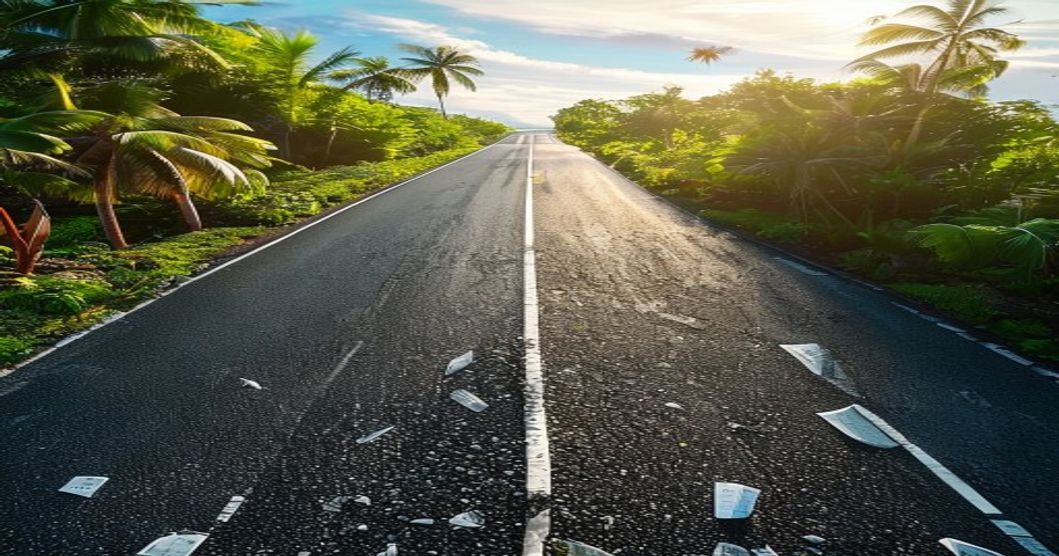
# Paving a Path to a Plastic-Free Future: Hawaii's Revolutionary Roads As environmental journalists for "Environment Warrior," India's leading platform, we constantly seek stories that ignite hope and demonstrate tangible progress in the face of our planet's most daunting challenges. Today, July 8, 2026, we turn our gaze to the Pacific, where a remarkable innovation is not just cleaning up our oceans but literally paving the way for a more sustainable future. Hawaii, a state intimately connected to the health of the ocean, is pioneering a groundbreaking method: transforming discarded fishing nets and other ocean plastics into durable asphalt roads. This isn't just about recycling; it's about reimagining waste as a valuable resource, offering a powerful antidote to marine pollution and overflowing landfills.
## The Unrelenting Tide of Plastic: A Global Crisis The scale of plastic pollution is staggering. Every year, millions of tonnes of plastic waste enter our oceans, breaking down into insidious microplastics that infiltrate every level of the food chain, from plankton to whales, and ultimately, us. Ghost fishing gear – abandoned, lost, or otherwise discarded fishing equipment – constitutes a significant portion of this marine debris. These nets, lines, and traps continue to ensnare and kill marine life for decades, turning our oceans into silent graveyards.
On land, landfills are groaning under the weight of non-biodegradable plastics, leading to land degradation, groundwater contamination, and emissions from incineration. For a nation like India, with its vast coastline and burgeoning population, the dual challenges of marine plastic pollution and waste management are particularly acute. Our rivers carry plastic debris to the seas, and our cities struggle with ever-growing mountains of waste. Finding scalable, effective solutions is not just an environmental imperative but an economic and social necessity.
## Hawaii's Ingenious Solution: Giving Plastic a Second Life Enter the trailblazers in Hawaii. Researchers there have developed a method to integrate recycled plastic, specifically ocean plastic and fishing nets, into asphalt mixes for road construction. The concept is elegantly simple yet profoundly impactful: intercept plastic waste before or after it pollutes the ocean, process it, and then blend it with traditional road-building materials. This isn't merely a theoretical exercise; early test roads are already demonstrating promising results.
The process typically involves collecting, cleaning, and shredding the plastic waste, including notoriously durable fishing nets. This processed plastic is then melted and mixed with bitumen (the sticky, black, viscous liquid or semi-solid form of petroleum used as the 'glue' or binder in asphalt roads) or used as an aggregate substitute. The precise formulation is crucial to ensure the structural integrity and longevity of the road. By replacing a portion of conventional asphalt components with recycled plastic, these roads offer a dual benefit: reducing reliance on virgin materials and providing a much-needed outlet for plastic waste that would otherwise contaminate ecosystems or languish in landfills.
## Addressing the Elephant in the Room: Microplastic Release One of the most pressing concerns with any plastic-based solution is the potential for secondary pollution, particularly the release of microplastics. Critics rightly question whether integrating plastic into roads might simply shift the problem from the ocean to our terrestrial environment, with tiny plastic particles potentially leaching into soil and water systems as roads wear down. This was a critical question for the Hawaiian researchers, and their early findings offer significant reassurance. Initial tests found that these recycled plastic roads did not release more plastic particles than standard pavement.
The key insight was that tire wear, a ubiquitous phenomenon on all roads, overwhelmingly contributes to any plastic signal detected from the pavement. In essence, the plastic particles generated by the friction of tires on *any* road surface, regardless of whether it contains recycled plastic, are far more significant than any potential release from the integrated plastic within the asphalt mix itself. This finding is a game-changer, addressing a major environmental and public health concern that could otherwise derail such an innovative solution. If future, long-term studies continue to confirm the durability and environmental safety, this technology holds immense promise.
## A Pillar of the Circular Economy: Beyond Waste Management Hawaii's plastic roads are more than just an engineering feat; they represent a powerful embodiment of the circular economy principles. Instead of a linear 'take-make-dispose' model, this approach champions 'reduce-reuse-recycle-regenerate. ' It transforms waste into a valuable commodity, creating a closed-loop system where pollution becomes a resource for infrastructure development. This innovation offers a multi-pronged attack on several environmental crises simultaneously: * **Marine Pollution:** Directly removes plastic and ghost fishing gear from the ocean, protecting marine biodiversity and ecosystems.
* **Waste Management:** Diverts massive volumes of plastic from overflowing landfills, reducing land degradation and the environmental burden of waste disposal. * **Resource Conservation:** Decreases the demand for virgin bitumen and aggregates, conserving natural resources and reducing the carbon footprint associated with their extraction and processing. * **Infrastructure Development:** Potentially creates more durable and cost-effective roads, especially beneficial for island nations or regions with limited access to traditional road-building materials. The implications for countries like India are profound.
Imagine a future where our coastal cities, grappling with plastic waste, could use this very waste to build resilient roads, connecting communities and boosting economic activity, all while cleaning our beaches and oceans. It's a vision that aligns perfectly with India's ambitious sustainability goals. ## The Road Ahead: Challenges and Future Prospects While the early results from Hawaii are incredibly encouraging, widespread adoption of plastic roads isn't without its challenges. Long-term durability under varying climate conditions, cost-effectiveness compared to traditional methods (especially considering the processing of plastic waste), and the development of robust processing infrastructure are all critical factors.
Standardisation of plastic types and blending ratios will also be essential for consistent quality and performance. Further research is vital to confirm the long-term environmental safety, particularly regarding the leaching of microplastics or chemical additives into the environment over decades of wear and tear. Governments, research institutions, and industry must collaborate to scale up these solutions, refine the processes, and overcome logistical hurdles. We must also consider the energy footprint of collecting, cleaning, and processing the plastic, ensuring that the net environmental benefit remains substantial.
This Hawaiian innovation isn't an isolated effort. It's part of a global surge in ingenuity to combat plastic pollution. From the Bionic Underwater Robot Turtle (BURT), designed by student Evan Budz, using AI to detect plastic waste and ecological distress, to art exhibitions like 'Aqua Paradiso' at KCCI, New Delhi, where artists like Eunhae Jung transform ocean microplastics into powerful symbols of crisis and hope, the world is rallying. Each initiative, whether technological, artistic, or infrastructural, plays a crucial role in our collective fight.
## Paving the Way to a Brighter Tomorrow Hawaii's plastic roads stand as a powerful testament to human ingenuity and our capacity to turn environmental challenges into opportunities. They offer a tangible, large-scale solution that addresses the plastic crisis at its core, transforming pollution into progress. As "Environment Warrior" continues to champion sustainable solutions, we look to such innovations as beacons of hope. They remind us that the future isn't just about mitigating damage; it's about actively regenerating our planet, one recycled road, one bionic turtle, and one piece of art at a time.
It's about recognizing that every piece of 'waste' has the potential to become a building block for a more sustainable, circular future. The path to a plastic-free future might be long and winding, but with innovations like these, we are steadily paving it, one mile at a time.