Climate Change
Ganga's Warming Waters: Climate Threatens India's Riverine Livelihoods
Erratic monsoons and scorching temperatures in the Ganga basin imperil ancient fishing traditions and critical freshwater biodiversity.
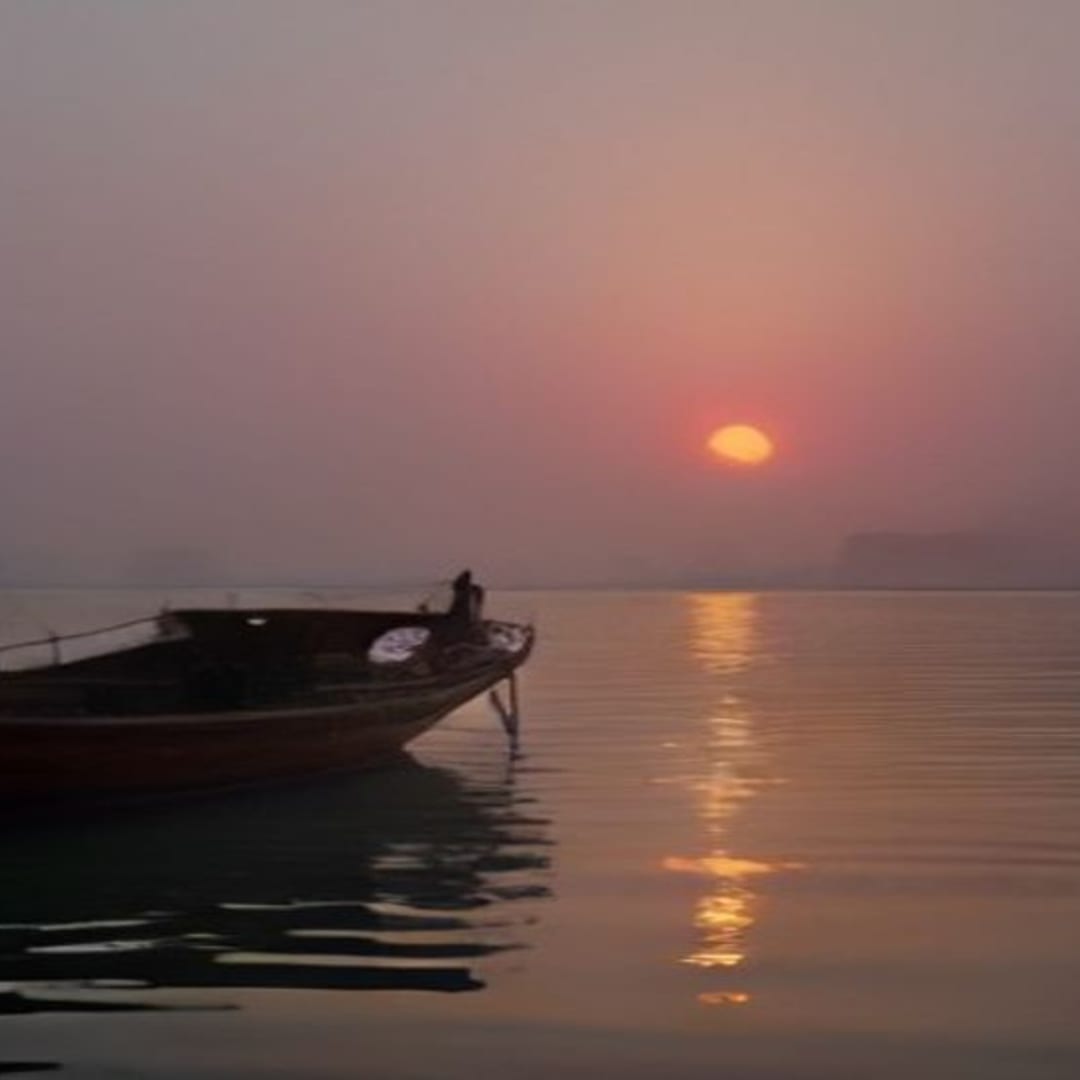
The August heat in 2026 hung heavy over the Ganga at Farakka, a suffocating blanket even at dawn. For Ramlal Mallah, a third-generation fisherman from Murshidabad, the river that once sustained his ancestors now felt like a betrayer. His nets, once teeming with prized Hilsa and Rohu, came up dishearteningly empty. "The river is sick," he murmured, his weathered face reflecting the rising sun and a profound weariness.
"The water is too warm, the fish are gone. What will become of us? " Ramlal's lament echoes a growing crisis across the vast Ganga River basin, India's lifeblood, where millions depend on the sacred waterway for their sustenance and cultural identity. While headlines often focus on extreme heatwaves baking cities or erratic monsoons devastating crops, a quieter, more insidious threat is unfolding beneath the surface: the warming of India's rivers and its devastating impact on freshwater ecosystems and the communities intertwined with them.
The climate crisis, in 2026, has firmly grasped the Ganga, altering its delicate ecological balance and pushing traditional riverine livelihoods to the precipice. ## The Ganga's Fever: A River Under Stress Scientific observations from institutions like the Central Inland Fisheries Research Institute (CIFRI) have confirmed a worrying trend: average water temperatures in various stretches of the Ganga have risen by an estimated 0. 5 to 1. 0 degrees Celsius over the past three decades.
This might seem minor, but for aquatic life, it's a profound shift. Fish are poikilothermic, meaning their body temperatures are regulated by their environment. Even slight increases can throw their physiology into disarray. Rising temperatures directly impact the dissolved oxygen (DO) content in water—warmer water holds less oxygen.
This creates hypoxic conditions, particularly challenging for species that require high DO levels. It also exacerbates the effects of pollution, as warmer water can increase the toxicity of certain pollutants. For indigenous fish species like the Indian Major Carps (Rohu, Catla, Mrigal) and the migratory Hilsa, these conditions are proving lethal. Breeding cycles are disrupted, growth rates are stunted, and susceptibility to diseases increases.
Many species are forced to migrate further upstream or into deeper, cooler waters, often beyond the reach of traditional fishing grounds. Furthermore, the erratic monsoon patterns of recent years—intense, short bursts of rain followed by prolonged dry spells—are compounding the problem. Heavy rainfall leads to sudden nutrient runoff and siltation, clouding waters and affecting fish spawning. Conversely, prolonged dry periods reduce river flow, concentrating pollutants and further increasing water temperatures in stagnant sections.
This hydrological volatility is a direct consequence of the global climate crisis, making the Ganga a battleground for survival for its aquatic inhabitants. ## Livelihoods on the Brink: The Human Cost The most immediate and profound impact of the Ganga's warming is felt by the estimated 1. 2 million fisherfolk and their families who directly depend on the river for their daily bread. Communities like the 'Mallah' in Uttar Pradesh, Bihar, and West Bengal, whose identities are inextricably linked to the river, are seeing their traditional way of life erode.
Suresh Kewat, a fisherman from Patna, recalls how his grandfather could net enough fish in a single day to feed his family for a week and sell the surplus. "Now, even after a full day, we barely catch enough for ourselves," he lamented. "The Hilsa, once abundant, is a rare sight. We used to catch them near Farakka during their migration, but their numbers have plummeted by almost 40% in some peak seasons.
" This decline in catch volume translates directly into devastating economic hardship. Many fisherfolk, often operating on thin margins, are forced into debt, pushing their children out of schools and into manual labor to supplement dwindling household incomes. The cultural significance is also immense. Fishing is not just a profession; it's a heritage, passed down through generations.
The knowledge of river currents, fish behavior, and traditional netting techniques—a rich tapestry of ecological wisdom—is now threatened with extinction as the younger generation sees no future in the profession. The social fabric of these communities begins to fray under the pressure of economic distress and displacement. ## A Policy Patchwork: Addressing a Fragmented Crisis The Indian government has initiated various programs aimed at river rejuvenation and fisheries development. The National Mission for Clean Ganga (NMCG), a flagship program, has focused extensively on pollution abatement, wastewater treatment, and solid waste management.
While crucial for improving water quality, its mandate has only recently begun to integrate direct climate change impacts on aquatic biodiversity and traditional livelihoods. Similarly, the Pradhan Mantri Matsya Sampada Yojana (PMMSY), launched to boost fish production and fisherfolk welfare, primarily focuses on aquaculture development and modern fishing infrastructure. While valuable, these schemes often operate in silos, lacking a comprehensive, climate-resilient framework for natural riverine fisheries. There's a critical need for the NMCG to explicitly incorporate climate adaptation strategies for riverine ecosystems, focusing on maintaining optimal water temperatures, enhancing dissolved oxygen levels, and protecting critical spawning grounds from both pollution and thermal stress.
Experts at CIFRI advocate for robust monitoring systems to track real-time water temperature, DO levels, and fish populations. They also emphasize the need for climate-smart fisheries management, which includes identifying and protecting thermal refugia (cooler spots in the river), promoting climate-resilient aquaculture practices in areas less susceptible to riverine fluctuations, and supporting the diversification of livelihoods for traditional fisherfolk. ## Community Adaptation and the Road Ahead Faced with a shrinking future, some communities are attempting to adapt. In parts of Bihar, some Mallah communities are experimenting with small-scale cage aquaculture in oxbow lakes adjacent to the Ganga, leveraging the PMMSY's subsidies.
Others are diversifying into small vegetable farming or daily wage labor. However, these solutions are often temporary and insufficient to replace the deep cultural and economic ties to riverine fishing. What is urgently required is an integrated approach. This means enhancing the scientific capacity to predict and model climate impacts on riverine fisheries, establishing early warning systems for extreme heat events in rivers, and developing climate-smart breeding programs for native fish species.
It also necessitates empowering fisherfolk communities with the knowledge and resources to transition to climate-resilient practices or alternative, sustainable livelihoods that honor their deep connection to the river. Crucially, policies must move beyond pollution control to active ecological restoration. This includes restoring river floodplains, which act as natural sponges and help regulate water temperatures, and protecting riparian vegetation that provides shade and habitat. International collaborations, perhaps with neighboring countries sharing the Ganga basin, could also play a vital role in data sharing and coordinated management strategies.
As Ramlal Mallah pulls in his empty nets, the chilling reality of a warming Ganga becomes stark. It is not just the fish that are disappearing; it is a way of life, a rich cultural heritage, and a critical component of India's food security. The crisis in the Ganga's waters is a poignant reminder that the climate emergency is multifaceted and demands immediate, holistic, and people-centric solutions that transcend traditional sectoral boundaries. Only then can we hope to restore the river's health and secure the future of those who call it home.