Air Quality
Delhi's Exhaust Cloud: The Commuter's Daily Battle for Breath
As vehicular pollution chokes the National Capital Region, residents navigate a toxic labyrinth, demanding urgent shifts towards green mobility.
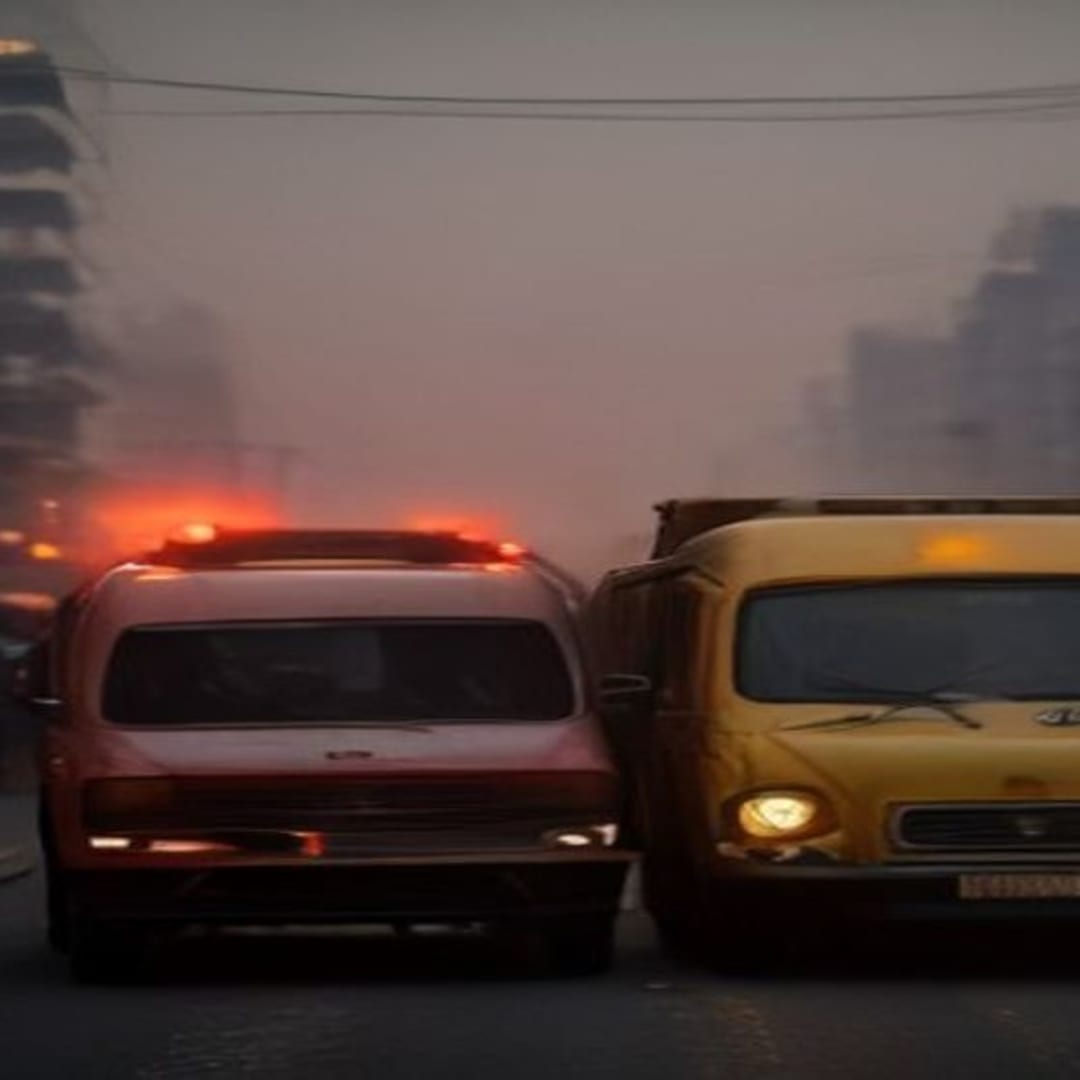
The perpetual haze over Delhi-NCR isn't just a weather phenomenon; it's a daily, suffocating reality for millions. For someone like Rakesh Kumar, a 48-year-old marketing executive who commutes from Ghaziabad to Gurugram five days a week, the journey is a physical ordeal. He navigates a serpentine route through congested roads, his car's AC struggling against the outside air, which often registers PM2. 5 levels soaring past 300 µg/m³ – well over six times the safe limit.
“Every morning, it’s a gamble,” Rakesh says, wiping his eyes, which often feel gritty. “Will I reach office without a headache? Will my chest feel tight by afternoon? This isn’t living; it’s just existing.
” Rakesh’s experience is not unique. As of 2026, India's capital region continues to grapple with some of the world's most dangerous air quality levels. While stubble burning, industrial emissions, and construction dust contribute significantly, vehicular pollution has emerged as a relentless and insidious antagonist, particularly within the sprawling urban agglomeration of Delhi and its National Capital Region (NCR). ## The Unseen Assault: Vehicular Emissions' Grip on Delhi-NCR The sheer volume of vehicles on Delhi-NCR's roads is staggering.
With over 13 million registered vehicles in Delhi alone, and millions more commuting daily from satellite cities like Gurugram, Noida, Ghaziabad, and Faridabad, the exhaust plumes form a dense, toxic canopy. Studies indicate that vehicular emissions contribute between 20-40% of Delhi's PM2. 5 levels on any given day, a figure that can spike dramatically during peak hours and colder months. These emissions – nitrogen oxides, sulfur dioxide, carbon monoxide, unburnt hydrocarbons, and fine particulate matter – are microscopic assassins that penetrate deep into the human respiratory system.
The health ramifications are dire and far-reaching. Beyond the immediate irritation and respiratory discomfort, long-term exposure is linked to a heightened risk of chronic bronchitis, asthma, heart disease, strokes, and even certain cancers. Children are particularly vulnerable, with impaired lung development and increased susceptibility to respiratory infections. The elderly, too, bear a disproportionate burden.
But the damage extends beyond physical ailments; research is increasingly linking chronic air pollution exposure to cognitive decline and mental health issues, adding another layer of silent suffering. ## Navigating the Policy Labyrinth: Roadblocks to Cleaner Air India has made strides in automotive fuel standards, transitioning to Bharat Stage VI (BS6) norms nationwide by 2020. This was a critical step in reducing emissions from new vehicles. However, the sheer growth in vehicle numbers, coupled with an aging fleet of older, more polluting vehicles still on the roads, often dilutes the impact of these advancements.
The Delhi-NCR region, a complex administrative tapestry involving the Government of Delhi, Uttar Pradesh, Haryana, and Rajasthan, faces unique challenges in implementing uniform and stringent emission control policies. Traffic congestion is another major culprit. Idling vehicles burn fuel inefficiently, releasing a higher concentration of pollutants. Despite significant investments in infrastructure like elevated corridors and bypasses, the road network struggles to keep pace with the exponential increase in private vehicle ownership.
The Graded Response Action Plan (GRAP), a set of emergency measures implemented during periods of severe air pollution, often includes restrictions on vehicle movement, but these are reactive and temporary, not a sustainable solution. ## Glimmers of Green: Delhi's Electric Push and Public Transport Evolution Amidst the challenges, there are determined efforts to pivot towards green mobility. The Delhi Electric Vehicle Policy 2020 has been a landmark initiative, aiming for 25% of all new vehicle registrations to be electric by 2024. This policy offers significant subsidies for electric two-wheelers, three-wheelers, and four-wheelers, along with a robust push for charging infrastructure.
As of late 2025, Delhi has seen a commendable surge in EV adoption, particularly in the two and three-wheeler segments, which are crucial for last-mile connectivity and public transport. The Delhi Metro, a sprawling network that carries millions daily, remains the backbone of sustainable urban transport. Its continuous expansion, with new lines connecting deeper into the NCR, is vital in drawing commuters away from private vehicles. Furthermore, the Delhi Transport Corporation (DTC) has been steadily inducting electric buses into its fleet, with hundreds now plying city routes.
These zero-emission buses are not only reducing pollution but also providing a quieter, smoother ride for passengers. The aim is to have 80% of the city’s bus fleet electrified by 2030, a monumental shift that could transform the urban airscape. ## The Path Forward: Beyond Incremental Changes The journey to clean air in Delhi-NCR demands more than piecemeal solutions; it requires a systemic overhaul and unwavering political will across all administrative boundaries. Here's what needs urgent attention: ### Integrated Urban Planning and Regional Coordination The NCR’s fragmented governance structure often hampers comprehensive action.
A unified regional authority with powers to enforce uniform emission norms, promote sustainable land use, and integrate public transport across state borders is critical. This includes discouraging unplanned urban sprawl that increases commuting distances and reliance on private vehicles. ### Robust and Accessible Public Transport While the Metro is a success, its reach needs to be complemented by an efficient, safe, and reliable bus network, especially for last-mile connectivity. Investing in dedicated bus rapid transit (BRT) corridors, improving frequency, and ensuring digital integration for seamless travel can make public transport a truly attractive alternative to private cars.
The recent expansion of electric mini-buses for feeder routes is a step in the right direction. ### Accelerating EV Adoption and Infrastructure The EV policy needs sustained momentum. This involves not just subsidies but also ensuring widespread, affordable, and rapid charging infrastructure, especially in residential areas and workplaces. Incentives for retrofitting older, polluting vehicles with electric powertrains, where feasible, could also be explored.
### Promoting Non-Motorized Transport For short distances, cycling and walking offer zero-emission alternatives. Developing safe, well-maintained cycle tracks and pedestrian pathways, coupled with public bicycle-sharing schemes, can significantly reduce reliance on motorized transport for daily errands. ### Stricter Enforcement and Public Awareness Higher penalties for emission norm violations, coupled with advanced remote sensing technologies for vehicle monitoring, are essential. Equally important is public awareness – educating citizens about the sources of pollution, the health impacts, and the benefits of adopting sustainable mobility choices.
Campaigns encouraging carpooling and behavioral shifts can have a cumulative impact. ## A Breathable Future: A Collective Endeavor The fight for clean air in Delhi-NCR is a marathon, not a sprint. It demands sustained commitment from governments, industries, and individual citizens. The current trajectory of vehicular pollution is unsustainable, exacting a heavy toll on public health, economic productivity, and the very quality of life.
As India marches towards a greener future, its capital region must lead the way in demonstrating how a megacity can transition from being choked by exhaust fumes to breathing freely, driven by innovation, integrated policy, and collective resolve. The question is no longer if we can change, but how quickly we will act to secure a breathable tomorrow for generations to come.