Environmental Crisis
Deep-Sea's Silent Scourge: Microplastics Invade Earth's Last Frontier
Shocking findings reveal 92% of deep-sea animals host microplastics, exposing a pervasive threat to marine life and the human food chain.
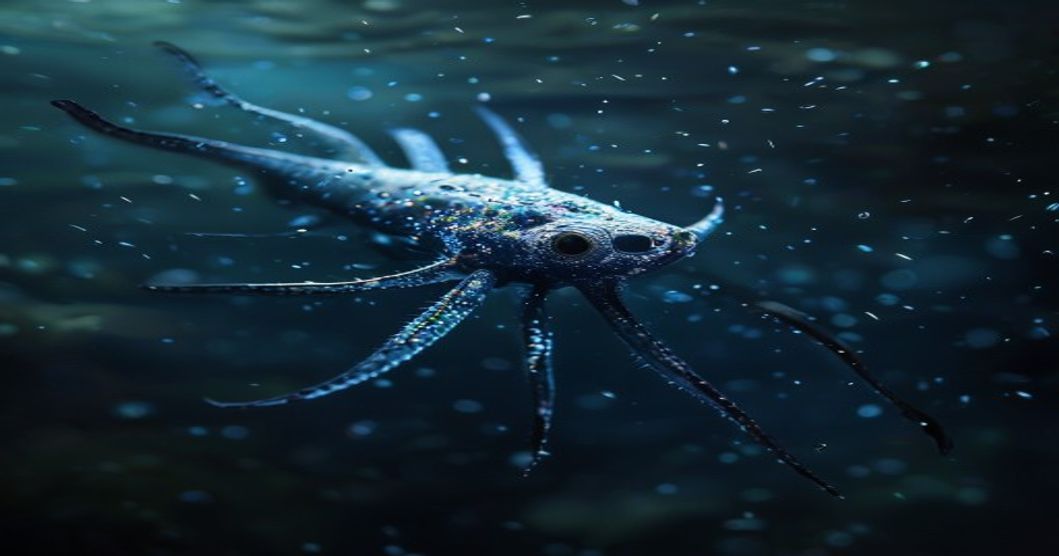
Today, 26 July 2026, we stand at a critical juncture in our understanding of the planet's most pervasive environmental crisis. For decades, humanity harboured a comforting, albeit naive, belief that the deep ocean – a realm of crushing pressures and eternal darkness, kilometres removed from human touch – remained a pristine sanctuary. This illusion has now been shattered, not by a cataclysmic event, but by something far more insidious and microscopic: plastic. New, groundbreaking research has revealed a horrifying truth: microplastics have infiltrated the very fabric of deep-sea life, reaching Earth's most remote ecosystems and threatening the delicate balance of marine food webs, with alarming implications for our own.
## The Unseen Threat: Microplastics in the Abyss The scientific community recently delivered a chilling report that should serve as a global wake-up call. Scientists, venturing into the ocean's abyssal plains, looked 2,000 metres below the surface and discovered microplastics embedded within 92% of deep-sea animals. This isn't just a troubling statistic; it's a profound redefinition of the scale of plastic pollution. For generations, the deep sea was considered one of Earth's last untouched frontiers, a realm where life evolved in isolation from human interference.
This new data unequivocally proves that no corner of our planet, no matter how remote or inaccessible, is immune to the plastic tide we unleash daily. It challenges the long-held belief that these vast, isolated environments remain pristine, revealing a silent, pervasive scourge that has permeated the planet's deepest ecosystems. ## From Surface to Sediment: How Plastic Travels How do these tiny plastic fragments reach such unfathomable depths? The journey begins at the surface, where an estimated 11 million tons of plastic enter our oceans each year.
This colossal influx of debris, ranging from discarded bottles to fishing nets, doesn't simply disappear. Instead, it embarks on a relentless process of degradation. Sunlight, waves, and microbial action break down larger plastic items into progressively smaller pieces – first macroplastics, then mesoplastics, and finally, microplastics (particles less than 5 millimetres) and even nanoplastics. These tiny fragments, often invisible to the naked eye, are then transported throughout marine ecosystems by powerful ocean currents.
Some microplastics sink due to their inherent density, while others become 'biofouled' – colonised by microorganisms, algae, and other organic matter, which increases their weight and causes them to descend into the water column. The deep ocean, far from being isolated, acts as a vast, indiscriminate sink for these microscopic pollutants, accumulating them in its sediments and distributing them across its unique inhabitants. ## A Silent Invasion: Impact on Marine Life and Ecosystems The consequences of this deep-sea invasion are dire and multifaceted. When deep-sea animals ingest microplastics, they face a range of threats.
Physically, these particles can cause internal injuries, block digestive tracts, and lead to a false sense of fullness, resulting in starvation. Chemically, plastics are known to leach toxic additives and absorb persistent organic pollutants from the surrounding seawater. When ingested, these chemicals can transfer to the animals, potentially disrupting their endocrine systems, impairing reproduction, and compromising their immune responses. The discovery of a polychaete worm, not previously found in Japanese waters, hitchhiking on a plastic bottle cap recovered near southern Japan, further highlights another insidious threat.
When 'ecosystem engineers' – species that significantly shape their environments – colonise plastic debris, entire micro-communities can be transported over extended periods. This 'plastic raft' phenomenon dramatically increases the risk of invasive species spreading to new territories, disrupting local biodiversity and potentially devastating fragile deep-sea ecosystems that have evolved in isolation. Beyond individual harm, the pervasive presence of microplastics threatens to destabilise entire marine food webs. Deep-sea organisms form the base of complex food chains, and their contamination means that plastics and their associated toxins bioaccumulate, moving up the trophic levels.
Larger predators consume smaller contaminated prey, leading to higher concentrations of plastics and chemicals in their tissues. This process fundamentally alters the health and resilience of these unique ecosystems, the full implications of which we are only beginning to grasp. ## The Human Connection: A Threat Beyond the Deep The deep ocean might seem distant, but its fate is inextricably linked to ours. As microplastics permeate marine food webs, they inevitably find their way back to our plates.
Fish, crustaceans, and other seafood consumed globally are increasingly found to contain microplastics. While research into the direct human health impacts of ingesting microplastics is ongoing, preliminary studies are concerning. Microplastics have been detected in human organs, blood, and even placentas, raising questions about potential inflammatory responses, chemical exposure, and long-term health consequences. The discovery of microplastics in our deepest oceans is not just an ecological disaster; it is a stark reminder that what we cast away ultimately returns to us, posing an undeniable threat to human health and well-being.
## India's Vulnerability and Response For a nation like India, with its vast coastline and burgeoning population, the deep-sea microplastic crisis holds particular significance. Our rivers, like the Ganga and Yamuna, are major conduits for plastic pollution flowing into the Arabian Sea and the Bay of Bengal. Coastal cities like Mumbai, with their bustling populations and often inadequate waste management infrastructure, contribute significantly to the problem, as highlighted by initiatives like The Ocean Cleanup. Their latest effort, targeting Mumbai’s trash-clogged waterways to stop plastic before it reaches the sea, is a crucial step.
However, it's just one piece of a much larger puzzle. India's efforts to ban single-use plastics are commendable, but enforcement and public awareness remain critical challenges. We need robust, nationwide strategies for waste collection, segregation, recycling, and the development of sustainable alternatives to truly turn the tide on this pervasive issue. ## Detecting the Invisible: The Science of Microplastic Tracking Detecting and quantifying these tiny plastic fragments, particularly in the vastness of the ocean, is a monumental scientific challenge.
As Euronews Tech Talks recently showcased, scientists at institutions like the Flanders Marine Institute are at the forefront of developing sophisticated techniques. From advanced microscopy and spectroscopic methods to chemical fingerprinting and ocean current simulations (as seen in tracing the plastic bottle cap's journey), researchers are working tirelessly to understand the sources, pathways, and ultimate fates of microplastics. This intricate scientific detective work is vital for informing policy, guiding clean-up efforts, and ultimately, protecting marine ecosystems. ## Beyond the Deep: Pathways to a Plastic-Free Future The deep-sea microplastic crisis demands an urgent, multi-pronged global response.
We cannot simply clean our way out of this problem; prevention is paramount. This means a radical shift away from our linear 'take-make-dispose' economy towards a circular model. Initiatives like 'Plastic Free July' highlight the power of individual action, but systemic change requires robust legislative frameworks. The failure of the New York State Legislature to pass the Packaging Reduction and Recycling Infrastructure Act, which would have curbed single-use plastics and banned toxic chemicals, is a stark reminder of the political hurdles.
Action is needed at every level – local, national, and international – to enforce bans on single-use plastics, invest in sustainable packaging alternatives, and develop advanced recycling technologies. Furthermore, improving waste management infrastructure, particularly in developing nations, is critical to preventing plastic leakage into the environment. Innovation in biodegradable materials and advanced clean-up technologies, while not a silver bullet, can play a supplementary role. Ultimately, a profound change in consumer behaviour, driven by greater awareness and education, is essential.
We must demand sustainable products, support businesses committed to plastic reduction, and hold our governments accountable for implementing effective policies. ## Conclusion The discovery of microplastics in 92% of deep-sea animals is not just a scientific finding; it is a mirror reflecting the true cost of our consumption patterns. The deep ocean, once a symbol of pristine wilderness, now bears the indelible mark of human activity. This crisis transcends geographical boundaries and species lines, threatening the very foundations of marine life and, by extension, our own health.
As Environment Warriors, we must recognise the urgency of this moment. The time for incremental change is over. We need bold, collective action from individuals, industries, and governments to halt the plastic tide, protect our oceans, and safeguard the future of our planet. The deep sea is calling; will we answer before it's too late?