Climate Change
Broken Tracks, Scorched Roads: India's Transport Battle
From buckling rail lines to melting asphalt, India's critical transport networks face unprecedented stress, disrupting lives and economy.
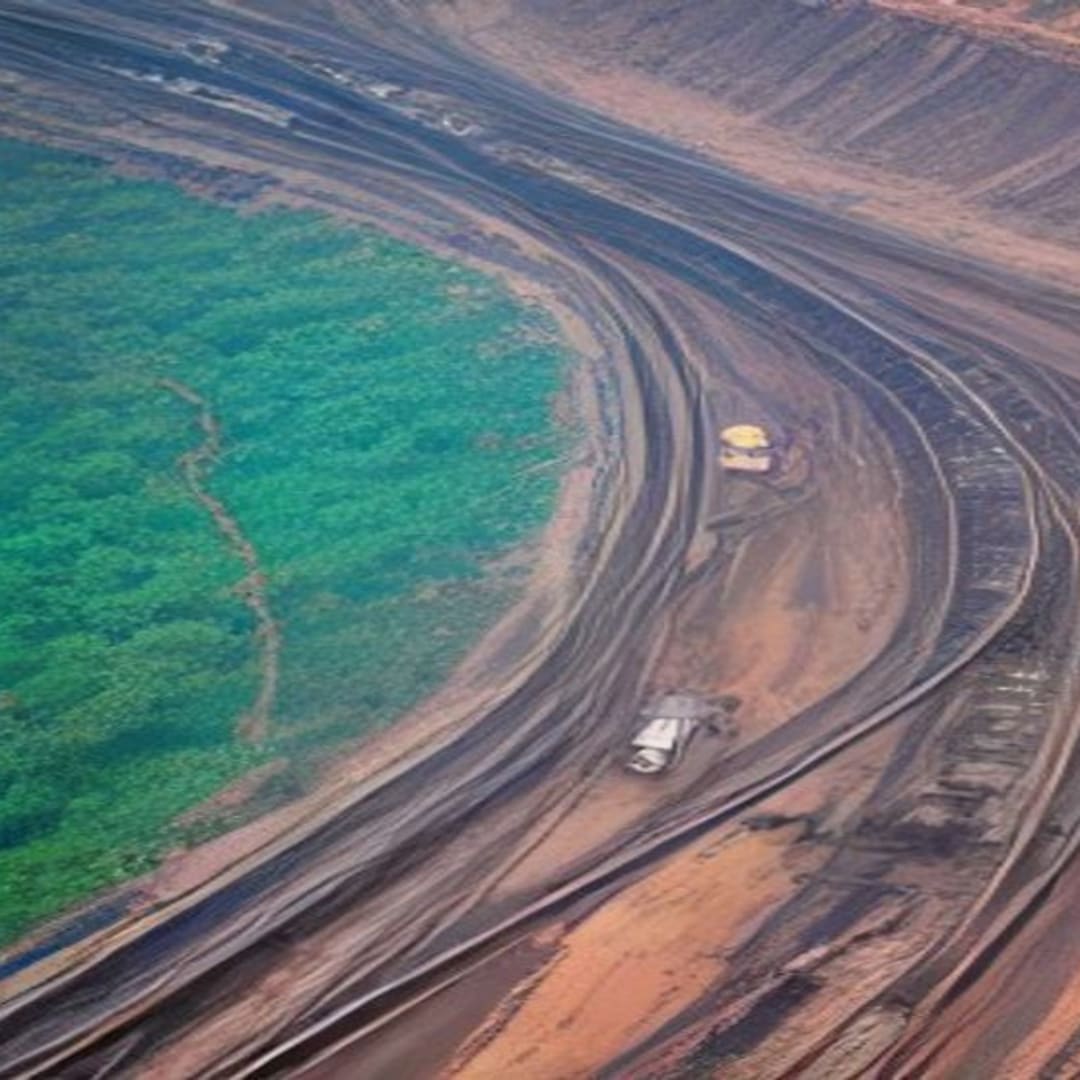
The sun-scorched plains of Uttar Pradesh shimmered, distorting the horizon into a wavy mirage. Inside the air-conditioned compartment of the Lucknow-Delhi Duronto Express, commuters stirred restlessly. What should have been a swift six-hour journey had stretched into an agonizing eight, now halted indefinitely near Etawah. The culprit wasn't a signal failure or a mechanical snag; it was the relentless 48-degree Celsius heat that had literally buckled a section of the railway track, forcing an emergency stop.
This wasn't an isolated incident; it was a symptom of a far deeper crisis: India's critical transportation infrastructure is melting, warping, and fracturing under the unprecedented assault of a warming climate. For decades, India's burgeoning network of roads, railways, and airports has been the bedrock of its economic growth and social cohesion, connecting its vast and diverse population. Yet, in 2026, as climate change ushers in record-breaking temperatures and extreme weather events, these vital arteries are facing a stress test they were never designed for. The impacts are insidious, often unseen until a major disruption occurs, but their cumulative toll on daily life, commerce, and future development is staggering.
## The Unseen Warping: Heat's Engineering Challenge The science behind heat's destructive power on infrastructure is straightforward but complex in its manifestation. Different materials react differently to extreme temperatures, and India’s infrastructure, largely built on historical climate assumptions, is proving vulnerable. **Railways Under Duress:** Steel, the backbone of India's 68,000-kilometre railway network, is highly susceptible to thermal expansion. As temperatures soar, steel tracks expand.
While engineers incorporate expansion gaps, the current heatwaves push these limits beyond conventional safety margins. When tracks expand too much, they can deform into "sun kinks" or "buckles," leading to derailment risks. Indian Railways, a lifeline for millions, recorded a 15% increase in heat-related track distortion advisories and speed restrictions across its Northern and Central zones in the summer of 2026 alone. This isn't just about passenger discomfort; freight movement, crucial for supply chains, also faces significant delays, impacting everything from agricultural produce to industrial raw materials.
**Roads Turning to Slurry:** India boasts the second-largest road network in the world, over 6. 3 million kilometres, predominantly built with bitumen-based asphalt. Asphalt is highly temperature-sensitive. At high temperatures (above 45°C), it softens, leading to "rutting" – depressions formed by vehicle tires – and "bleeding," where bitumen rises to the surface, reducing skid resistance and creating hazardous driving conditions.
Concrete roads, while more heat-resistant, face their own challenges with thermal expansion causing cracks and "blow-ups" where slabs push against each other and lift. The National Highways Authority of India (NHAI) has noted a concerning trend of increased maintenance costs for national highways, with a significant portion attributed to heat-induced damage. Road resurfacing and pothole repairs, once seasonal, are now becoming year-round battles in many states like Rajasthan and Gujarat, where temperatures routinely exceed 47°C for weeks. **Airports Feeling the Heat:** Even air travel, often seen as insulated from ground-level issues, is not immune.
Concrete runways, like roads, expand and contract, potentially causing surface irregularities that require costly repairs and can even lead to temporary closures. Furthermore, extreme heat impacts aircraft performance. Hot air is less dense, reducing lift and engine efficiency. This often necessitates "payload restrictions," where flights must carry less fuel, cargo, or even fewer passengers to achieve safe take-off and landing, especially at smaller, high-altitude airports.
This translates to increased operational costs for airlines and disruptions for passengers. ## A Nation Gridlocked: The Far-Reaching Consequences The disruption of India's transport infrastructure isn't just an inconvenience; it's a systemic threat with profound economic and social repercussions. **Economic Arteries Clogged:** The efficiency of India's supply chains is directly tied to its transport networks. Delays in freight movement due to buckled tracks or damaged roads translate into higher logistics costs, spoilage of perishable goods (especially critical for India's vast agricultural sector), and manufacturing slowdowns.
Industries reliant on timely delivery of raw materials and finished products face severe setbacks. Moreover, the increased expenditure on emergency repairs and maintenance diverts crucial funds that could otherwise be invested in new infrastructure development or other public services. The Confederation of Indian Industry (CII) estimated that transport delays due to climate-related infrastructure damage could shave off an additional 0. 5% from India's GDP growth annually if not addressed proactively.
**Social Fabric Under Strain:** For the average Indian, daily life is inextricably linked to accessible and reliable transport. Commuters face longer travel times, missed appointments, and increased exposure to heat in crowded, delayed public transport. Emergency services – ambulances, fire brigades – are hampered by damaged roads, potentially costing lives. In remote rural areas, where transport links are already tenuous, heat-induced damage can further isolate communities, cutting off access to markets, healthcare, and education.
The psychological stress of unpredictable journeys and constant disruptions adds another layer of burden on an already climate-stressed populace. ## Engineering Resilience: Adapting to a New Reality Recognizing the escalating challenge, both government bodies and research institutions are scrambling for solutions. The task is monumental: climate-proof an entire nation's infrastructure built for a bygone era. **Indian Railways' Proactive Stance:** Indian Railways has initiated a comprehensive review of its track engineering standards.
This includes experimenting with new rail fastening systems that offer greater resilience to thermal stress, deploying specialized track monitoring sensors for early detection of expansion issues, and exploring "continuously welded rails" in certain sections with enhanced stress absorption capabilities. Furthermore, the **Rail Vikas Nigam Limited (RVNL)**, a key implementing agency for railway projects, has begun incorporating climate resilience modules into its planning for new lines, considering future temperature projections rather than just historical averages. **NHAI's Material Innovations:** The NHAI is actively exploring advanced materials for road construction. This includes the use of polymer-modified bitumen (PMB) and crumb rubber modified bitumen (CRMB), which offer greater resistance to high temperatures and reduce rutting.
Pilot projects in states like Gujarat are testing new asphalt mixes designed to withstand temperatures exceeding 50°C. There's also a growing emphasis on "white-topping" – overlaying existing asphalt roads with concrete – in urban areas, leveraging concrete's higher heat tolerance. The challenge lies in scaling these innovations across the vast network and the higher upfront costs. **Airport Authority of India's Vigilance:** The Airports Authority of India (AAI) is enhancing its runway inspection protocols, using thermal imaging and advanced non-destructive testing to identify stress points before they become critical.
For new airport developments and expansions, climate impact assessments are becoming mandatory, pushing for designs that account for higher ambient temperatures and potential shifts in wind patterns. ## Beyond Reactive Measures: Charting a Resilient Future While immediate fixes and material innovations are crucial, a long-term, systemic approach is imperative. **Integrated Climate-Proofing:** Future infrastructure planning must fully integrate climate change projections. This means not just designing for current extremes, but for projected future scenarios.
Every new bridge, road, and rail line must be conceived with a climate resilience lens, accounting for not only heat but also erratic rainfall, increased flood risks, and rising sea levels in coastal areas. **Investment in Research & Technology:** India needs to significantly boost its investment in indigenous research for climate-resilient construction materials and techniques. This includes smart infrastructure solutions – sensor networks that provide real-time data on temperature, stress, and structural integrity, allowing for predictive maintenance rather than reactive repairs. AI and machine learning can analyze vast datasets to identify vulnerability hotspots and optimize maintenance schedules.
**Capacity Building:** There's a pressing need to train engineers, planners, and construction workers in climate-resilient design and construction practices. Understanding the nuances of heat stress on different materials and implementing adaptive strategies requires a skilled workforce. The buckling tracks and melting roads are stark reminders that the climate crisis is not just an environmental abstract; it’s an immediate, tangible threat to the very sinews of India's progress. As 2026 unfolds, the nation stands at a critical juncture.
The choice is clear: either continue to patch up a system built for a different era, or embark on a transformative journey to forge an infrastructure that can withstand the fiercest challenges of a rapidly warming world, ensuring a connected and resilient India for generations to come.