How To Protect Environment
Bombay High Court Landmark Ruling: The Right to Protest is a Constitutional Right — What It Means for Every Environmental Activist in India
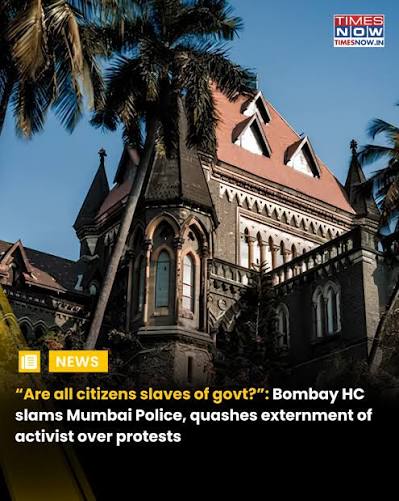
Introduction In a landmark ruling delivered today, the Bombay High Court sent a powerful message to authorities across India — you cannot silence a citizen simply because they disagree with the government. For environmental warriors, climate activists, and grassroots campaigners fighting for a cleaner and greener planet, this judgment is nothing short of a shield of protection. The case — Saeed Ahmad Abdul Wahid Chaudhary vs State of Maharashtra (Writ Petition 1700 of 2026) — may not have been about tree-cutting or pollution on the surface, but its implications run deep into the very foundation of environmental activism in India. What Happened?
The Story Behind the Case The Man at the Center Saeed Ahmad Abdul Wahid Chaudhary is the General Secretary of the Social Democratic Party of India (SDPI). Over the course of his activism, he organised several protests, morchas (marches), and dharnas (sit-ins) against decisions made by the Union Government. These were peaceful demonstrations — people raising their voices, holding placards, chanting slogans — the very heartbeat of democracy. The Police Action In December 2025 , the Deputy Commissioner of Police, Zone-6, Chembur, Mumbai, issued an Externment Order against him under Section 56(1)(a) and (b) of the Maharashtra Police Act.
An externment order is an extraordinary and drastic measure — it essentially means the authorities can forcibly remove a person from their own city , restricting their movement and freedom. Multiple FIRs (First Information Reports) were registered against him — mostly under Section 188 of the Indian Penal Code — for holding demonstrations without prior police permission. The Appeal Fails Chaudhary challenged this order before the Konkan Divisional Commissioner , but in March 2026 , the appellate authority upheld the police action. Left with no option, he knocked on the doors of the Bombay High Court.
What the Court Said — The Judgment Justice Madhav J. Jamdar of the Bombay High Court heard the case and delivered a ruling that will resonate across courtrooms and protest grounds alike. 1. Protesting Government Policies Is a Fundamental Right The court held that organising peaceful protests against government decisions does not amount to causing alarm, danger, or harm to the public.
The Maharashtra Police Act allows externment only when a person's activities genuinely threaten public order or safety — and peaceful dissent simply does not meet that bar. The court found that all the FIRs against Chaudhary arose solely from protest activities. Even if these FIRs disclosed an offence, the maximum punishment under Section 188 IPC is merely one month of simple imprisonment — hardly the kind of serious criminal conduct that warrants banishing someone from their own city. 2.
No Material to Justify the Order Justice Jamdar found that the externment order was built on thin air. The authorities claimed the petitioner's activities caused "alarm and danger," but when the court examined the actual FIRs, none of them contained any such allegations. The government's "subjective satisfaction" — a legal requirement for passing an externment order — had absolutely no material backing. 3.
Externment is an Extraordinary and Drastic Measure The court strongly emphasised that externment is not a casual tool — it strikes at the very heart of a citizen's fundamental rights under Articles 19 and 21 of the Constitution — the right to freedom of speech and expression, and the right to live with dignity. Using it against someone for peacefully opposing government policies is constitutionally impermissible. 4. Democratic Rights Cannot Be Suppressed Relying on the Supreme Court's landmark judgment in Anuradha Bhasin vs Union of India , the court reaffirmed that powers meant to maintain public order cannot be weaponised to suppress legitimate democratic expression.
Citizens have the right to raise grievances, organise movements, and demand accountability from their elected governments. Both the December 2025 externment order and the March 2026 appellate order were quashed in their entirety. Why This Matters for Environmental Activists You might be wondering — what does a political activist's case have to do with environmental warriors? The answer is: everything.
Environmental Protesters Face the Same Threats Across India, environmental activists face strikingly similar situations. Those who protest against illegal mining, deforestation, river pollution, coastal destruction, or industrial encroachment are routinely slapped with FIRs, detained, or harassed by authorities. The tactics used against them — false cases, permission denials, externment threats — mirror exactly what happened in this case. This Judgment Creates a Legal Shield Today's ruling establishes a clear legal precedent: peaceful protest against government or corporate decisions is a constitutionally protected activity.
Authorities cannot use vague claims of "public alarm" or "danger" to silence activists without concrete evidence. This precedent is now available to every environmental campaigner who faces police action for speaking up. The Right to Fight for Nature is the Right to Speak Whether you are protesting a coal plant, blocking a highway for a climate march, or sitting in front of bulldozers about to cut an ancient forest — you are exercising your fundamental right to free expression. The Bombay High Court has now made it unmistakably clear that this right cannot be taken away simply because the government finds your voice inconvenient.
Key Legal Takeaways Point What It Means Externment requires genuine threat Peaceful protests don't qualify as "alarm or danger" FIRs must match the externment claim Authorities can't make claims not backed by actual FIR content Articles 19 & 21 protect activists Free speech and dignity are fundamental, not optional Democratic dissent is protected Opposing government decisions is a constitutional right Section 188 IPC cases are minor Minor violations cannot justify extraordinary measures like externment The Bigger Picture — Democracy Needs Dissent Healthy democracies are built on the ability of citizens to question, challenge, and push back against those in power. Environmental movements around the world — from Chipko in India to Fridays for Future globally — were born out of citizens refusing to stay silent when the planet was being harmed. When courts protect that right, they protect not just one individual — they protect the very idea that ordinary people have the power to demand a better world. Today, the Bombay High Court did exactly that.
Conclusion The ruling in Saeed Ahmad Abdul Wahid Chaudhary vs State of Maharashtra is a victory not just for one man, but for every Indian who has ever stood at a protest, held a sign, raised a slogan, or marched through the streets demanding change — including those marching for our forests, our rivers, our air, and our future. As environmental warriors, this judgment reminds us that the law is on our side when we stand up peacefully and speak the truth. The Constitution protects us. And now, so does this precedent from the Bombay High Court.
Keep protesting. Keep fighting. The planet is counting on you. 🌍 Case Reference: Saeed Ahmad Abdul Wahid Chaudhary vs State of Maharashtra, Writ Petition 1700 of 2026, Citation: 2026 LiveLaw (Bom) 305, Decided by Justice Madhav J.
Jamdar, Bombay High Court, July 3, 2026.