Water Conservation
Bihar's Water Pollution Crisis: A Silent Emergency Poisoning Millions — And What We Must Do to Fix It
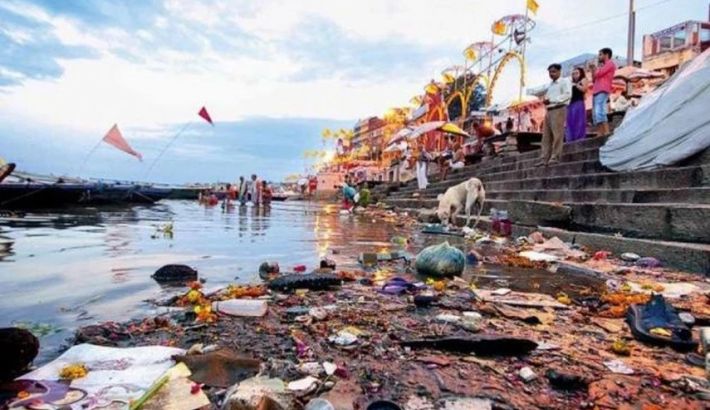
Introduction: The River That Gives Life Is Now Taking It Away Bihar — the land of the Ganga, the Gandak, the Kosi, and the Sone — has always been defined by its rivers. For thousands of years, these waterways fed its fields, sustained its people, and shaped its civilisation. Today, those same waters carry a far darker legacy: arsenic, heavy metals, untreated sewage, and industrial effluents that are quietly poisoning one of India's most populous and vulnerable states. This is not a distant, abstract environmental crisis.
It is happening right now, in the villages along the Ganga's banks, in the tube wells of Patna, Bhojpur, Vaishali, and Buxar — in the glasses of water that millions of Bihari families drink every single day. This blog is an attempt to tell that story — honestly, urgently, and with a clear eye towards solutions. Part 1: The Scale of the Crisis 🔴 Arsenic Poisoning — Bihar's Most Dangerous Invisible Enemy Of all the pollutants threatening Bihar's water, arsenic is the most alarming. Arsenic contamination has been reported in 10 out of the 15 major river basins of Bihar, affecting 22 districts and 87 blocks, with over 10 million people impacted.
ScienceDirect Let that number sink in. Ten million people. That is more than the entire population of Switzerland — drinking water laced with a poison that causes cancer. The Ganga stem and northern river basins, especially Bhojpur district, have the highest arsenic levels — with concentrations reaching as high as 1,861 micrograms per litre.
The World Health Organisation's safe limit is just 10 micrograms per litre. Bihar's worst-affected areas exceed that limit by nearly 186 times. ScienceDirect The population in Bihar has been experiencing high risks of arsenic exposure from both drinking water and food. Arsenicosis symptoms such as hyperpigmentation and hyperkeratosis in the palms and soles have been observed in arsenic-exposed people in Bihar.
Villagers have also been found with anaemia, gastrointestinal problems, loss of appetite, constipation, and breathlessness. Springer Most heartbreakingly, epidemiological data from Mahavir Cancer Sansthan and Research Centre in Patna showed that most cancer cases reported were from cities or towns located near the river Ganga — with the highest incidences from Buxar, Bhojpur, Saran, Patna, Vaishali, Samastipur, Munger, Begusarai, and Bhagalpur districts. 🔴 Where Does the Arsenic Come From? This is a question that often surprises people — the arsenic in Bihar's groundwater is not primarily man-made.
Alluvial sediments are the major source of arsenic contamination in groundwater, with a strong relation to plate tectonic processes, mountain building, erosion, and sedimentation. Nature In simpler terms: over millions of years, the Himalayas eroded and deposited arsenic-rich sediments into the Gangetic plains. Arsenic in the form of arsenopyrite load has reached these river basins as silt from the Himalayas, causing geogenic changes in the sediments and groundwater. However, human activity has made things dramatically worse.
Excessive pumping of groundwater disturbs the natural aquifer chemistry, releasing more arsenic into the water supply. Groundwater levels have steadily declined across all river basins in Bihar, with shallow aquifers under 90 metres depth in younger, calcareous alluvial formations showing higher arsenic contamination, whereas deeper aquifers between 100 and 300 metres depth have lower contamination. ScienceDirect 🔴 Heavy Metal Contamination — The Other Silent Killer Arsenic is not the only problem. A 2025 study evaluating groundwater samples in Gaya, Bihar for 10 heavy metals found that aluminium and iron exceeded Bureau of Indian Standards limits, while arsenic concentrations as high as 91 ppb were found in Samastipur district and 168 ppb in Bhojpur district.
Sprf Iron, fluoride, cadmium, lead — all have been detected in various parts of Bihar's groundwater at concerning levels, adding layers of complexity to an already severe public health challenge. 🔴 The Ganga — Bihar's Sacred River in Crisis The Ganga flows through Bihar for hundreds of kilometres, and the state is one of the largest contributors to its pollution. Bihar contributes significant pollution to the Ganga but has negligible or no operational sewage treatment capacity — meaning the vast majority of sewage generated in Bihar's cities and towns flows directly and untreated into the river. ScienceDirect Multiple drains in Patna — including Pahari drain, Kankerbagh drain, Digha drain, and Saidpur drain — discharge sewage, industrial effluents, stormwater runoff, heavy metals, pesticides, ammonia, nitrates, and phosphates directly into the Ganga River, leading to eutrophication and severe contamination.
Springer Nationally, over 52,000 million litres per day of sewage flows untreated into rivers, lakes, and groundwater systems across India — and the gap between sewage generation and treatment capacity is not closing; it is widening. Bihar sits at the worst end of this spectrum. ScienceDirect 🔴 Agricultural Chemicals Adding to the Burden Bihar is one of India's most agricultural states, and the chemicals used on its fields — pesticides, fertilisers, herbicides — seep into groundwater and rivers at alarming rates. The Kosi, Gandak, and other agricultural belt rivers now carry elevated pesticide residue levels, affecting both drinking water and aquatic ecosystems.
Part 2: The Human Cost The statistics above translate into real human suffering that must be named directly: Cancer — Districts along the Ganga like Buxar and Bhojpur report disproportionately high cancer rates, directly linked to long-term arsenic exposure through drinking water and contaminated food crops. Skin diseases — Arsenicosis, characterised by darkening and thickening of skin on palms and soles, is visible in villages across northern Bihar. Children are among the affected. Child development — Arsenic and heavy metal exposure in early childhood causes irreversible neurological damage, stunted growth, and cognitive impairment — robbing children of their futures before they have even begun.
Farmer livelihoods — Contaminated irrigation water affects crop quality and soil health, threatening the agricultural productivity that millions of families depend on. Women's health — Women, who traditionally manage water collection and cooking in rural Bihar, face the highest daily exposure to contaminated water. Part 3: Why Has This Crisis Persisted? 1.
Governance Failure The Ganga flows through five states — Uttarakhand, Uttar Pradesh, Bihar, Jharkhand, and West Bengal — creating governance fragmentation where no single authority is fully accountable for the river's health. Bihar sits in the middle of this governance gap. nih 2. No Sewage Treatment Bihar has among the lowest sewage treatment capacity in India.
Cities like Patna, Gaya, Bhagalpur, and Muzaffarpur generate enormous volumes of wastewater daily — most of it going directly into rivers or groundwater. 3. Awareness Gap In many villages, families do not know their water is contaminated with arsenic. The poison has no colour, no smell, and no immediate taste.
By the time symptoms appear — years or decades later — the damage is deep and irreversible. 4. Infrastructure Deficit Bihar is one of India's least developed states. Piped water supply, water treatment plants, and monitoring infrastructure remain deeply inadequate — particularly in rural areas where the crisis is most acute.
Part 4: Solutions — What Must Be Done ✅ 1. Deep Aquifer Boring — Immediate Life-Saver Deeper aquifers between 100 and 300 metres depth in older alluvium have significantly lower arsenic contamination. Replacing shallow tube wells with deep bore wells in affected districts is one of the fastest ways to give communities access to safer water. The Bihar government's Public Health Engineering Department has already begun this work — it must be massively scaled up.
ScienceDirect ✅ 2. Arsenic Removal Filters — Community Level Solutions Community water purifiers and treatment plants have successfully eliminated approximately 90% of arsenic, and implementation of rainwater collection systems has also enhanced the overall quality of water. Every arsenic-affected village needs a functional community filtration unit — and crucially, someone trained and accountable to maintain it. ✅ 3.
Sewage Treatment Plants — Non-Negotiable Bihar urgently needs investment in sewage treatment infrastructure. Under the Namami Gange programme, several STPs have been sanctioned — but construction, operationalisation, and maintenance must be accelerated dramatically. Every litre of sewage treated before it reaches the Ganga is a victory. ✅ 4.
Real-Time Water Quality Monitoring A state-wide network of water quality sensors — on rivers, in tube wells, at community water points — would allow authorities to identify contamination hotspots quickly and respond before communities suffer long-term harm. ✅ 5. Agricultural Reform — Organic Farming Promotion Reducing pesticide and chemical fertiliser use in Bihar's agricultural belts, promoting organic farming, and building buffer zones around water bodies would significantly reduce the chemical load entering groundwater and rivers. ✅ 6.
Community Awareness Campaigns Arsenic poisoning is invisible until it is too late. Mass awareness programmes — in schools, gram sabhas, and through local media — are essential to ensure communities know the risks, can identify symptoms early, and know where to access safe water. ✅ 7. Rainwater Harvesting — Ancient Wisdom, Modern Need Bihar receives significant monsoon rainfall — yet most of it runs off or causes floods.
Systematic rainwater harvesting and groundwater recharge programmes would reduce dependence on arsenic-affected shallow aquifers while also addressing Bihar's paradoxical water crisis: floods in monsoon, drought and contamination in summer. ✅ 8. Legal Accountability for Industrial Polluters Industries discharging untreated effluents into Bihar's rivers must face swift, severe legal consequences. Bihar Pollution Control Board enforcement must be strengthened, and NGT orders must be implemented — not ignored.
Part 5: What You Can Do as an Environment Warrior The Bihar water crisis can feel overwhelming in scale — but every large change begins with small, determined actions. If you live in Bihar: Get your local water tested. Contact your gram panchayat or local government about arsenic testing and filtration units. Spread awareness among your neighbours.
If you are an activist or NGO worker: Partner with village communities for water testing campaigns. Document cases, collect data, and bring them to the National Green Tribunal. If you are a professional or student: Research, write, and advocate. The more this crisis is documented and amplified, the harder it becomes for authorities to ignore.
If you are anyone at all: Share this blog. Talk about Bihar's water crisis. Make it impossible to look away. Conclusion: Bihar's Water is a Warning to All of India Bihar's water pollution crisis is not just Bihar's problem.
It is a mirror held up to the entire nation — showing what happens when economic development, governance, and environmental protection fail to keep pace with each other. The Ganga was once called India's eternal river. If we do not act — with urgency, resources, and accountability — it may become a monument to our collective failure. Bihar's children deserve clean water.
Bihar's farmers deserve rivers that nourish rather than poison. Bihar's communities deserve a future where water is a source of life, not suffering. That future is possible. But only if we fight for it.
🌊 Sources: IWA Publishing H2Open Journal (May 2025), Springer Nature Discover Environment (January 2025), Scientific Reports — Nature, Earth5R Environmental Research (February 2026), ScienceDirect — Ganga River Patna Urban Drains Study (January 2026), CPCB National Inventory Reports.