Climate Change
Bihar's Sun-Skilled Youth: Powering Rural India's Green Future
Across flood-prone plains, a generation of young Biharis is mastering solar tech, not just electrifying homes, but building resilient livelihoods.
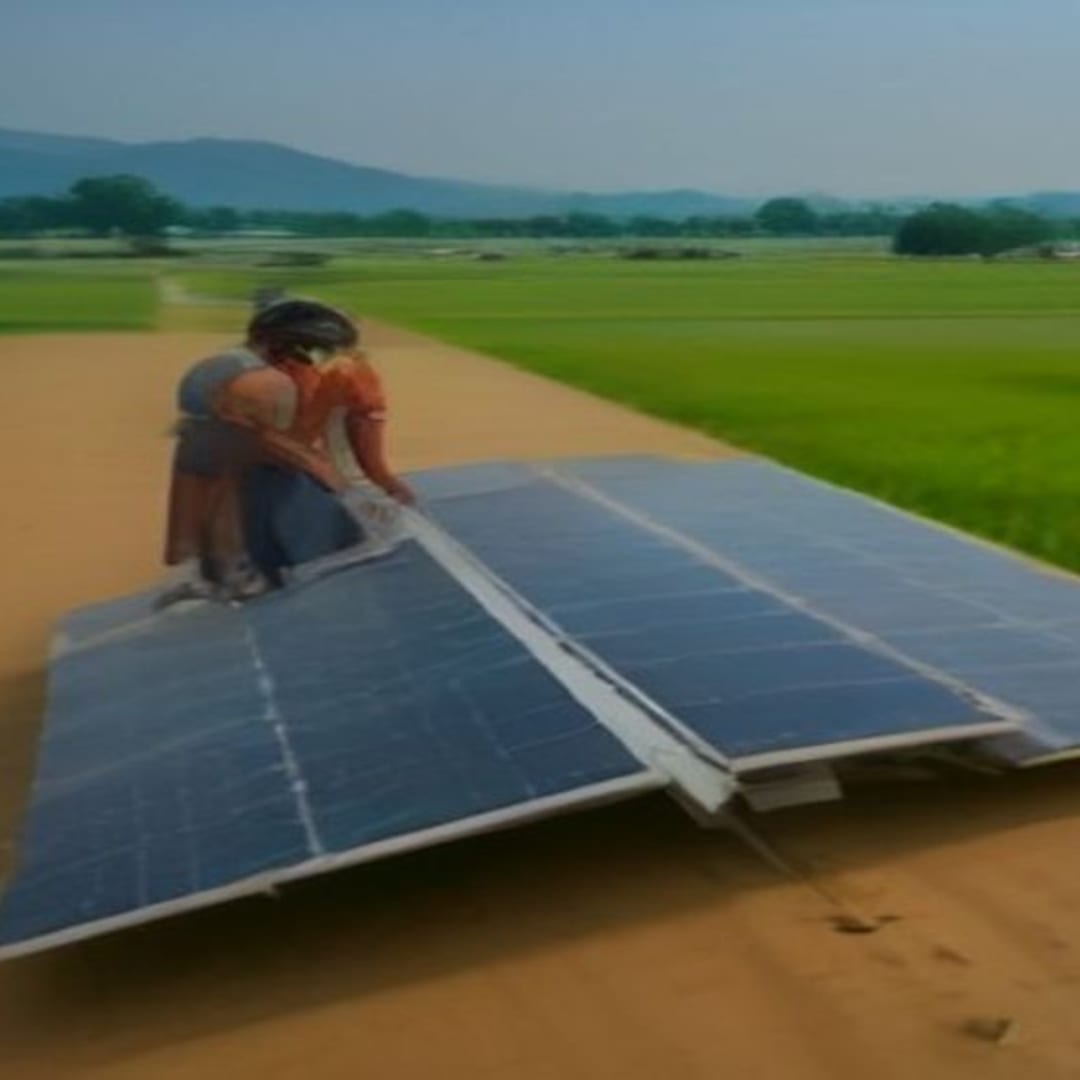
The scent of freshly tilled earth hung heavy in the Araria air, but for Rajesh Kumar, the smell of solder and insulation was a more potent promise. Just five years ago, Rajesh, like countless others in this flood-prone district of Bihar, saw limited horizons – perhaps seasonal migration for manual labour, or eking out a living from increasingly unpredictable farm yields. Today, at 24, he runs a small but thriving solar installation and repair service, a beacon of self-reliance powered by the very sun that once scorched his family’s fields. Rajesh’s story is not an isolated one; it represents a quiet, yet profound, revolution unfolding across rural Bihar.
While India grapples with the escalating climate crisis – record temperatures threatening millions, and critical air pollution levels choking its cities – a parallel narrative of empowerment and sustainable development is gaining momentum. This is the story of India’s renewable energy push, particularly solar, accelerating across rural landscapes, and more importantly, the story of the skilled workforce making it possible. ## Bihar's Dual Burden: Climate Vulnerability Meets Energy Deficit Bihar stands as a poignant microcosm of India's environmental challenges. Annually, its vast, fertile plains are ravaged by erratic monsoons, bringing either devastating floods or prolonged droughts.
These climate extremes directly impact agriculture, the backbone of its rural economy, pushing millions towards greater precarity. Beyond the immediate impact of climate, a significant portion of Bihar’s rural population has historically faced energy deficits. While grid connectivity has improved, reliability remains a concern, often forcing communities to rely on polluting and expensive diesel generators for critical needs – contributing to the very air pollution crisis that plagues urban India. This dependence on fossil fuels in rural settings creates a vicious cycle.
Diesel combustion exacerbates local air quality issues and contributes to greenhouse gas emissions, further entrenching climate vulnerabilities. The need for a clean, reliable, and decentralized energy solution became not just an environmental imperative, but an economic and social one. ## The Dawn of a Green Collar Economy The expansion of solar energy in rural India is more than just about installing panels; it’s about building a sustainable ecosystem capable of deploying, maintaining, and innovating these solutions locally. This requires a robust, skilled workforce.
Recognising this crucial linkage, government initiatives and non-governmental organisations have begun focusing on skill development programs, transforming rural youth into proficient solar technicians and entrepreneurs. Under the umbrella of national programs like Skill India, and specifically through the Bihar Skill Development Mission (BSDM), thousands of young Biharis are undergoing intensive training. These programs go beyond theoretical knowledge, offering hands-on experience in solar photovoltaic (PV) system installation, inverter troubleshooting, battery management, and even basic business acumen. They cover everything from site assessment and system design to safety protocols and customer service.
For many, this training is their first formal exposure to a technical skill, opening doors to opportunities previously unimaginable. ## From Trainee to Trailblazer: Empowering Local Entrepreneurs Take Priyanka Devi from Muzaffarpur, for instance. A mother of two, she completed a three-month solar technician course supported by a local NGO partnering with the BSDM. Armed with her certificate and a modest micro-loan, she started a small venture, servicing solar streetlights and home systems in her block.
“Before, I relied on my husband’s meagre farming income,” Priyanka shares, “Now, I contribute significantly, and during floods, when the grid fails, people depend on me to keep their solar systems running. ” Her story highlights not just economic empowerment, but also enhanced community resilience during climate-induced disruptions. These newly minted solar artisans are not merely employees; they are becoming entrepreneurs, driving a decentralized energy revolution. They set up small businesses, providing critical installation, repair, and maintenance services, ensuring the longevity and effectiveness of solar infrastructure.
This local presence is vital, especially in areas where access to urban-based technicians is difficult or expensive. This model fosters a self-sustaining ecosystem where the local economy benefits directly from the clean energy transition, reducing outward migration in search of work and strengthening community bonds. ## Beyond Illumination: Holistic Socio-Economic Transformation The impact of this green collar revolution extends far beyond simply providing light. It is a catalyst for holistic socio-economic transformation in rural Bihar: * **Economic Empowerment:** Reliable and affordable solar power fuels small rural businesses – from tailoring shops to flour mills – extending operating hours and increasing productivity.
Farmers can use solar-powered irrigation pumps, reducing reliance on costly diesel and mitigating the impact of erratic monsoons on crop yields. The average income of a skilled solar technician can be significantly higher than that of an agricultural labourer, lifting families out of poverty. * **Environmental Gains:** The most direct environmental benefit is the significant reduction in the use of diesel generators, directly addressing India's critical air pollution levels in rural areas. This cleaner air improves public health outcomes, especially for children and the elderly.
Furthermore, the shift to solar reduces carbon emissions, contributing to India’s climate targets and mitigating long-term climate change. * **Enhanced Climate Resilience:** Decentralized solar systems are inherently more resilient to grid failures during extreme weather events like floods and cyclones. In times of crisis, these systems can power critical infrastructure such as mobile charging stations, community information centres, and even medical outposts, ensuring essential services remain functional when the conventional grid collapses. This local energy independence is a crucial adaptation strategy for climate-vulnerable regions.
* **Improved Social Indicators:** Access to reliable electricity positively impacts education, allowing children to study after dark. Healthcare facilities can operate more efficiently with consistent power for refrigeration of medicines and medical equipment. Digital inclusion also improves, as more homes can power devices, bridging the information gap. ## Navigating the Path Ahead: Challenges and Opportunities Despite the promising trajectory, challenges remain.
Ensuring sustained access to affordable financing for aspiring solar entrepreneurs is critical, as initial investment in tools and inventory can be a barrier. Maintaining quality standards for components and installations across thousands of dispersed operations requires robust monitoring and certification mechanisms. Scaling these initiatives to reach the remotest villages, ensuring equitable access, and integrating micro-grids effectively with the broader state grid are also complex undertakings. Furthermore, continued policy support is essential.
This includes streamlining permits, providing incentives for local manufacturing of solar components, and fostering an environment conducive to innovation. Initiatives specifically targeting women's participation in this burgeoning workforce can unlock immense untapped potential, further diversifying and strengthening the green collar economy. ## A Blueprint for a Resilient Future Bihar's nascent green collar revolution offers a powerful blueprint for other climate-vulnerable and energy-deficient regions across India. It demonstrates that empowering local communities with relevant skills is as vital as the technology itself in driving a just and sustainable energy transition.
It’s a testament to human ingenuity and resilience, showing that even amidst the gravest climate challenges, homegrown solutions can emerge to build a brighter, cleaner future. Rajesh Kumar, installing a new solar home system for a family in Araria, is not just connecting wires; he is connecting his community to a future of energy independence, cleaner air, and economic stability. His story, and countless others like it, are proof that the most impactful climate action often begins at the grassroots, powered by the sun and the unbreakable spirit of India's youth.