Air Quality
Beyond Tailpipes: India's Construction Dust Strangles Urban Air
India's urban growth fuels a construction boom, but pervasive dust emissions are exacting a severe public health toll, demanding urgent policy reforms.
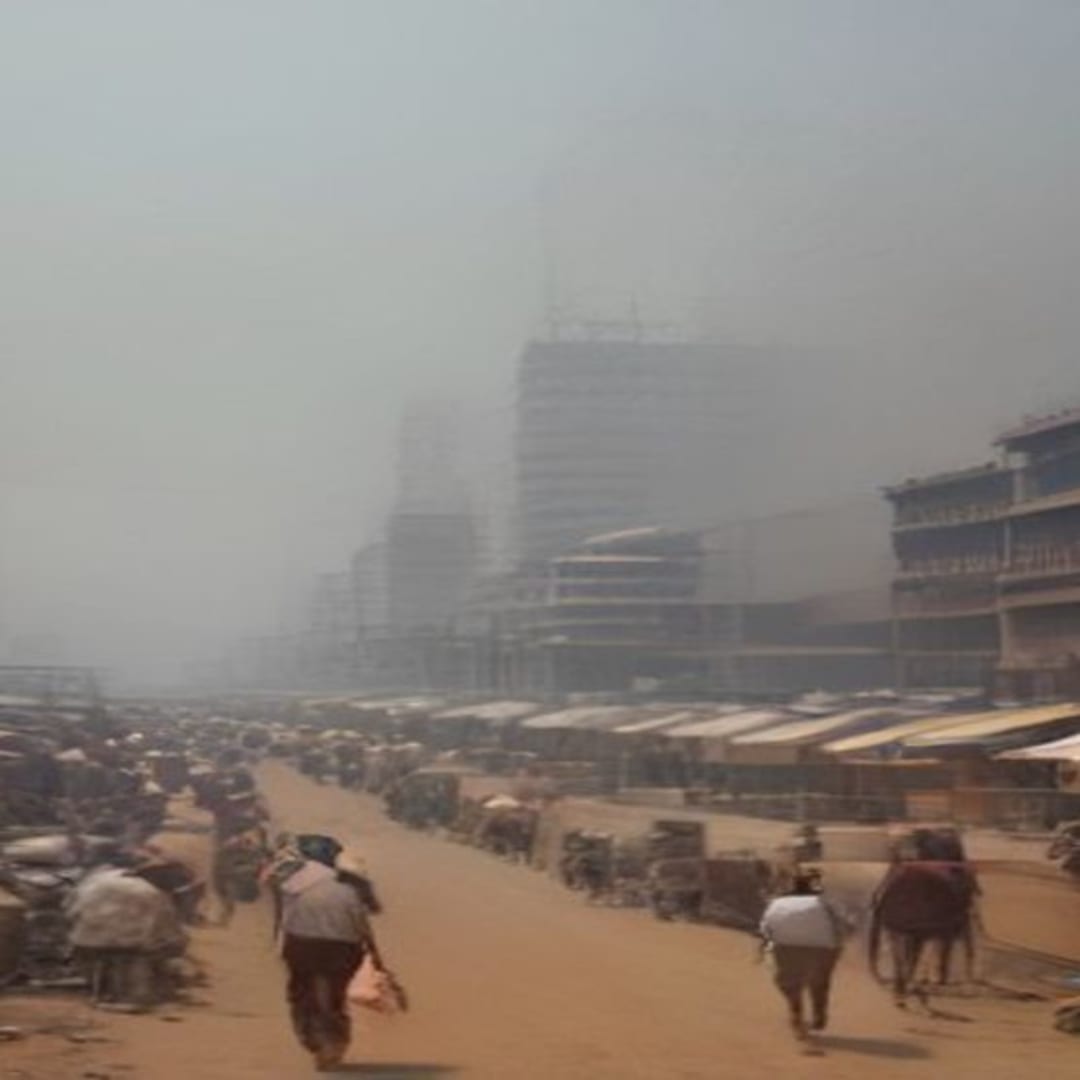
The rhythmic clang of hammers, the roar of excavators, and the ceaseless grind of concrete mixers – these are the sounds of India’s relentless urban expansion. From towering skyscrapers in Mumbai to sprawling residential complexes in Bengaluru and new infrastructure projects transforming Delhi, the nation is building its future at an unprecedented pace. Yet, this very progress often cloaks an insidious threat: construction dust. While much public discourse, and rightly so, focuses on vehicular and industrial emissions, the omnipresent, often ignored particulate matter emanating from construction sites forms a significant, pervasive, and highly localized layer of the air pollution crisis gripping Indian cities.
Imagine a typical morning in a rapidly developing urban periphery of Delhi. Children walk to school, their uniforms quickly acquiring a fine, gritty layer. Street vendors set up their stalls, their wares dusted even before the first customer arrives. Commuters navigate roads flanked by construction hoardings, their vehicles kicking up plumes from unpaved shoulders and unsecured material piles.
This isn't just an aesthetic inconvenience; it's a daily assault on the respiratory systems of millions, a tangible indicator of an environmental challenge that demands immediate and targeted intervention. ## The Invisible Menace, Made Visible Construction dust isn't a singular entity; it's a complex cocktail of particulate matter, primarily PM2. 5 and PM10, composed of silica, cement, wood, metal, and various chemicals. Unlike the more diffuse emissions from vehicles or power plants, construction dust is generated in concentrated bursts and lingers in the immediate vicinity of development sites.
Demolition activities release old building materials and asbestos fibers. Excavation unearths soil, silt, and rocks. Transportation of raw materials like sand, gravel, and cement, often uncovered, sheds significant amounts along arterial roads. Even seemingly minor activities like cutting tiles or mixing mortar contribute to the overall burden.
Studies by institutions like the Indian Institute of Technology Kanpur (IIT-K) and various environmental agencies have consistently identified construction and demolition (C&D) activities as a major contributor to PM2. 5 and PM10 levels in India's megacities. During peak construction seasons or under lax enforcement, its contribution can spike dramatically, sometimes accounting for 10-20% of the total particulate load, and even higher in specific micro-environments. This makes construction dust a uniquely challenging pollutant: highly localized, variable, and often directly impacting the most vulnerable communities living and working adjacent to these sites.
## A Breather's Betrayal: Health Impacts Beyond the Obvious The health consequences of inhaling construction dust extend far beyond the general respiratory ailments associated with air pollution. The specific composition of C&D dust, particularly its silica content, poses unique hazards. Chronic exposure can lead to silicosis, an incurable lung disease that can cause severe breathing difficulties and increase susceptibility to tuberculosis. For construction workers, who often lack adequate personal protective equipment, this is an occupational hazard of dire proportions.
For urban residents, especially children and the elderly, the impact is more insidious. Fine particulate matter (PM2. 5) from construction sites can penetrate deep into the lungs, exacerbating asthma, bronchitis, and other respiratory infections. Emerging research also points to links with cardiovascular diseases, with sustained exposure contributing to inflammation and oxidative stress in the heart and blood vessels.
Children, with their smaller airways and developing immune systems, are particularly vulnerable, experiencing higher rates of respiratory infections and potentially impaired lung development over time. The constant irritation can also lead to eye, nose, and throat irritation, reducing overall quality of life. ## Delhi's Dust Bowl: A Case Study in Resilience and Regulation Delhi, often ranked among the world's most polluted cities, provides a stark illustration of the construction dust challenge. Its relentless expansion, coupled with a dense population, means that construction sites are never far from residential areas, schools, or hospitals.
The city's atmospheric conditions, particularly during the dry winter months, exacerbate the problem, trapping dust close to the ground and creating persistent haze. The capital has, however, implemented measures to combat this. The Graded Response Action Plan (GRAP), enforced by the Commission for Air Quality Management (CAQM), includes specific, stringent directives targeting construction and demolition activities. Under GRAP, during 'Very Poor' or 'Severe' air quality days, all non-essential C&D activities are banned.
Compliance requires developers to install green nets, sprinkle water regularly, cover material piles, ensure wheel washing for vehicles exiting sites, and use anti-smog guns. The Central Pollution Control Board (CPCB) has also issued detailed guidelines for C&D waste management. These policies represent a significant step forward, acknowledging the problem and outlining solutions. Yet, enforcement remains a persistent Achilles' heel.
Despite fines and occasional crackdowns, many sites continue to operate with blatant disregard for environmental norms. The sheer number of ongoing projects, coupled with limited regulatory staff, makes comprehensive oversight incredibly difficult. Public complaints often highlight unattended dust piles, un-netted buildings, and uncovered trucks, underscoring the gap between policy intent and on-the-ground reality. ## Policy Paralysis and Enforcement Gaps The challenges in controlling construction dust are multi-faceted.
Firstly, there’s a perception among some developers that dust control measures are an additional, unnecessary cost, rather than an integral part of responsible project management. This often leads to corners being cut, prioritizing speed and cost-efficiency over environmental compliance. Secondly, the regulatory framework, while robust on paper, struggles with effective implementation. Municipal corporations, state pollution control boards, and environmental agencies often face resource constraints – insufficient personnel, inadequate monitoring equipment, and lengthy bureaucratic processes.
The penalties, though substantial for repeat offenders, may still be viewed as a cost of doing business rather than a deterrent for large-scale projects. Thirdly, a lack of standardized, real-time monitoring at construction sites makes it difficult to pinpoint violations proactively. While drones and satellite imagery are increasingly being used, human inspection remains critical. Furthermore, the transient nature of many construction sites and the contractual complexities involving multiple subcontractors can obscure accountability.
## Innovation in the Face of Adversity: Solutions and Best Practices The good news is that effective, scalable solutions for construction dust management exist. It's not a question of technology, but of political will and consistent enforcement. **1. Technological Interventions:** * **Anti-Smog Guns and Water Sprinklers:** These devices can effectively suppress airborne dust, particularly at demolition sites and large excavation areas.
Their mandatory deployment, especially during high pollution periods, is crucial. * **Automated Monitoring Systems:** Installing continuous ambient air quality monitors at large construction sites, linked to a central regulatory dashboard, can provide real-time data and trigger alerts for non-compliance. * **Dust Suppressants:** Chemical additives can be mixed with water to increase its dust-binding capacity, reducing the frequency of watering required. **2.
Best Management Practices:** * **Green Netting and Hoarding:** Enclosing construction sites with robust green nets and sturdy hoardings is fundamental to containing dust within the perimeter. * **Covered Transportation:** All vehicles transporting construction materials or C&D waste must be fully covered to prevent spillage and airborne dust during transit. * **Wheel Washing Facilities:** Mandatory wheel washing stations at site exits prevent vehicles from carrying dust onto public roads. * **Paved Access Roads:** Ensuring that all internal and access roads within a construction site are paved or regularly watered minimizes dust generation from vehicular movement.
* **Pre-fabrication:** Where possible, off-site pre-fabrication of building components reduces on-site cutting, grinding, and associated dust generation. * **Waste Segregation and Recycling:** Proper management of C&D waste, including segregation and recycling, reduces the volume requiring transport and disposal, which are often dust-generating activities. **3. Policy and Enforcement Enhancements:** * **Mandatory Dust Management Plans:** All construction projects, regardless of size, should be required to submit and adhere to a detailed dust management plan as part of their environmental clearance.
* **Increased Penalties and Accountability:** Penalties for non-compliance must be steep enough to deter violations, with clear accountability mechanisms for developers and contractors. * **Third-Party Audits:** Independent environmental audits of construction sites can provide an unbiased assessment of compliance. * **Public Reporting Mechanisms:** Empowering citizens to report violations through accessible digital platforms, with assurances of swift action, can act as an additional layer of oversight. ## Moving Forward: Building a Healthier India India's aspirations for robust infrastructure and urban development are legitimate and necessary for its economic growth.
However, this growth cannot come at the expense of its citizens' health. The battle against air pollution requires a multi-pronged approach, and tackling construction dust is a critical, often underestimated, front. By integrating stringent dust control measures into every stage of project planning and execution, and by bolstering regulatory enforcement, India can build not just cities, but also a healthier, more breathable future for its urban millions. The time for viewing dust control as an optional add-on is over.
It must be recognized as an essential component of sustainable urbanization, a non-negotiable aspect of responsible development. Only then can India truly build a future where progress doesn't leave behind a cloud of choking dust, but rather, a legacy of clean air for all.